



Cloud-native development is one of the most groundbreaking innovations, with many businesses seeking its benefits. This approach is characterized by its emphasis on scalability, resilience, and flexibility. The cloud-native approach continues to transform the software development lifecycle. Cloud-native development leverages cloud computing technology to develop and deploy applications.
According to CNCF annual survey, 96% of businesses have adopted Kubernetes, a popular cloud-native technology. A survey by IBM reports that 73% of developers and IT executives state that the cloud-native development model has resulted in a faster development process and roll-out. While the hype and advantages of migrating to cloud-native infrastructure are abundant, there are critical challenges that arise when you adopt the cloud-native strategy. These challenges can be overcome if handled effectively as part of a cloud-native migration strategy.
As a development company with years of experience in cloud-native development services, we will discuss the challenges you might face on a cloud-native journey and tell you how to overcome them.
What is Cloud-Native Development?
Cloud-native development is an approach to building, deploying, and managing modern software applications in a cloud computing environment. Cloud-native applications are highly scalable and developed using advanced, container-based infrastructures. They are developed in the cloud environment to help ideas reach the market faster and meet users' expectations for zero downtime, fast responsiveness, and innovative features.
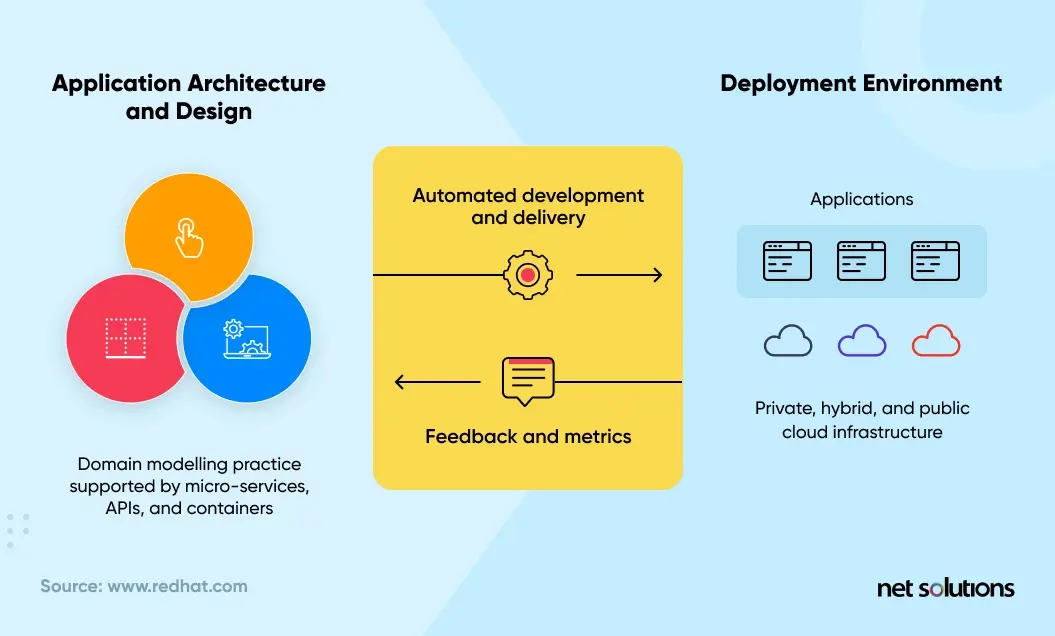
The benefits of developing cloud-native applications are huge. They allow businesses to take advantage of cloud computing's flexibility and cost savings, enabling faster app deployment and management. Big organizations like Uber and Netflix are already using the cloud-native model to respond to market conditions quickly and deploy services constantly. Now, let's discuss the challenges of migrating to a cloud-native approach.
Related Post: How to Build a Cloud-based SaaS Application in 2024
Challenges to Adopting Cloud Native Infrastructure
Here are the common challenges that arise when transitioning to the cloud-native infrastructure.
1. Persistent Data Storage
Challenge
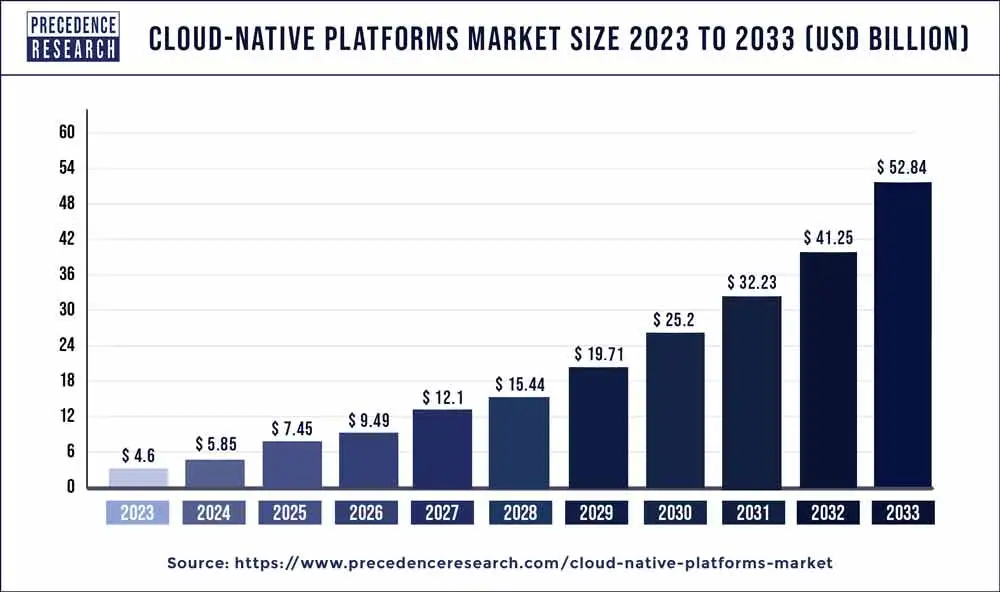
Cloud-native applications generate large volumes of data. One of the common challenges with these solutions is storing this enormous data persistently. A cloud-native infrastructure uses an immutable infrastructure model to deploy containers, serverless functions, and apps that don't have a way to store data permanently because all internal data is erased when the app is shut down. Choosing the right storage solution is important for ensuring data security, accessibility, and cost-effectiveness.
Solution
Addressing this challenge requires decoupling data storage from applications and host environments. Consider your data storage needs and choose a cloud service that provides scalability and security for your specific requirements. Cloud-native workflows store data externally using tools like AWS Simple Cloud Storage Service. Another option is Microsoft's Azure Storage. This tool offers enhanced accessibility, greater security, customized extensions, and versatility in managing accounts.
 Source: Precedence research
 2. Monitoring and Managing Microservices
Challenge
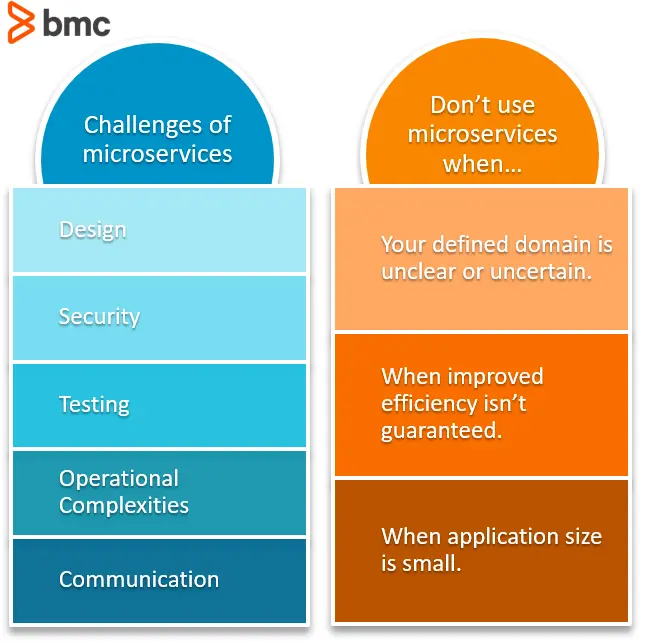
The more services operating in an application, the more difficult it is to monitor and manage them. Microservices are difficult to monitor because they produce a lot of data. Ensuring application health requires monitoring services and the relationship between the services. One microservice can run on hundreds of machines, and a hundred microservices can run on a single device, and you will need to track multiple metrics for each service. As a result, manual monitoring is not feasible.
 Source: bmc
Solution
To successfully monitor and manage services in a cloud-native environment, you need a system that can automatically track performance, flag issues, assess how a failure in one service will affect others, and understand which failures are significant. Dynamic baselining is also critical. It involves using AI to assess the application environment to determine what is normal and what is unusual.
3. Vendor Lock-in
Challenge
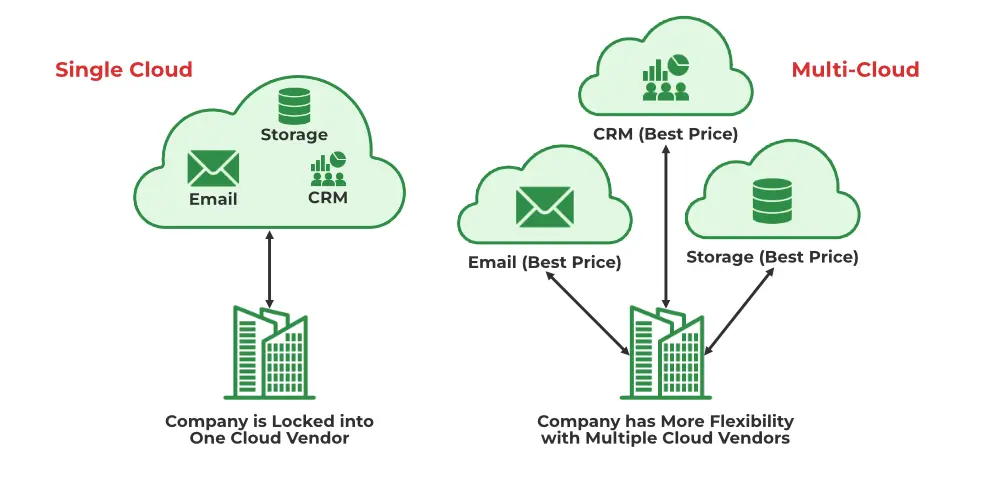
In cloud-native development, relying on a particular cloud provider can result in vendor lock-in, making it difficult to switch to another provider in the future. Lock-in risks are not limited to just the cloud; they can occur from any type of technology and have been a threat to agile development for decades. However, this threat is particularly high in cloud-native infrastructure.
 Source: GeeksforGeeks
 Solution
Implement a multi-cloud strategy to overcome this challenge. This approach involves implementing a combination of cloud services from several providers or a combination of on-premises and cloud-based infrastructures. Reducing this cloud lock-in risk is easy as long as you plan ahead of time. Sticking to community-based cloud standards (like those set by OCCI) will allow you to shift your workloads smoothly from one cloud to another. While deciding on a cloud services provider, consider whether any services you're considering have unique features that are unavailable in other clouds. If they have, avoid using those features, as they can lock you in.
Related Post: Choosing the Right Cloud Infrastructure for Your SaaS Application
4. Security Concerns and Compliance
Challenge
Every organization prioritizes security. A Fortinet report states that 95% of firms are concerned about their cloud security posture due to sensitive data breaches, insecure APIs, and unauthorized access. Cloud environments are vulnerable to cyber-attacks. When applications are distributed across multiple cloud services, data security is in danger. Therefore, security and compliance are major challenges for cloud-native development. Cloud-native apps require advanced security considerations, such as managing access across several environments and securing containerized workloads.
Solution
With the evolution of the digital world, companies must implement new security protocols and ensure their infrastructure meets these cloud security standards. Implementation of proactive security measures is crucial in a cloud-native development model. Employ robust cloud security practices such as cloud encryption, continuous security audits, Identity and Access Management, and least privilege access. Authorized users and services should have access to the data in the cloud infrastructure.
To ensure greater cloud security, reach out to an experienced cloud security services provider to create a tailored strategy for your security needs.
5. Lack of Technical Expertise
Challenge
One of the major challenges for organizations moving to cloud-native infrastructure is the lack of suitable technical expertise. Cloud-native development requires a skilled team with greater expertise in cloud platforms, containerization, modern application architectures, and DevOps methodologies.
Solution
Companies need to invest in a qualified, certified, and cloud-skilled workforce to manage their cloud-native apps and bridge the skills gap. Many cloud service providers offer training to help you develop your team's cloud expertise. Moreover, there must be a well-defined procedure for onboarding new staff, training existing teams, and monitoring market trends and emerging cloud technologies. Developers should also leverage educational resources such as articles, webinars, and tutorials to gain insights about best practices for developing cloud-native infrastructure.
6. Apps Delivery Pipelines
Challenge
Another challenge is developing cloud-native app delivery pipelines. Many app delivery pipelines run in traditional, on-premises environments that aren't cloud-friendly and are clunky when integrated with apps and services running on public clouds. However, cloud-native applications run in the cloud. This creates challenges in numerous ways. One is that developers may face unforeseen delays when deploying code from local environments to the cloud. Another challenge is that developing and testing applications locally makes it difficult to emulate production-like conditions that can lead to unexpected app behavior after deployment.
Solution
The best way to overcome these challenges is to move your CI/CD pipeline into a cloud environment. By doing so, you may benefit from the cloud's scalability and immutability, obtain production conditions, and bring your pipeline closer to your apps. That way, the code is created closer to where it'll be deployed, making deployment faster and testing workflows built quickly.
7. Service Integration
Challenge
When developers build cloud-native applications, service integration is an issue they must address. Cloud-native apps consist of several disparate services due to their distributed nature. The good thing about this nature is that it makes them scalable and flexible compared to monoliths. However, the challenge is that cloud-native workloads have many moving parts that must be smoothly connected together.
Solution
Developers should assign a distinct service to each type of functionality in the workload instead of making a single service do multiple things. Do not add extra services unnecessarily, as it might add unnecessary complexity to your cloud-native app. Choose optimal deployment methodologies for successful service integration. You can combine various services into a single workload using containers, serverless functions, and API gateways.
8. Need for Cultural Shifts
Challenge
Transitioning from a traditional to a cloud-native approach frequently demands a cultural shift within a company. Organizations often underestimate the significance of organizational and team changes. Traditional IT teams may need to embrace agile development methodology, CI/CD, and infrastructure as code.
Solution
Effective communication is essential for overcoming cultural resistance. Describe the advantages of cloud-native development to your workforce and provide them with the training and support they need to adjust to a new way of working related to a cloud-native environment. Determine the roles that need to be changed or assigned when moving to the cloud. This may include shifting the company's focus from operational tasks like server configuration to advanced services like automation, scalability, and security compliance.
9. Observability and Monitoring in Distributed Systems
Challenge
In cloud-native systems, your application runs across multiple services and environments, which makes tracking issues difficult. Logs, metrics, and traces are scattered, so when something breaks, it is hard to find the exact cause. Teams often spend hours debugging, and small issues can quickly turn into major outages without proper visibility.
Solution
To fix this, set up a centralized observability system from the start. Bring all logs, metrics, and traces into one place so you can clearly see what is happening across services. Use tools like Prometheus and Jaeger to monitor performance and trace requests. Set meaningful alerts so you can catch issues early and fix them before they impact users.
10. Cost Management and Resource Optimization
Challenge
Cloud-native systems run on a pay-as-you-use model, which can lead to rising costs if not managed properly. Many teams over-provision resources, leave unused services running, or fail to track usage, which results in unnecessary spending that keeps increasing over time.
Solution
To control costs, start monitoring usage from day one. Use tagging and cost tracking tools to understand where money is going, and set budget alerts to avoid surprises. Implement auto-scaling so resources match actual demand and shut down anything not in use. Regularly review and optimize usage to reduce waste and keep costs under control.
6 Best Practices to Improve Cloud-Native Development
Here are six best practices to improve cloud-native development:
1. Keep Services Small and Focused
Do not try to build everything into one system. Break your application into smaller services, each handling a specific task. This makes it easier to scale, update, and fix issues without affecting the entire system. When each service has a clear role, your architecture becomes easier to manage and grow.
2. Use Containers for Consistency
One of the biggest problems teams face during cloud native development is “it works on the machine, but not in production.” Containers solve this. They package your application along with everything it needs to run, so it behaves the same everywhere. This reduces errors, simplifies deployment, and makes scaling much smoother.
3. Automate Your CI/CD Pipelines
Manual deployments slow you down and increase the chances of mistakes. Set up automated pipelines that handle building, testing, and deploying your code. This helps you release updates faster, catch issues early, and maintain consistency across environments. It also gives you the confidence to deploy more frequently.
4. Manage Infrastructure Using Code
Instead of manually configuring servers and environments, define everything using code. This ensures consistency across development, testing, and production. It also makes it easy to recreate environments, track changes, and avoid configuration issues that often break systems later.
5. Build Observability from the Start
Do not wait for something to break before setting up monitoring. Make sure you can track logs, metrics, and system behavior from day one. This helps you quickly understand what is happening inside your system and fix problems before they impact users. Good visibility saves hours of debugging later.
6. Make Security Part of the Process
Security should not be something you think about at the end. It needs to be built into every step of development. Use proper access control, secure communication, and regular checks for vulnerabilities. When security is part of your workflow, you reduce risks without slowing down development.
Frequently Asked Questions (FAQs)
The biggest challenges come from handling complexity across multiple systems. Instead of one application, you manage many services, each with its own data, communication, and dependencies. This makes monitoring, debugging, security, and cost control harder. Most teams struggle not because of tools, but because everything is interconnected and harder to manage at scale.
Most failures happen when teams adopt cloud-native tools without proper planning. They move to microservices or Kubernetes too early, without strong DevOps practices, monitoring, or clear architecture. This creates confusion, slows development, and leads to unstable systems. Starting with the right foundation makes a big difference.
No. Cloud-native is ideal for applications that need to scale, handle high traffic, or release updates frequently. If your system is simple or stable, the added complexity may not be worth it. The key is choosing cloud-native based on your actual needs, not just following trends.
Companies manage costs by tracking usage continuously and adjusting resources based on real demand. They use auto-scaling, set budget alerts, and regularly review where money is being spent. Removing unused resources and optimizing workloads helps avoid unnecessary costs over time.
Because cloud-native systems are distributed. Instead of managing one system, you manage many small services that communicate with each other. When something breaks, it is not always clear where the issue is. This is why strong monitoring, logging, and clear architecture are essential.
Vendor lock-in happens when your system depends heavily on one cloud provider’s tools. To avoid this, use containerized applications, open standards, and cloud-agnostic tools. Planning for flexibility early makes it easier to switch providers or adopt multi-cloud strategies later.
Cloud-native development requires knowledge of containers, Kubernetes, cloud platforms, and DevOps practices like CI/CD. Teams also need to understand how distributed systems work. Without these skills, managing and scaling cloud-native systems becomes difficult and inefficient.
The best approach is to start small. Choose one use case, build it using cloud-native principles, and set up proper CI/CD and monitoring from the beginning. This helps your team learn in a controlled way before scaling to larger systems.
Final Takeaway
Businesses are rapidly embracing cloud-native development due to its benefits in terms of flexibility, scalability, and efficiency. Cloud-native apps are complex compared to legacy apps, so they may have more areas for errors. However, cloud-native development challenges can be overcome by partnering with a supportive and seasonal cloud-native development expert like ownAI. ownAI is always up-to-date with the latest cloud technologies and industry trends, ensuring your business isn't left behind. At ownAI, our experienced developers implement advanced strategies to overcome these challenges and unlock agility, scalability, and reliability. As a leading cloud-native development services provider, ownAI will help you make the most of the cloud to drive business value, including faster time to market, enhanced efficiencies, minimized costs, and business continuity.
Contact us to share your cloud-native development challenges, and let us help you overcome them and develop top-notch cloud-based applications.

Let’s discuss about your next AI, Cloud or Digital Transformation.
 AI-Skilled & Agile
 Transparent, Trustworthy &
Vetted team Not tech, but business &
customer first approach





 Turn your idea into MVP in 8-16 weeks