



Serverless computing is a groundbreaking approach in the cloud computing landscape that promises scalability, increased performance, and cost-effectiveness for businesses and developers alike. This revolutionary technology offers businesses several advantages that traditional server-based computing does not provide. Cloud computing is the core of the modern, globally networked world. Cloud computing with serverless computing revolutionizes the way we design, develop, and deploy applications. Most modern applications use the cloud to collect and process data.
As per Gartner's cloud shift research, cloud computing is expected to reach 51% of IT spending by 2025 in key market segments compared to 41% in 2022. Serverless computing was a distant dream a few years ago. However, the introduction of AWS Lambda in 2014 brought a significant shift, and now AWS serverless solutions are transforming the cloud development industry. Its growth has increased significantly because it allows developers to run code and create top-notch cloud applications without worrying about managing servers.
In this article, our cloud experts explore the key components, benefits, and challenges of serverless computing and discover how serverless computing can transform the future of cloud applications.
What is Serverless Computing?
Serverless computing is a cloud computing model that aims to assign the responsibility of server management to the cloud provider instead of the developer. This type of cloud computing simplifies cloud application development for developers by relieving them of the hassle of managing servers.
In traditional cloud computing, developers need to configure and manage servers to run their apps while ensuring they can handle peak loads, which can be time-consuming and difficult. In a serverless infrastructure, the cloud provider handles all server-related tasks, such as provisioning, maintenance, and scaling. As a result, this approach allows developers to focus solely on writing code for their applications.
Key Components of Serverless Computing
Function as a service (FaaS): FaaS is the key concept behind serverless computing. It is the logic, brain, and code that brings developers the right response. Cloud application developers break down the app into smaller and independent functions. Each function is responsible for performing a certain task and is activated by a certain event such as changes in database or HTTP request.
Event-driven Architecture: Serverless cloud apps are event-driven, which means they react to events or triggers such as data changes, file uploads, HTTP requests, or time-based events. The event-based platform scales resources up and down depending on demand to ensure optimal app performance and resource usage.
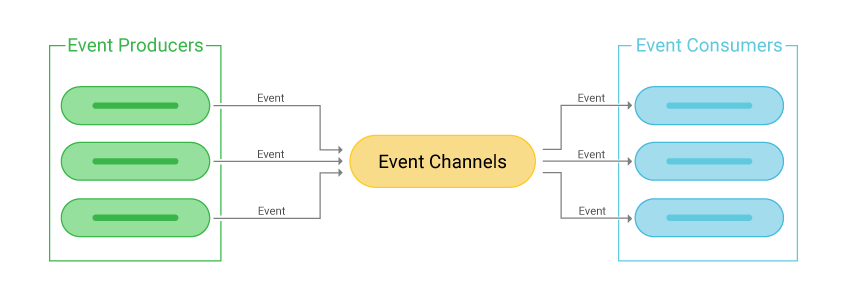
Image Source: ScyllaDB
Statelessness: Serverless functions don't save data or track connections, so they're stateless. Each function is stored in a separate service or database, which enhances scalability and cloud security.
Pay-as-You-Go Pricing: Serverless cloud applications are charged on a pay-as-you-go pricing model, meaning you only have to pay for the exact resources your application consumes. This model makes serverless computing cost-effective for both startups and large businesses.
Benefits of Serverless Computing
Here are the benefits serverless computing offers to businesses looking for a faster route to product delivery.
Scalability
Serverless computing allows applications to scale in response to changed workloads and increased demand, meaning developers don't have to worry about capacity. Since each function runs independently, the system can effectively distribute workloads. This ensures excellent performance in peak times and saves resources in low activity times.
Transparent Costs
There are no upfront infrastructure costs associated with using serverless cloud computing , so it reduces operational expenses and maintenance challenges. With traditional cloud, you usually have to pay for reserved server capacity, whether it's fully utilized or not. In serverless computing, you only pay for the computing time your app consumes. It provides you with cost transparency and cost savings.
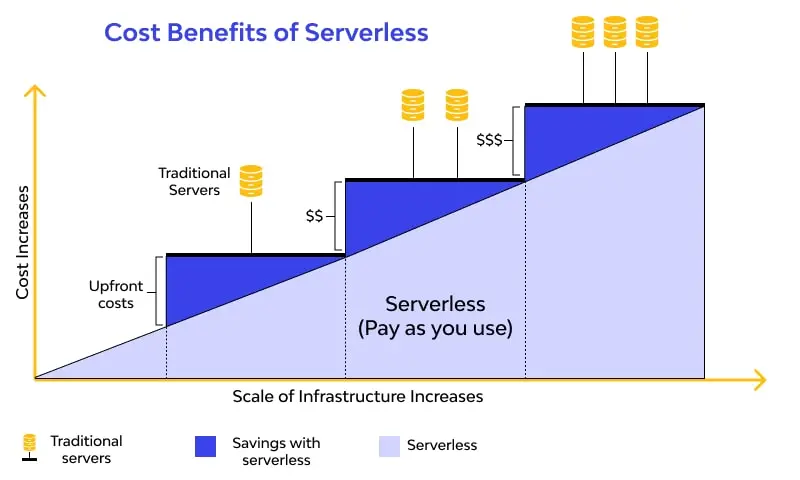
Image Source: Wallarm
Enhanced Productivity
One of the main advantages of serverless computing is that it enables app developers to build serverless applications fast because they don't have to handle server administration. Developers can launch MVP with fewer resources, which can be updated later with additional functionality. When updating the app, developers can upload new features and let the cloud make necessary adjustments.
Faster time-to-market
With serverless computing, cloud application developers need to focus only on writing code, allowing them to quickly build and deploy applications. This results in shorter time-to-market and greater agility for companies.
How to Start Serverless Application Development
Serverless solutions are transforming the way developers build and deploy applications. Here's the process of getting started with serverless application development.
Choose Serverless Platforms and Tools
The best serverless platform helps save costs and supports business success. However, the serverless infrastructure in which you run your application should scale up quickly with no downtime when your app becomes a big hit. Developers have a wide range of AWS, open-source, and third-party serverless solutions to simplify serverless development. Each platform offers unique features and integrations, so you should find the solution that allows you to start or migrate quickly.
Here are some of the best serverless platforms and frameworks.
AWS Lambda is a popular serverless platform of Amazon Web Services (AWS), enabling developers to run code without having to set up or manage servers.
Microsoft Azure Functions is another leading platform for developing and deploying event-based scalable applications.
Google Cloud Functions provides a serverless environment to develop and integrate other cloud services. This platform simplifies the cloud application development process as it scales based on demand and is designed for event-driven workloads.
IBM Cloud Functions offers a FaaS platform that helps developers run code in response to events without the hassle of managing infrastructure.
Chalice is a Python-based framework for creating serverless apps. It enables developers to develop apps that use AWS Lambda quickly.
Claudia.js is a framework that simplifies deploying Node.js microservices to API Gateway and AWS Lambda.
Continuous Integration and Continuous Delivery (CI/CD)
Implement a powerful CI/CD workflow to build and manage serverless applications efficiently. To build a CI/CD workflow, developers can use AWS developer tools such as AWS CodeCommit, CodeBuild, CodePipeline, CodeDeploy, CodeArtifact, and Stackery. These tools automate the test and deployment process, ensuring a faster process.
Monitoring and Logging
Effective logging and monitoring are important for the excellent performance of serverless applications. Developers can track real-time errors using AWS functions like AWS X-Ray, Amazon CloudWatch, and third-party tools such as Lumigo, Dashbird, Datadog, AppDynamics, and New Relic. These solutions help developers quickly spot and address issues in serverless environments.
Use Cases of Serverless Computing
Serverless solutions have revolutionized cloud computing, offering multiple use cases to meet diverse business needs. They enable real-time data processing, scalable backend services for applications, and IoT applications, significantly impacting the cloud computing industry.
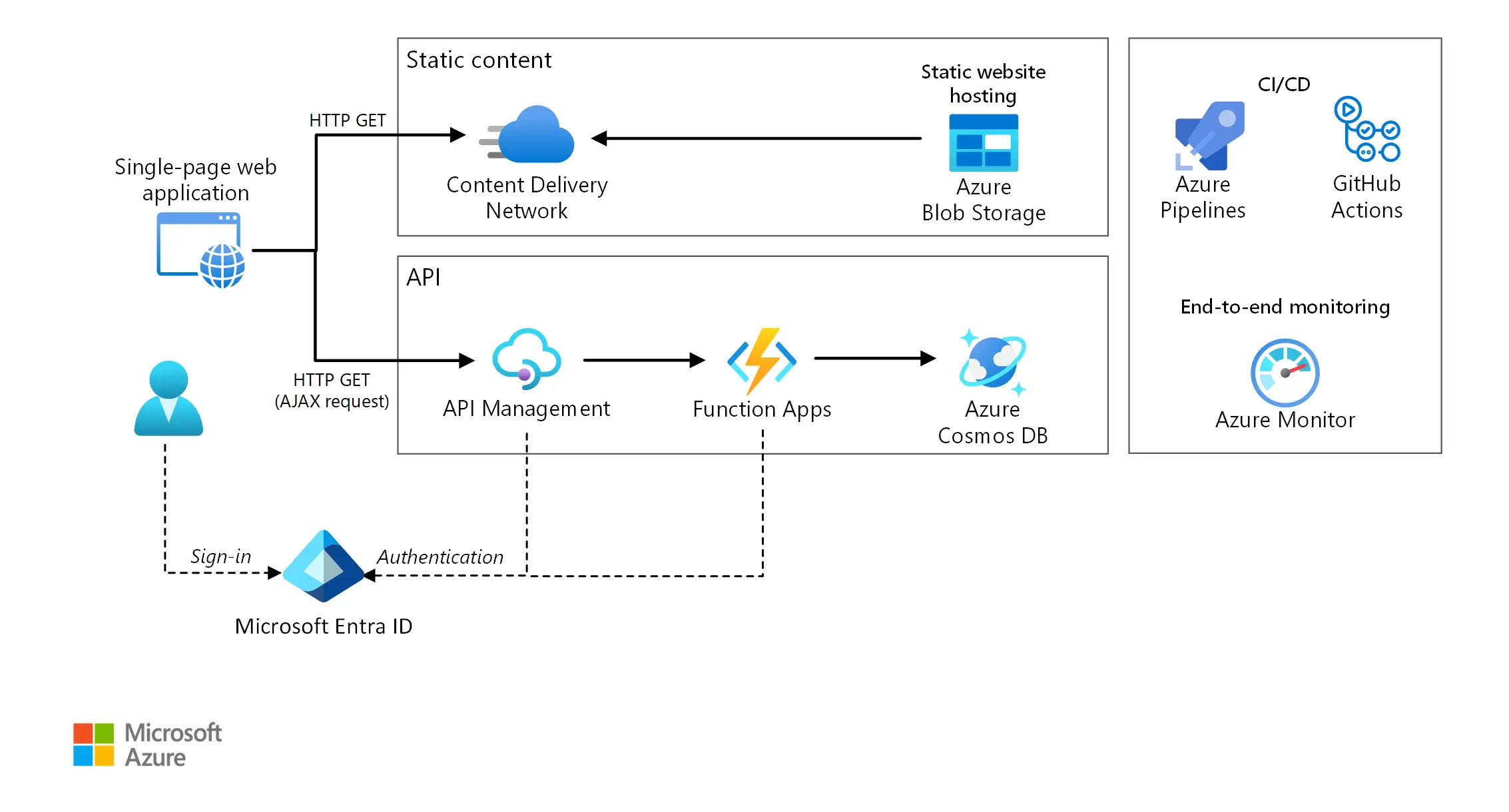
Image Source: Microsoft
Mobile and Web-based Applications
One key application for AWS serverless is developing backend services for mobile and web-based applications, where serverless platforms can handle workloads and scale based on user demand. With AWS Lambda, cloud developers can build scalable APIs and microservices without having to worry about infrastructure management. This allows the development team to focus on innovation rather than server maintenance.
Data Processing
This is another prominent use case for serverless computing. Businesses need to quickly and efficiently process large volumes of data from applications, IoT devices, and marketing sources. Serverless computing systems like AWS Lambda and Amazon Kinesis process and analyze real-time streaming data such as data transformation, image /video analysis, and ETL tasks.
IoT Applications
Serverless computing greatly benefits IoT projects by handling sensor data from IoT devices. It allows IoT devices to interact with cloud services without requiring servers to be running all the time. Additionally, it helps businesses create smart IoT solutions without dealing with traditional infrastructure.
Scheduled Tasks
AWS serverless computing is perfect for automating tasks such as backups, report generation, and data synchronization. By using AWS Lambda, businesses can schedule and manage these tasks without specialized server management, ensuring reliable and cost-effective operations.
Serverless APIs
Building microservices, serverless APIs, or webhooks are other areas where serverless computing excels. Amazon API Gateway helps build, monitor, and secure APIs that can be integrated with AWS services such as AWS Lambda.
Chatbots
Chatbots also rely on serverless technology to provide real-time and personalized responses. Developers can create smart chatbots or virtual assistants by combining AWS Lambda with Amazon Polly and Amazon Lex. These bots enhance customer interactions by delivering personalized experiences.
Challenges and Limitations of Serverless Computing
Although serverless computing offers appealing benefits, it's not without challenges. Let's look at the common challenges and considerations of serverless computing.
Vendor Lock-in

Image Source: CloudFlare
Using a serverless architecture could lead to vendor lock-in because every cloud provider offers a unique set of services and tools, and each tool has unique features and limitations. If you migrate serverless apps from one cloud provider to another, it can be costly, time-consuming, and complex.
Cold Starts
When serverless functions are invoked for the first time or after being inactive for some time, they experience a small delay called "cold start." This latency impacts low-latency and real-time applications.
Resource Constraints
Another challenge of serverless computing is resource limits. Serverless platforms have resource constraints such as memory and CPU, which can increase the complexity of managing the system. Some tasks demand more resources than a serverless function can provide, necessitating alternative solutions.
Limited Execution Time
Most serverless tools, including AWS Lambda, have a maximum execution time limit for functions imposed by cloud providers. Consequently, long-running processes might not be suitable for serverless platforms and need to be handled differently.
The Future of Cloud Application Development with Serverless Computing
As technology keeps evolving, serverless computing is becoming the preferred choice for building and deploying cloud applications. With its ability to scale seamlessly and pay only for the resources used, serverless architecture is revolutionizing cloud application development. Here are some trends that are likely to shape the future of serverless computing.
Hybrid Cloud Architectures: Businesses will adopt hybrid cloud solutions that combine serverless computing with traditional cloud computing. This flexible approach allows organizations to leverage the serverless computing benefits where they are most needed.
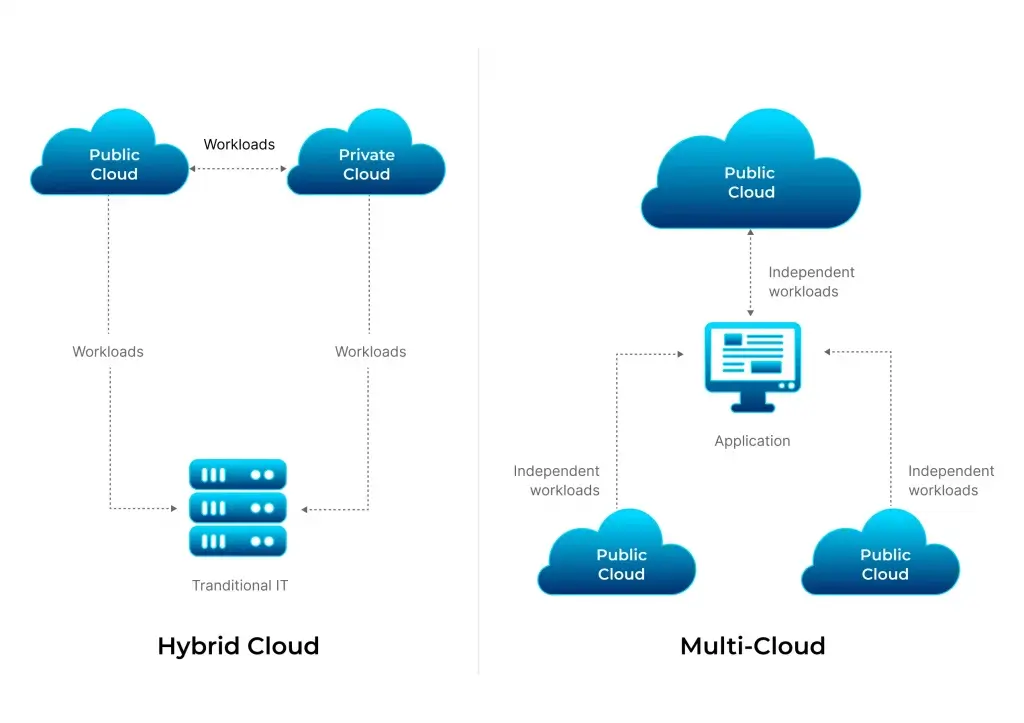
Image Source: mind inventory
Edge Computing Integration: Serverless cloud computing will expand its reach to edge locations which allows bringing computation closer to end-users. Edge computing allows data processing and analysis at the farthest reach of a company's network—the edge. This integration will improve the performance of apps that need prompt responses.
Enhanced Monitoring: With the rise of serverless adoption, there'll be more focus on developing monitoring solutions. These solutions will solve issues in serverless infrastructure, including debugging, security, and performance optimization.
Final Takeaway
Serverless computing is the future of cloud computing for the benefits it offers to cloud providers and users. The benefits of a serverless future go beyond cost savings. This solution allows developers to focus only on code instead of cloud infrastructure. Its ability to improve scalability, reduce operation overhead, and simplify development makes it a promising future for cloud computing and an ideal choice for businesses of all sizes.
Looking into the future, serverless computing seems to play a crucial role in shaping the upcoming generation of cloud apps and opening up new doors for innovation and efficiency. Embracing this revolutionary technology is essential to stay ahead in the rapidly changing market of cloud computing.
If you want to leverage serverless cloud computing, get in touch with ownAI Solutions. As a leading cloud application development company, we can help your business develop top-notch applications and move your applications on Microsoft, Amazon, and Google. Explore ownAI cloud services to scale your business in response to evolving market demands and unlock its real potential.

Let’s discuss about your next AI, Cloud or Digital Transformation.
 AI-Skilled & Agile
 Transparent, Trustworthy &
Vetted team Not tech, but business &
customer first approach





 Turn your idea into MVP in 8-16 weeks