


Prototypes and MVPs are essential parts of digital product development. When you develop software, you need to pass it through multiple phases before releasing the final product. Choosing the right product development method is one of the most crucial things, and the way you validate your idea is another. Developing digital products is always risky. Not testing your ideas during development can result in failure.
According to a research report published by CB Insights, one in three startups fail because they can't meet the market needs. Starting development from prototype and MVP is one of the best ways to reduce the risk of failure. Two crucial strategies that developers use to reduce problems and risks during the digital product development process are prototyping and MVP development. These strategies are used to verify that the product idea aligns with the target audience and stakeholders.
This article will introduce the in-depth concepts of prototype vs MVP, helping you figure out which one is the right choice for your project.
What is a Prototype?
A prototype is the earliest software model that represents a product idea, allowing designers, end users, and stakeholders to visualize its primary features and identify areas of improvement. It shows how your product looks, feels, and works. Digital product development companies make prototypes to identify areas of improvement and user pathways before developing the product.
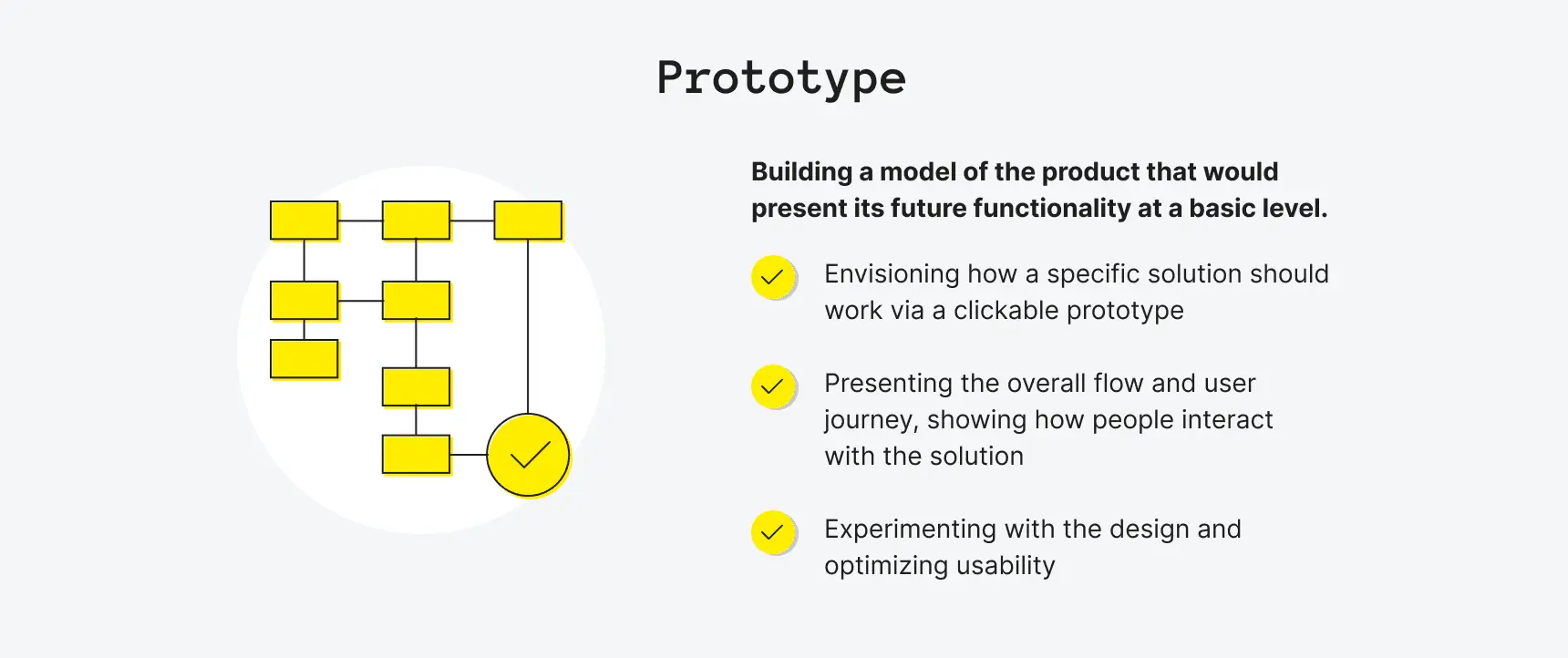
Image Source: Upsilon
How to Build a Prototype
UI/UX designers are mainly responsible for building prototypes. Designers collaborate with developers, UX researchers, engineers, and stakeholders to define the project requirements and turn product ideas into tangible prototypes. They use various prototyping tools and techniques to create visual representations of ideas. Then, the prototype is tested to find gaps and fix them.
Prototypes come in various forms, from low-fidelity to high-fidelity prototypes. Low-fidelity prototypes can be as basic as hand-drawn sketches or wireframes. Moreover, high-fidelity prototypes are clickable and interactive, which allows you to experience the product features.
Benefits of Prototyping
Here are the benefits of implementing a prototype for your digital product development.
Cost and Time-effective
Prototypes are cheaper and easier to build because they do not need a lot of development time. They can be built with lower fidelity and fewer features. Prototyping helps software development teams identify potential flaws before development and fix them early, which reduces unnecessary expenses and prevents rework.
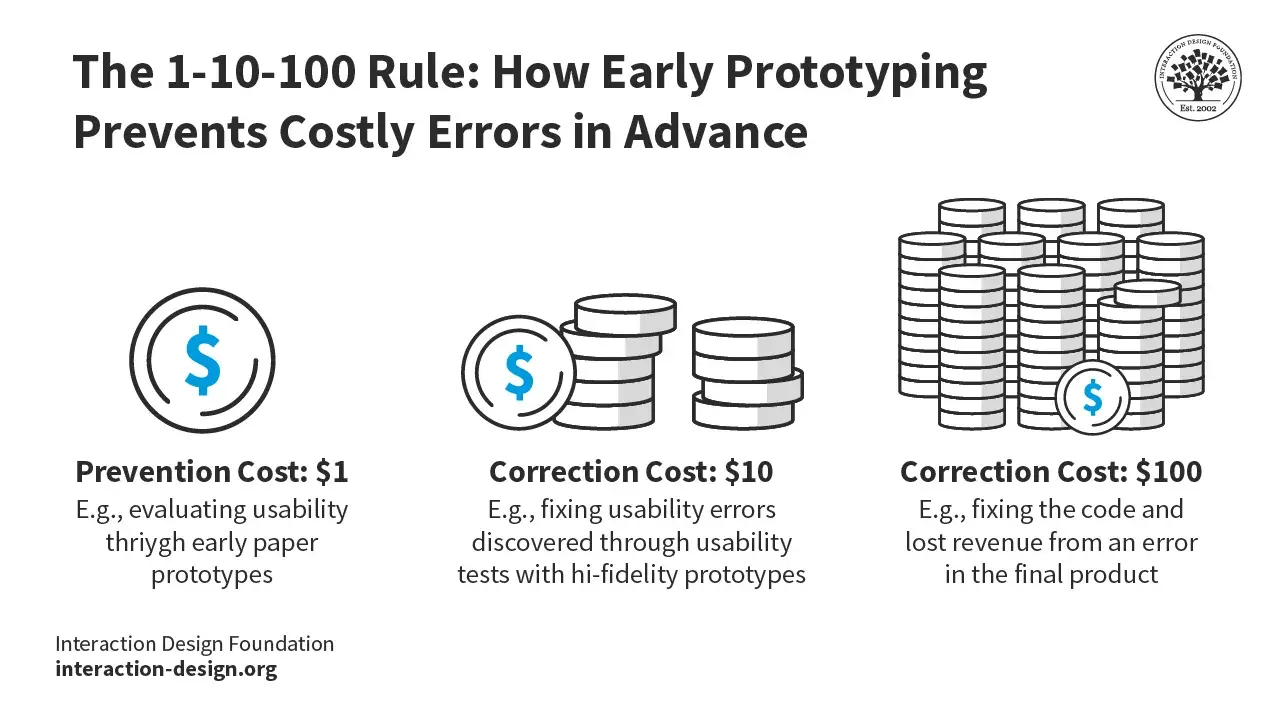
Image Source: https://www.interaction-design.org/literature/topics/prototyping
Low Risk
Prototyping is low risk in terms of cost and time. This allows startups and SMEs to test new product ideas and various designs before investing resources into complete product development.
Easy to Adjust
Prototypes are flexible and simple, which makes them easy to adjust in reaction to user feedback or evolving market conditions. You can improve the product conveniently and closely resonate with users' needs. Also, it is easier to run multiple tests on a prototype until you get the desired result.
Fast Feedback
By testing the prototype, businesses can get immediate feedback from people that helps designers and software developers identify issues, fix them, and move forward with the development process.
What is MVP?
A minimum viable product (MVP) is a simplified version of your product that includes enough core features and functionalities required to attract early users. MVPs are functional products that are developed mainly to test the product with a wide audience and begin getting early rewards. Early user interaction with MVP allows businesses to learn more about their target audience, measure user engagement, gather feedback, and understand their expectations, likes, and dislikes about your product. If your MVP enters the market successfully, you can evolve your MVP into a full-scale product by adding new features periodically.
Examples of MVP
Many well-known applications started as MVPs. One famous example of MVP is AirBnB. They initially built a basic platform that offered accommodation to people who visited San Francisco for a design conference. They tested their business idea on three guests during the conference and now have grown into a powerhouse.
Another example of MVP is Facebook. When it was released, it was a simple social media tool developed to connect with friends. Later, the idea was worth developing. So, the platform slowly added more and more features and became a social media giant.
How to Build a MVP
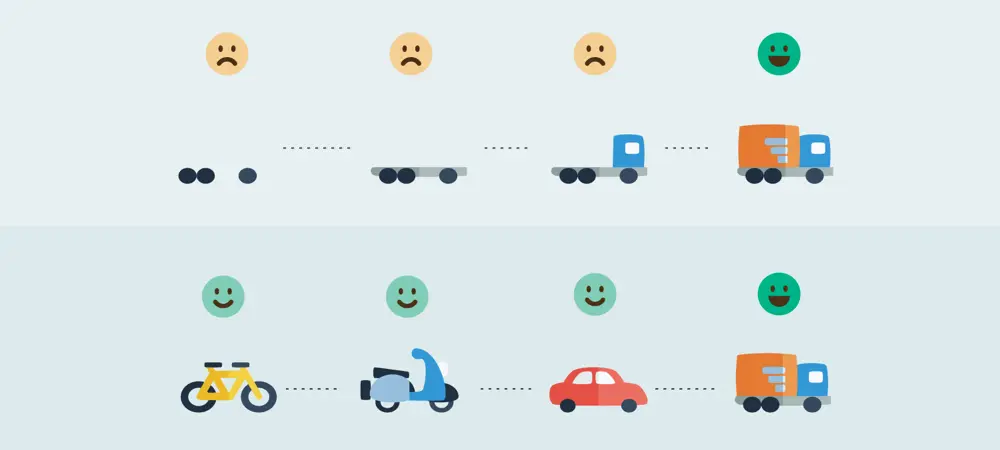
The digital product development team uses a variety of tools and methodologies to build an MVP. They use frameworks like Angular, React, and Vue and programming languages such as HTML, CSS, and Javascript. The software engineering team collaborates with UI/UX designers and stakeholders to specify the MVP's features, functions, and priorities.
The MVP development process includes implementing basic key features, integrating them with required APIs, and deploying the software for testing. The primary difference between prototype and MVP is that MVP is a market-ready app. However, it lacks complex features and is less polished than the final product.
Benefits of MVP
An MVP reduces development costs, provides instant value, and reveals the best direction for further development. Here are the most important benefits of a minimum viable product.
Real User Feedback
You can show an MVP to thousands of unbiased users who will test your product in the real world. With an MVP, you can collect valuable data and feedback that will help determine the most popular features, user pain points, and least intuitive elements. As a result, MVP provides a better understanding of the problem. This real-user feedback can be used to understand the problem better and make required adjustments before the full launch.
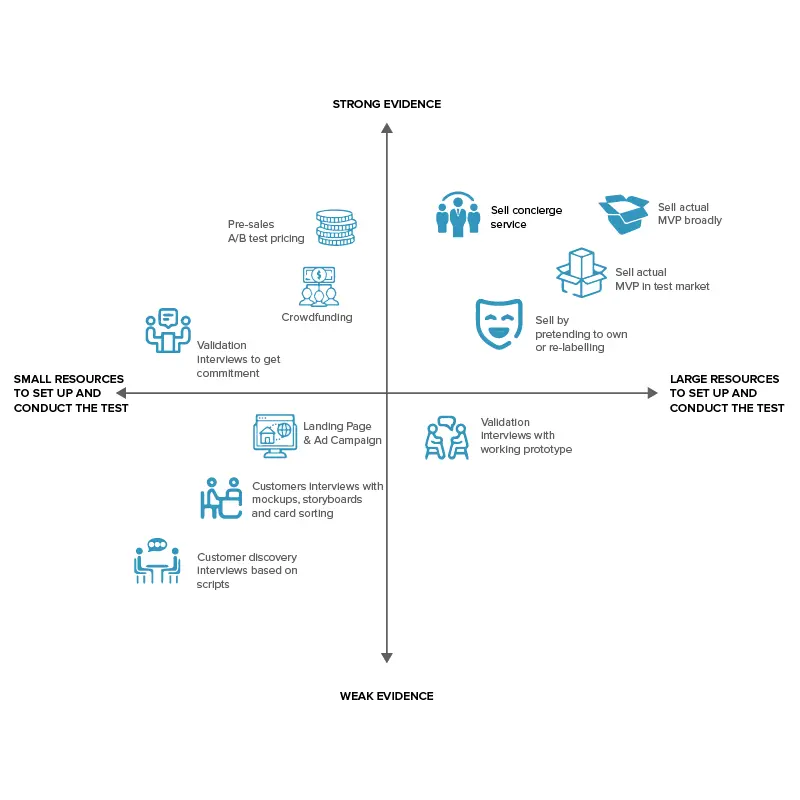
Image Source: Appinventiv
Attract Early Users
Even though MVP is not a fully refined product, you can launch it and attract early users and profitable clients. With MVP, you can not only test the product but also the audience. MVP can be used to attract early users and create their interest in the product. This can build a loyal user base and create a buzz about the product before it fully launches.
Profitability
One of the main benefits of releasing an MVP earlier is that it can give you payback earlier and provide an income stream to finish further development. Positive responses to MVP can be a sign of potential sales.
Prototype Vs. MVP: Similarities & Differences
Prototype and MVP are often confused as they both validate the product viability. Let's discover the similarities and key differences between Prototype and MVP.
Similarities
Prototype and minimum viable product (MVP) are built to validate a product's idea and discover the answer to three crucial questions: Does the product align with the needs of the target audience? Is it profitable? Is it scalable? These three things are key to a successful product.
Both prototypes and MVPs allow the developers to check how feasible the product is and test it in the early stage of the software development cycle. Both strategies save time, reduce risk, and reduce future complexities.
Key Differences
Here are the most significant differences between prototype and MVP.
Purpose
The primary goal of a prototype is to understand the idea's viability and evaluate a product's design, functionality, and usability in its early stages. An MVP is created to test the product's feasibility in the market and collect real-time feedback from first users.
Development Time
MVP takes more time to develop than the prototype. A prototype is a visual representation of product design and user experience. MVP requires detailed planning, coding, designing, and testing to ensure the app is functional. The development time for prototypes ranges from several days for simple designs to a few weeks for intricate prototypes. Furthermore, MVP development can take a few weeks to several months, depending on the product's complexity.
Functionality
A prototype has little or no actual functionality. It does not have full-fledged features. The prototype focuses on user flow, design, and overall experience instead of technical workings. On the other hand, MVP is a fully functional product with necessary yet minimal features. It is functional enough to benefit users and validate the idea of the product even though it is not like a full-scale developed product.
Target Audience
Prototypes are mostly private, so their audience is internal teams, stakeholders, or a particular group of users. It is intended to gather feedback, identify potential problems, and polish the idea.
In contrast, the audience for MVP is broader because MVP is public. It targets early adopters or particular market segments.
Cost
Developing a prototype is less expensive than MVP. Its costs are only associated with design and user experience testing without requiring backend development. However, MVP development needs a budget estimation due to costs related to the development process, testing, and launch.
Prototype vs. MVP: Which One Should You Use
The choice between an MVP and prototype strategy depends on how well you know your target audience, the amount of resources you've, and where you're in the digital product development lifecycle. Choose a prototype if you're still refining your ideas and testing the design flows. It gives you the opportunity to find out what the target group thinks of it.
Moreover, if you're confident in your idea and have the resources to begin full-scale software development, building an MVP is worth considering. Creating an MVP gives you a clear direction for further development. Instead of choosing one approach between prototype and MVP, using both strategies is most recommended before fully developing a digital product.
Start With an MVP When:
- You want to quickly monetize your product
- You want early adopters to help you determine market acceptance
- Your goal is to start as soon as possible at a fair development cost
- You want to reduce the risk of failure
Start With a Prototype When:
- You want to identify design issues and enhance the product's look
- You aim to build a product with excellent user experience and user flow
- You have a tight deadline to present your product idea to investors
- You have limited time and resources to show your product's design to attract investors
- You want to collect early feedback from focus groups
Conclusion
Prototypes and MVPs are useful tools to test your business idea and boost the chances of its success without spending much time or money. They can enhance the value of your product by allowing you to assess market demand, essential concepts, and scope. Choosing the right approach will ensure your product will succeed and you will use resources wisely.
If you need expert guidance or are looking for a top-class software development team with extensive technical expertise to develop your digital product, feel free to reach out to ownAI and talk with our experts.
Let's Convert Your Idea into a Successful and Profitable Product!

Let’s discuss about your next AI, Cloud or Digital Transformation.
 AI-Skilled & Agile
 Transparent, Trustworthy &
Vetted team Not tech, but business &
customer first approach




 Turn your idea into MVP in 8-16 weeks