



Enterprise Application Integration (EAI) is a solution for modern businesses seeking to connect business's internal applications, databases, and services into an integrating framework. This integration helps streamline business operations, increase productivity, and achieve uninterrupted data flow across multiple systems. EAI prevents data from being limited to a single department and ensures that all professionals can utilize it efficiently.
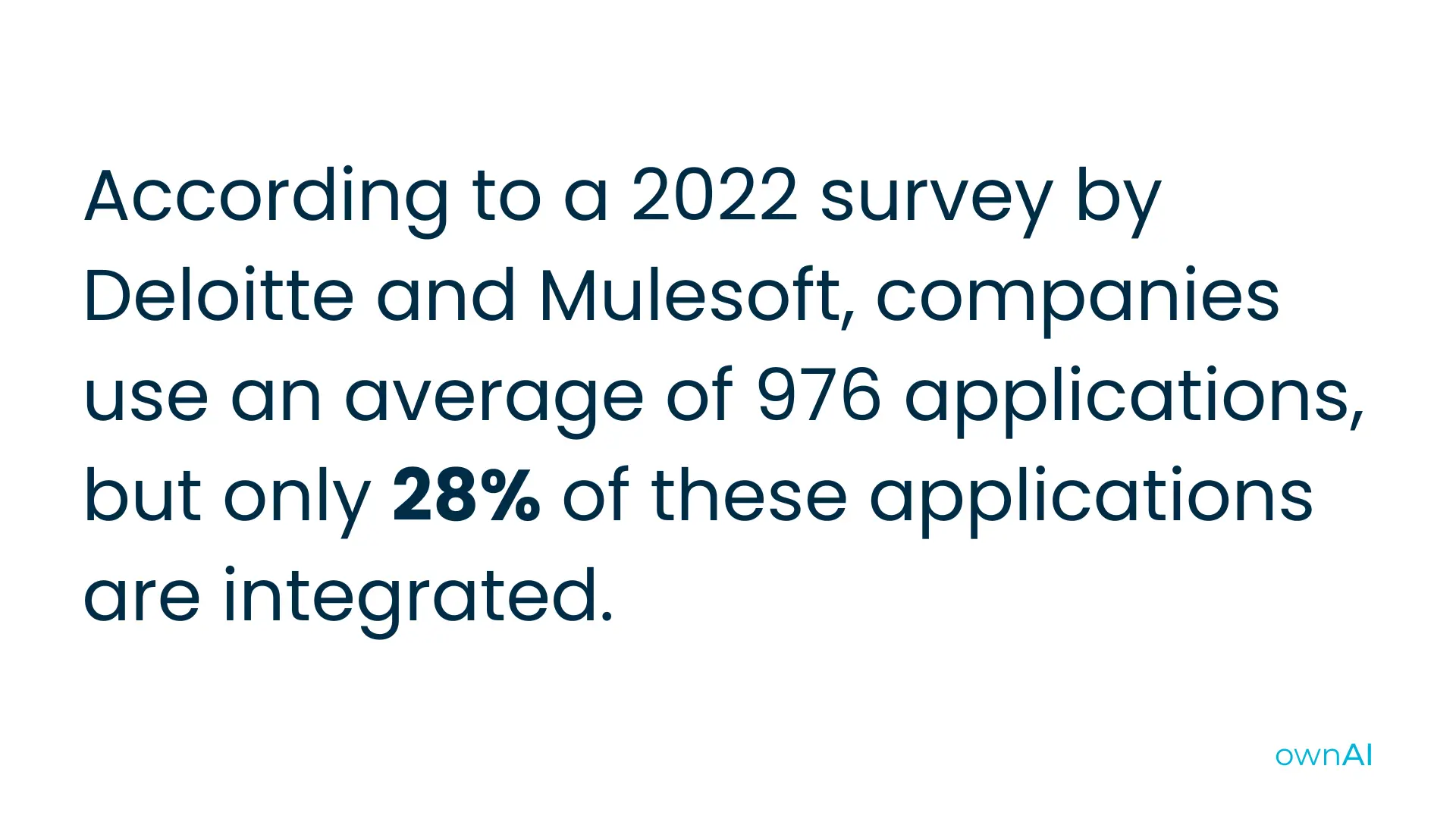
From supply chain management to customer relationship management and employee time tracking, it is challenging to integrate diverse applications to ensure smooth communication. Therefore, businesses are now leveraging enterprise application integration to overcome this challenge and make their operations smoother. As a result, the global market size for Enterprise Application Integration has reached USD 15.28 billion in 2024. It is expected to reach USD 31.61 billion by the end of 2029.
So, if you are running your business using diverse systems, it's time to merge them and streamline processes to cut costs and boost productivity. This post will introduce you to the concept of enterprise application integration, its benefits for businesses, and best practices for integrating business applications. Let's get started.
What is Enterprise Application Integration?
Enterprise Application Integration (EAI) is a strategic process of connecting and integrating multiple dissimilar applications and software systems within an organization to simplify and automate business processes while maintaining data security. This method allows businesses to share and integrate data and processes among multiple enterprise application development services.
EAI platforms work like middleware, bridging the gaps between various systems. The integration platform can be implemented without changing or reprogramming the systems. Instead, it uses robust technologies like service-oriented architecture (SOA), message-oriented middleware (MOM), application programming interfaces (APIs), or enterprise service bus (ESB) to enable systems to work together smoothly.
The importance of EAI is sky-high as it is a must-have tool for improving teamwork, decision-making, and efficiency within a company. Businesses can break down data barriers and make it simple to access data across different systems by weaving together disparate apps. Hence, data can move freely from one system to another, resulting in better-connected business operations. However, the perks of the EAI platform don't end there. Keep reading to discover the benefits of EAI and how it builds a strong business base.
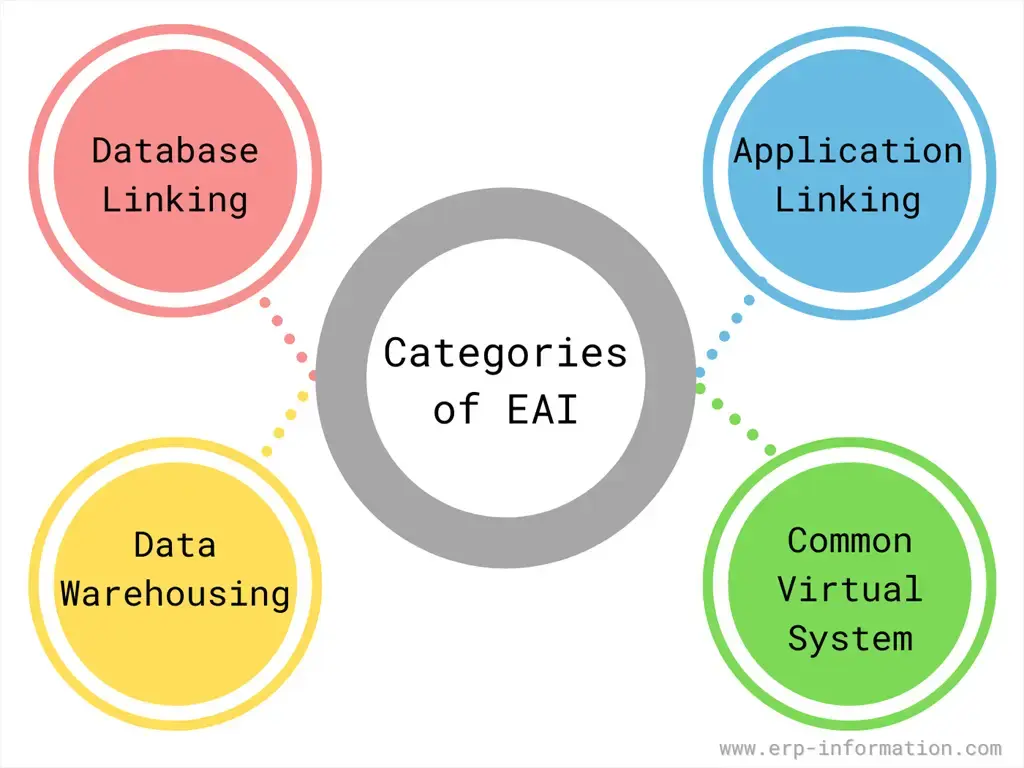
Source: erp-information
Best Practices for Integrating Enterprise Applications Successfully
Best practices help organizations choose the best platform for successful EAI implementation. A lot of great enterprise app development companies offer reliable platforms. Here are the practices for EAI that are worth implementing.
1. Develop a Solid Integration Plan
Knowing exactly what you want to achieve from your integrations can help you make informed decisions. Therefore, it is important to define clear goals and requirements before implementing EAI.
An effective integration plan is the foundation of any EAI project. As a business owner, you need to identify the critical processes that require improvement, understand the integration needs of your firm, consider data integration challenges, and establish goals that align with your business plan.
Have a clear understanding of the IT scene. This includes listing all applications, what they offer, and how they link. Involve relevant stakeholders and other departments in the firm to develop a solid integration plan. With all this information, enterprise development teams can spot which apps need integration and the best way to do it.
Related Post: How to Start Your SaaS Application Development Plan
2. Choose the Right Integration Model
For a successful integration, choose the right EAI approach that best suits your organization's requirements, integration plan, and future growth plans. There are multiple EAI models, including point-to-point integration, enterprise service bus (ESB) integration, and middleware-based integration.
3. Use Pre-built Connectors to Integrate Systems Internally
If you are serious about integrating your apps with an API, you should prioritize those that offer a large number of pre-made connectors. Pre-built connectors are translators in the software world. Enterprise application platforms have many of these connectors. They facilitate communication between different apps even when the apps speak different languages.
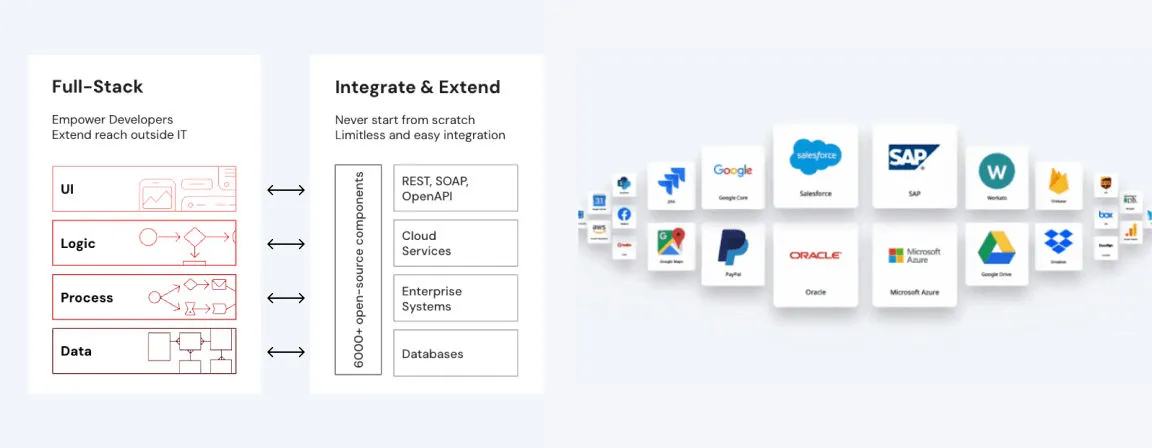
Source: Outsystems
Also, they make integration development faster and easier. Pre-built connectors close the gap between systems and simplify the process of sharing and syncing data. They eliminate the need to create a unique code for each app, which can be time-consuming and expensive.
4. Keep EAI Documents Organized
One important practice for successfully implementing EAI is to keep EAI documents well-sorted. EAI is about combining many different applications, each with its own features and interfaces. So, the documents related to EAI can be numerous and diverse.
As the integrations grow, it can be hard to remember the code you used for each integration, how they should work, and why you created that particular integration. Therefore, you should organize all EAI-related documents for quick access to information. The EAI process includes software developers, project managers, testers, and more. Tidy and clear documentation ensures that every detail is at the team's fingertips, lowering the risk of mistakes.
5. Prioritize Data Integrity and Security Controls
Data security should be a priority in enterprise application integration projects. In the EAI process, data from different apps travel seamlessly between different systems, which shows the integration strength. However, it also provides an opening for cybercriminals to strike.
Implement best practices such as encryption, authorization, data validation, monitoring, and authentication measures to protect any sensitive information during the integration process. Moreover, regular security updates and audits are crucial to maintain protection.
6. Perform Thorough Testing
Comprehensive testing is essential during and after implementing EAI. As we merge various applications, each with unique features, the complexity increases. A small glitch in one app can upset the peace of the whole integrated system. Therefore, it is vital to test the EAI solution rigorously.
Conduct unit testing, end-to-end testing, and integration testing to ensure the data flows securely between apps. Regular monitoring is essential to identify and swiftly fix any emerging issues.
Related Post: SaaS Application Development Company's Best Practices to Ensure Success
Benefits of Enterprise Application Integration
Enterprise application integration helps connect your business digitally. The benefits of EAI are huge as it helps organizations operate smoothly in today's business landscape. Let's explore some of the key benefits of EAI that can help your business gain a competitive edge and open the doors for long-term growth and success.
Minimized IT Complexity and Errors
EAI helps reduce IT complexity and errors by removing the need for multiple point-to-point connectors. Businesses can use a single integration platform that effortlessly integrates all systems instead of creating separate customized integrations for each app. As a result, the system gets easier to manage and operate, which reduces the integration cost.
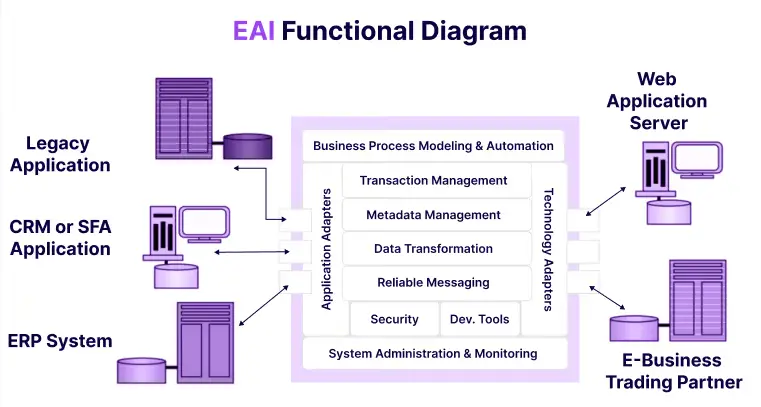
Source: eSparkbiz
EAI solutions remove data discrepancies by integrating data from all systems. This reduces errors, saves time, and maintains data accuracy.
Streamlines Business Processes and Increases Efficiency
EAI makes business processes streamlined and efficient by allowing smooth connectivity across apps. Data synchronization and automation speed up processes and improve operational efficiency. The integration platform makes communication easier between departments and customers, enhances control over data flow, saves team effort, and improves functionality. All this leads to increased organization efficiency required to manage supply chain disruption problems and address evolving market trends.
Improved Customer Experience
In today's competitive market, businesses need to solve customer problems and promptly respond to their feedback. EAI benefits businesses by leveraging smart technologies like AI and Machine Learning to provide excellent customer support and increase engagement.
Moreover, it provides a full customer review by integrating data from several touchpoints. This enables personalized customer interactions, which improves customer satisfaction.
Increased Data Visibility and Accessibility
EAI platform creates a single unified view of the organization's information by combining data from various individual apps. It enables users to access updated data quickly and saves time finding any information. This centralized data access provides real-time insights to decision-makers for making strategic decisions easier. Additionally, it improves collaboration between different departments.
Cost-effective Integration
EAI helps businesses save resources by allowing them to integrate existing enterprise applications with new ones without developing custom-built systems. This eliminates the need for manual data handling and duplicate data entry.
With EAI solutions, companies can utilize the old software investments and reduce integration costs. Besides, they can share historical data with new apps. This leads to lower operating costs.
Final Thoughts
The integration of different applications and software systems within a firm is important to the enterprise's growth. As businesses grow and evolve, the need for efficient data integration is becoming more important. Following the above practices can significantly improve your EAI endeavors. EAI is a powerful solution, enabling businesses to achieve seamless connectivity, optimize operations, and leverage the potential of their disparate applications. Not only does EAI eliminate data silos, but it also boosts productivity levels and promotes informed decision-making.
If you're ready to start your enterprise application integration journey, you can proceed to the next stage with ownAI. ownAI is an experienced Enterprise Software Development Company. We offer business-driven and custom software development services for enterprise companies. Our highly skilled team of software developers, engineers, and project managers uses advanced technologies to integrate your existing applications and develop high-quality enterprise solutions tailored to your business needs.
Contact our experts to discover how ownAI can maximize EAI benefits for your organization!

Let’s discuss about your next AI, Cloud or Digital Transformation.
 AI-Skilled & Agile
 Transparent, Trustworthy &
Vetted team Not tech, but business &
customer first approach





 Turn your idea into MVP in 8-16 weeks