


SaaS application development is not for the faint of heart, and even seasoned managers and engineers might find it difficult to manage product development. There are a lot of factors at play here, so it is important to take a thoughtful approach to each milestone.
We will attempt to put them all together in one place to make it easier for you to make an informed decision on the best way to create, and manage your SaaS application development plan to help your business scale and thrive.
SaaS application development in 7 easy steps
Developing a successful SaaS product involves a combination of strong ideas, hard work, practicality, and a little bit of luck. Just like in jazz performance, you must follow certain principles while developing a SaaS product.
To produce a quality product, your crew must be well-trained and in sync. As a team, they must be able to perform well on their while also being able to adapt to the demands of their teammates. There are many ways to get there.
Step 1: Make sure your concept is sound
Try answering a few questions honestly before starting to design SaaS. First and foremost, is my product needed? You may believe your concept is wonderful, but would a stranger on the street agree?
Do you think your ideal client would agree? Rather than focusing on what you are constructing, think about who you are developing it for!
The first step in developing a new product or service is to talk to potential consumers and learn about their pain points. Gathering input from prospective clients may be done using survey programs like Survay Moneky to name a few.
Ask yourself questions like:
- Is your SaaS application addressing a specific problem?
- Who are your primary customers?
- What distinguishes you from your rivals?
- Identify your product's most distinguishing traits.
Here are some methods which help to build the robust concept.
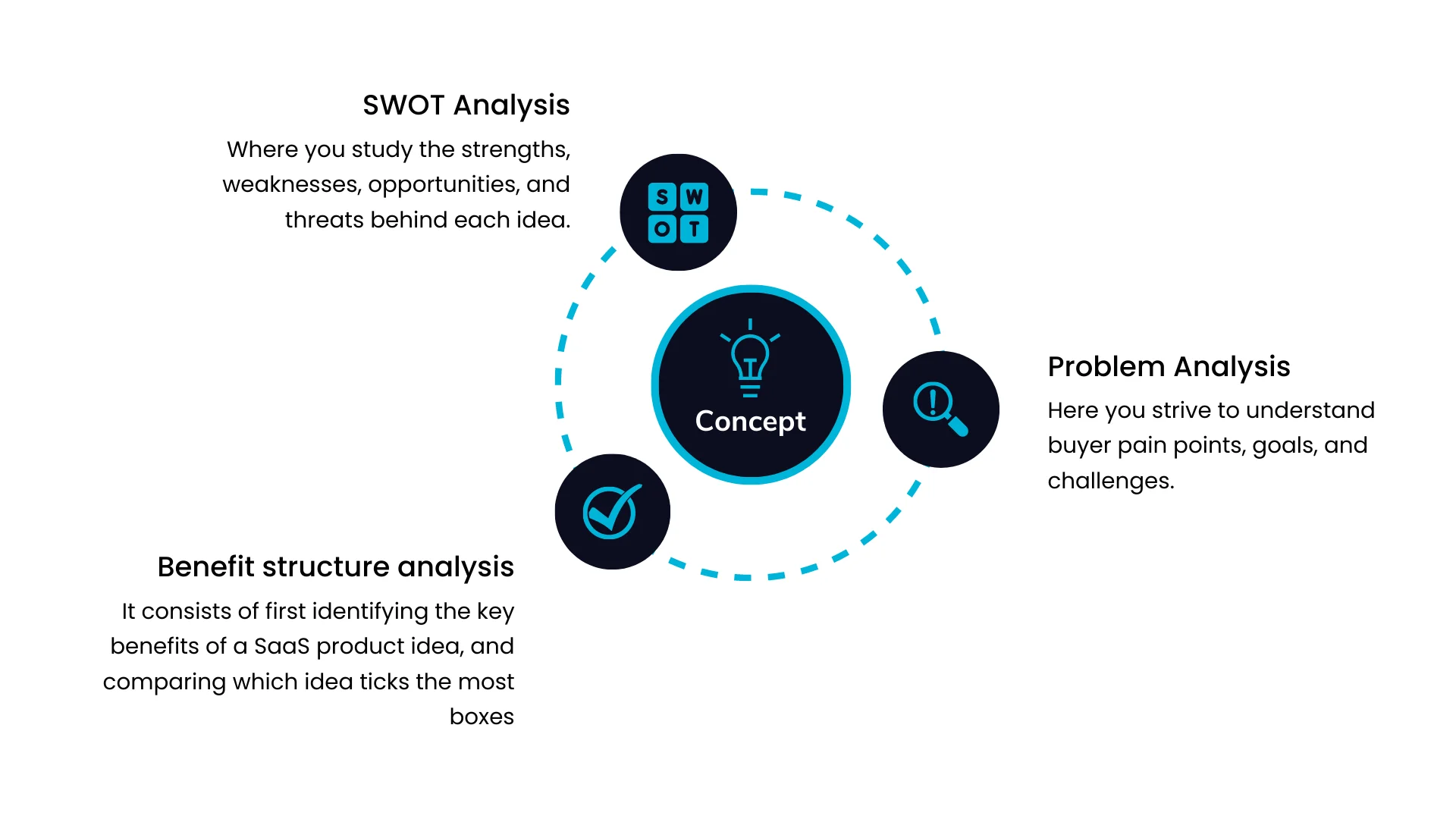
Your concept and vision may be tested early in the SaaS application development process for flaws and inconsistencies. Market research is a terrific approach to putting your concept to the test and learning more about the unmet requirements of your target audience.
Step 2: Talk about the fundamental SaaS needs
Having a clear strategy for security and privacy, customization and integration possibilities, as well as scalability, is the cornerstone for establishing a sustainable SaaS solution.
When it comes to developing high-quality software, security was frequently considered to be an afterthought rather than a core component. Consumers have come to demand the safety and security of their personal information, and this expectation is only growing as new laws and regulations are enacted.
Depending on the demands of your customers and clients, explore how your software may need to be modified or connected with other complementing solutions to meet their needs.
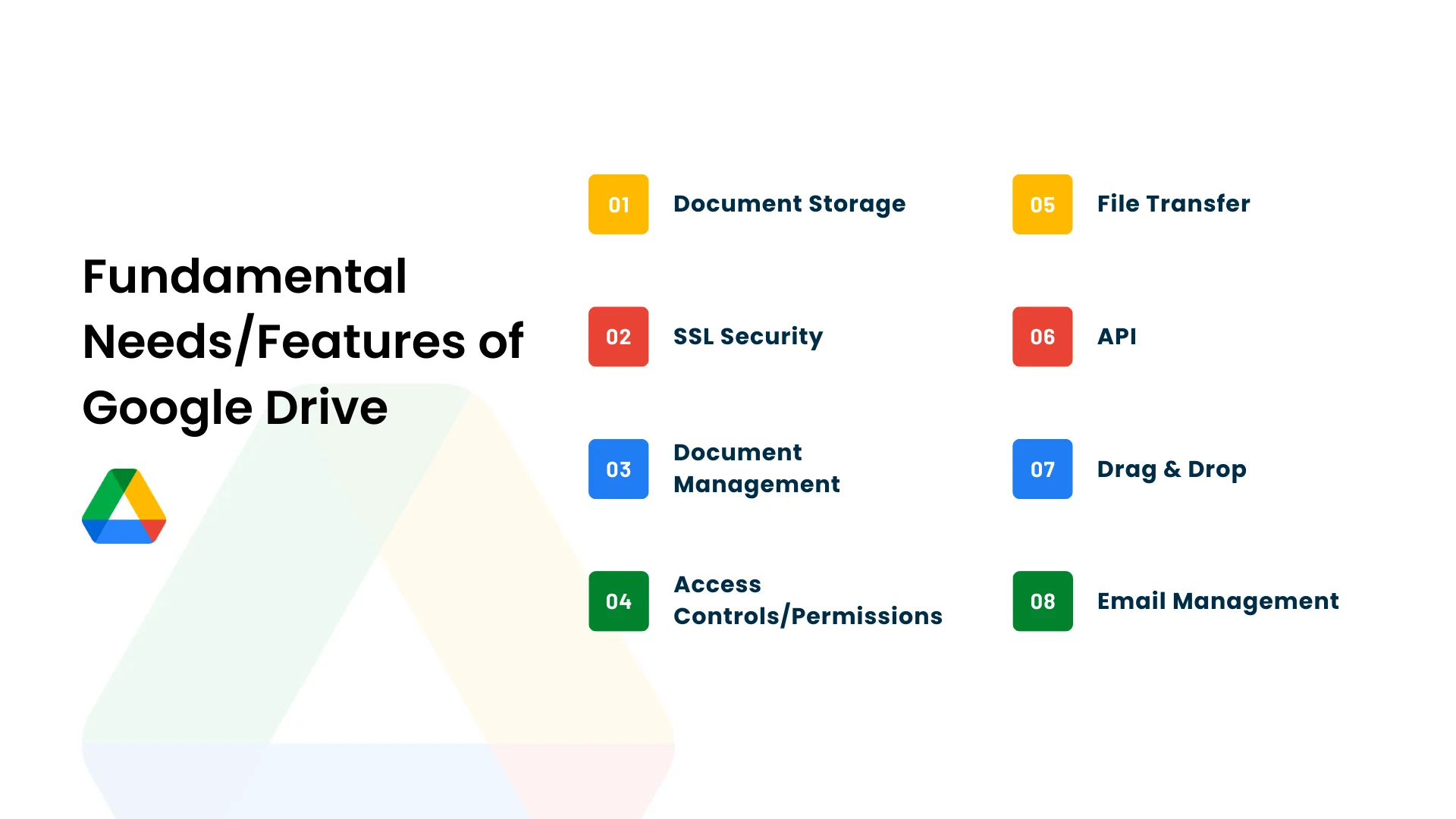
Let us understand this by looking at a real-life example. Here are the fundamental needs of google drive…
Finally, you need to ensure that your software solution is ready to meet the demands of an ever-growing number of customers.
Step 3: Define the minimal viable product (MVP)
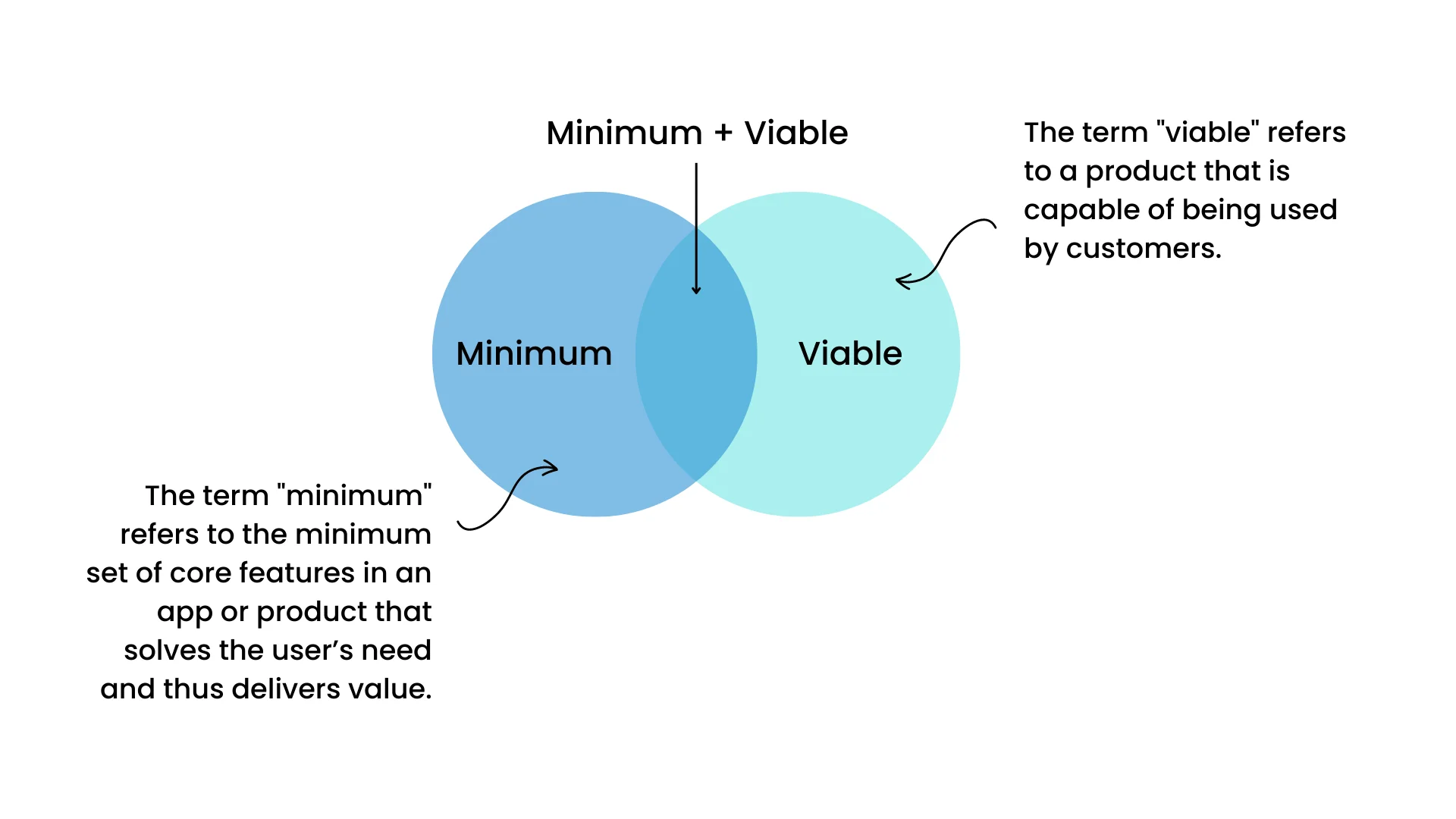
It refers to the essential elements that offer instant benefit for your user while requiring minimum effort on both your part and your user's part. Your product team's priorities for the MVP should be made clear via feature prioritization. What your early adopters will obtain and test is what we term the "minimum viable product."
The definition is one approach to getting a better idea of what your minimal viable product should look like.
- Personality type(s)
- They need to take to address their issue using your software
- Solution(s) to the issue(s)
As a result, you will have a better idea of what should go into your MVP.
Step 4: Technical specifications
Decide how your SaaS application development plan takes place. This is when you need to contact experts who can help you determine which programming language, platforms, software, and tools are needed to construct your SaaS solution. With both the MVP and long-term goals in mind, this choice should be taken now.
Step 5: Hire a SaaS application development team
If you are developing a piece of software, the team will be determined by the nature of the project. This section includes a more comprehensive checklist since identifying and selecting the best SaaS application development team is a multi-step procedure in and of itself.
Step 6: Calculate your finances
By now, you should have a good estimate of how much it will cost for SaaS application development, based on the preceding processes. Remember to factor in the time it will take to create the product. A SaaS product may take up to 6 months to develop, however, most SaaS MVPs are built in 3 months or less.
Do not neglect to account for the possibility of further financial strains and setbacks when deciding on budget sources and budget distribution. As a result, you will have to hunt for more funds for your project, which might create unnecessary delays.
Step 7: Organize the process
SaaS application development demands a lot of flexibility, fine-tuning, and ongoing communication, so finding the proper tools to keep your workflow on track is quite vital. All of these features may be found in different tools, but it is strongly advised that you go with one that does all you need it to do in one go.
Conclusion
SaaS application development might seem like a new endeavor, no matter how well-versed you are in the field. Despite our best efforts, do not forget that this procedure will eventually demand a great deal of ingenuity and improvisation to succeed. Open your SaaS product to fresh ideas, team participation, and challenges, and leverage them for growth.
Start managing your SaaS application development plan from beginning to finish with your ownAI Solutions to ease the process.

Let’s discuss about your next AI, Cloud or Digital Transformation.
 AI-Skilled & Agile
 Transparent, Trustworthy &
Vetted team Not tech, but business &
customer first approach





 Turn your idea into MVP in 8-16 weeks