


AI is becoming a core business capability. Companies use it to automate operations, analyze large volumes of data, improve customer experiences, and unlock new revenue opportunities.
In fact, a recent study shows that around 78% of companies globally have adopted AI in at least one business function.
But adopting AI successfully is not as simple as it seems.
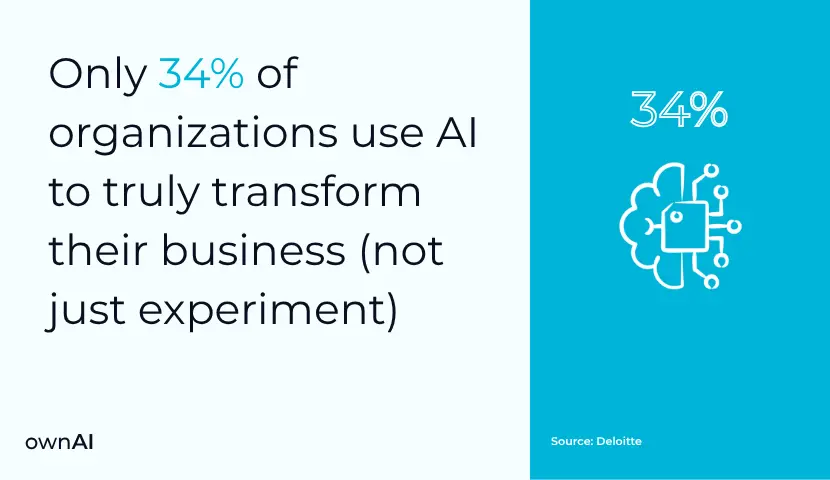
Many companies rush into AI development without a clear plan. They experiment with tools, launch pilots, or invest in technologies that never scale. This ended up wasting time, money, and effort.
The reason for failure is not the technology. It is the lack of a roadmap that connects AI initiatives with real business goals.
This is where an AI strategy development consulting partner plays a crucial role.
These AI experts help organizations identify high-impact AI opportunities, assess data readiness, prioritize use cases, and create a practical roadmap for implementation.
Instead of scattered experiments, businesses get a structured plan that focuses on measurable outcomes such as efficiency, revenue growth, and better decision-making.
Now the question is - how to choose an AI strategy development consulting partner?
We've got you covered!
In this guide, you will learn how to choose an AI strategy development consulting partner, key qualities to evaluate, and what mistakes to avoid so your AI investments lead to meaningful business results.
By the end of this guide, you'll clearly understand how to choose an AI strategy development consulting partner for your business.
So, without any further delay, let's dive in!
What an AI Strategy Development Consultant Really Does?
An AI strategy consultant helps you move from random AI ideas to a clear, result-driven plan. They connect business goals with the right AI opportunities and make sure everything is practical, scalable, and measurable.
Here are the most important things they actually do:
1. Turn Business Goals into AI Opportunities
They study your business, workflows, and challenges to find where AI can create real impact. Not every problem needs AI, so they focus only on high-value use cases that can drive revenue, reduce costs, or improve efficiency.
2. Assess Your AI Readiness
Before anything starts, they evaluate your data, systems, and team capabilities. This helps answer a critical question. Are you actually ready for AI, or do you need to fix gaps first?
3. Build a Clear AI Roadmap
They create a step-by-step plan that shows what to build, when to build it, and how to scale it. This includes timelines, priorities, and clear success metrics so your AI efforts stay focused.
4. Define Data and Technology Strategy
AI runs on data, so they assess data quality, structure, and accessibility. They also guide you on the right tools, platforms, and whether to build custom solutions or use existing ones.
5. Validate Ideas with Proof of Concept
Instead of jumping into full development, they test ideas through small pilots. This helps you see what works before investing heavily, reducing risk and avoiding costly mistakes.
6. Guide Implementation and Integration
They ensure AI solutions fit into your existing systems and workflows. The focus is not just building models, but making sure they actually work in real business environments.
7. Ensure Adoption, Governance, and Results
They help your team adapt to AI through training and change management. At the same time, they set up governance for security, compliance, and ethical use. After deployment, they track performance and measure ROI to ensure real business outcomes.
8 Signs Your Business Needs an AI Strategy Consulting Partner
Many businesses feel they “should” invest in AI, but are unsure if they actually need expert help yet. The reality is simple. If your AI efforts feel unclear, slow, or disconnected from results, you likely need a AI strategy development partner.
Here are the most critical signs:
1. You Have Data but Cannot Turn It into Decisions
Your business collects data from CRM, analytics tools, or operations, but it does not lead to clear insights. Teams still rely on guesswork instead of data-driven decisions. This usually means your data is not structured or used correctly for AI.
2. AI Experiments Never Reach Production
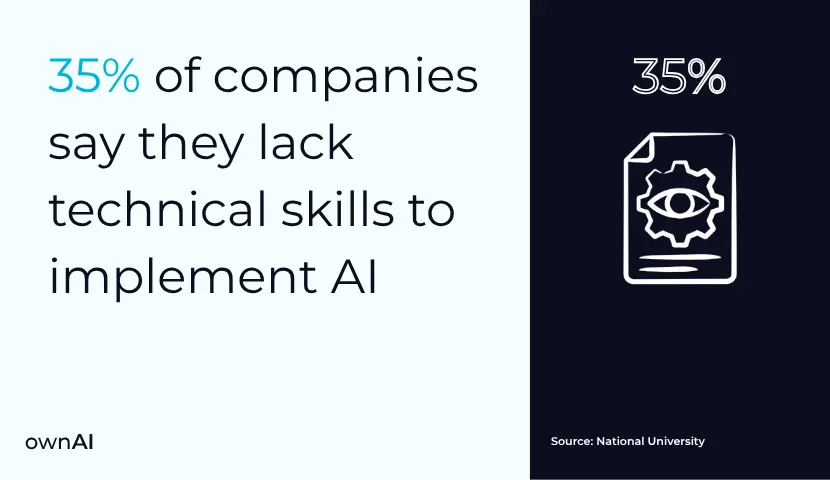
Your team is trying AI tools or running small pilots, but nothing scales. Projects stay in testing mode without delivering measurable ROI. This is one of the most common signs of a missing strategy and poor execution planning.
3. No Clear Direction or AI Roadmap
You know AI is important, but there is no clear plan. No defined use cases, no priorities, and no timeline. Without a roadmap, AI efforts become scattered and fail to create real business impact.
4. Your Team Lacks AI Strategy and Execution Expertise
Your internal team may be strong in operations or tech, but lacks deep expertise in AI, machine learning, or data strategy. This leads to wrong tool choices, poor planning, and missed opportunities.
5. Your Data Is Fragmented and Hard to Use
Data is spread across multiple systems and departments. There is no unified view, making automation and AI integration difficult. Without clean and connected data, even the best AI models will fail.
6. Too Much Manual Work Slows Your Business
Your teams spend hours on repetitive tasks like data entry, reporting, or basic customer handling. You know automation is possible, but you are unsure where to start or what to automate first.
7. Competitors Are Gaining an Advantage with AI
You start seeing competitors moving faster, offering better personalization, faster service, or more efficient operations. If you delay, the gap will only increase.
8. You Are Concerned About Risk, Compliance, or AI Decisions
If your business handles sensitive data or operates in a regulated industry, AI introduces risks. Without proper governance, you face issues related to privacy, bias, or compliance.
If you relate to even a few of these, it is a strong signal that you need clarity on how to choose an AI strategy development consulting partner.
10 Key Criteria for Choosing the Best AI Strategy Development Consulting Partner
Choosing the right AI strategy partner is not a surface-level decision. It directly impacts whether your AI investment creates real business value or becomes another failed initiative.
Here are the 10 most critical factors, explained in a way that helps you actually evaluate and choose the right partner with confidence:
1. Business Understanding, Not Just Technical Skills
The first thing you should evaluate is whether the partner truly understands business, not just technology.
Many firms are good at building models. But very few understand your business.
A strong partner will talk about revenue, cost, operations, and growth, not just algorithms. They should clearly explain how AI will impact your business outcomes.
They will ask questions like:
- Where are you losing time or money?
- Which processes are slow or manual?
- Where are decisions unclear or delayed?
If a company jumps directly into tools, models, or solutions without understanding your business context, they are not thinking strategically. That often leads to solutions that look good technically but fail in real operations.
2. Proven Experience in Your Industry
AI is not the same across industries. What works in retail will fail in healthcare or finance.
You need a partner who understands your industry challenges, regulations, and data realities.
A good consulting partner understands your industry deeply. They know what works, what fails, and what risks exist. This helps them avoid common mistakes and recommend solutions that are practical from day one.
You should not rely on generic claims. Always ask for:
- Real case studies
- Similar projects
- Measurable outcomes
If they cannot answer clearly, you will end up funding their learning process.
3. Clear and Structured Methodology
A reliable AI strategy partner always follows a structured process. They should be able to clearly explain how they move from idea to execution.
They should clearly explain:
- How they assess your current state
- How they identify and prioritize use cases
- How they evaluate data readiness
- How they build the roadmap
- How they define success
This is important because AI projects fail when there is no structure.
A structured approach ensures:
- No guesswork
- No missed steps
- Better decision-making
If their process is unclear, your project will be too.
4. Ability to Bridge Strategy with Real Execution
This is where most businesses fail.
Some firms deliver detailed strategies but do not help you implement them. Others jump into buildings without a proper strategy. Both approaches fail in the long run.
You need a partner who can connect both sides. They should ensure that whatever they recommend is technically feasible, financially viable, and operationally scalable.
They should also be able to work with your internal teams or external vendors to move from planning to real deployment.
If a strategy cannot be executed, it has no value.
Always ask how they move from roadmap to production. That answer reveals everything about their capability.
5. Strong Data Strategy and Infrastructure Thinking
AI is only as good as your data. If your data is not ready, your AI won’t deliver the expected outcome.
A good consulting partner will spend significant time evaluating your data before recommending anything. They will:
- Assess data quality and availability
- Identify gaps and inconsistencies
- Help unify fragmented data
- Design scalable data systems
They should also help you unify data from different systems, clean and structure it, and design a scalable data architecture that supports AI.
If a partner treats data as a secondary step, it is a serious warning sign. Most AI failures happen because of poor data, not poor models.
6. Clear Focus on Measurable ROI and Business Value
AI should always be tied to measurable outcomes. Without that, it becomes an expensive experiment.
A strong partner will help you define clear success metrics from the beginning. They will estimate potential impact, prioritize use cases based on value, and help you understand expected returns.
They should be able to answer questions like:
- What value will this deliver?
- How long will it take?
- What will it cost?
They should also help you track performance after implementation to ensure that the expected results are achieved.
Avoid partners who make vague promises or focus only on innovation without discussing business impact.
7. End-to-End Capability with Clear Accountability
AI strategy is not a one-time activity. It involves multiple stages, from planning to execution to optimization.
The right partner should be able to support the entire journey. This includes strategy development, solution design, integration, deployment, and ongoing improvement.
You should have clarity on who is responsible for each stage. There should be no gaps between strategy and execution.
If multiple vendors are involved without clear ownership, projects often fail due to coordination issues.
A strong partner ensures continuity and responsibility from start to finish.
8. Strong Communication and Collaboration
AI strategy affects multiple teams across your organization.
Your partner should be able to communicate clearly across all levels. They must be able to:
- Explain complex ideas in simple language
- Work with leadership and technical teams
- Collaborate with your internal stakeholders
- Keep communication clear and transparent
They should also work collaboratively with your internal teams, not operate in isolation.
Clear communication builds trust, speeds up decisions, and ensures smoother execution.
You can assess this early. Notice how they communicate during discussions. If they are unclear or overly technical, it will become a problem later.
9. Responsible AI, Security, and Compliance Focus
AI decisions can impact customers, operations, and compliance.
A strong partner will take this seriously from the beginning.
They should address:
- Data privacy
- Security risks
- Bias in models
- Regulatory compliance
This is especially important in industries like healthcare, finance, and insurance.
They should have clear frameworks and practices to manage these risks. If they ignore this aspect, it can lead to serious legal and reputational issues.
10. Long-Term Thinking and Scalability
AI is not a one-time project. It evolves continuously as your business grows and technology advances.
The right partner will think beyond initial implementation. They will design systems that can scale, adapt, and improve over time.
They should also stay updated with new trends such as generative AI, LLMs, and automation systems, and help you adopt them when relevant.
They should offer ongoing support, optimization, and strategic guidance.
If a partner focuses only on delivery and not on long-term value, you will have to restart again later.
By considering these factors, you can confidently understand how to choose an AI strategy development consulting partner that delivers real, measurable results.
How to Find the Right AI Strategy Development Consulting Partner?
Finding the right AI strategy partner is not about who looks impressive. It is about who can actually take you from confusion to execution.
Most companies fail here because they evaluate superficially.
Here is a step-by-step process to find the right AI strategy development consulting partner:
Step 1: Define Your Goals, Problems, and Current Readiness
Start by getting clear internally before speaking to any AI consultant.
Identify:
The top business problems you want to solve
Where AI can create real impact
What data do you already have, and its quality
Your budget, timelines, and internal limitations
Be specific. Instead of saying “we want to use AI,” define 2–3 clear use cases like improving customer support, reducing manual work, or making faster decisions.
This clarity helps you quickly recognize which partners actually understand your needs and which ones are just pitching generic solutions.
Step 2: Shortlist Partners Based on Proof, Not Hype
Now filter the market carefully.
Ignore:
Big brand names
Fancy websites
Generic service claims
Focus on:
Case studies with real, measurable results
Experience in solving similar problems
The depth of their thinking and approach
Industry-relevant experience
Look for how they explain their work. Strong partners talk about challenges, decisions, and outcomes. Weak ones talk only about capabilities.
Step 3: Go Deep and Evaluate How They Think
Move beyond basic calls and have real conversations.
Set up discovery sessions or workshops and observe:
How do they understand your business
The kind of questions they ask
Whether they break problems into structured steps
If they challenge your thinking, where needed
A good partner will spend more time understanding than pitching. They will focus on clarity before suggesting solutions.
This step gives you a clear picture of how they will actually work with you and whether they truly understand how to choose an AI strategy development consulting partner.
Step 4: Compare Proposals Based on Depth and Fit
When proposals come in, do not rush to compare prices.
Look at:
How well they understood your problem
Whether the roadmap is practical and realistic
If the solution is tailored to your business
Clarity in deliverables, timelines, and outcomes
Also, check if they define success clearly or keep things vague.
The best proposal is not the cheapest. It is the one that feels most grounded, structured, and aligned with your reality.
Step 5: Validate Their Technical, Data, and Execution Capability
Now go deeper into their actual ability to deliver.
Check if they can:
Work with real, messy business data
Build systems that scale with your growth.
Integrate with your existing tools and infrastructure.
Manage the full lifecycle from development to monitoring
Also assess:
Their approach to data security and compliance
How they handle model performance over time
Their understanding of responsible AI practices
You want a partner who can move from idea to production without breaking along the way.
Step 6: Choose a Partner You Can Work With Long Term
Finally, look beyond capability and evaluate collaboration.
Ask yourself:
Do they communicate clearly and simply?
Are they transparent about risks and limitations?
Do they involve your team or work in isolation?
Do they focus on building your capability or creating dependency?
Also confirm:
Ongoing support after deployment
Continuous improvement and scaling
Willingness to adapt as your needs evolve
The right partner should feel like an extension of your team, not just a service provider.
That’s it! Following these six steps helps you understand how to choose an AI strategy development consulting partner for your business.
Benefits of Hiring an AI Strategy Development Consulting Partner
Here are six major benefits of hiring an AI strategy development consulting partner:
Access to the Right Expertise Without Hiring Challenges: You get a full team of specialists across AI, data, and strategy without the time and cost of hiring internally. This ensures you start with the right expertise instead of learning through mistakes.
Faster Execution Without Trial and Error: Consultants use proven methods and real experience to avoid common pitfalls. This helps you move from idea to implementation quickly without wasting time on failed experiments.
Clear Focus on Business Value and ROI: Every AI initiative is aligned with business goals like cost savings or revenue growth. This ensures your investment is focused on measurable results, not just innovation.
Strong Data Foundation and Risk Control: Your data is properly structured, secured, and prepared for AI use. This reduces risks related to poor performance, compliance issues, and unreliable outcomes.
Scalable and Customized Solutions That Fit Your Business: Solutions are tailored to your workflows and designed to grow with your business. This helps you avoid rebuilding systems as your needs evolve.
Ongoing Support, Optimization, and Team Enablement: You get continuous improvement, monitoring, and team training after deployment. This ensures your AI systems keep delivering value over time instead of becoming outdated, which is exactly why learning how to choose an AI strategy development consulting partner matters.
5 Common Mistakes to Avoid When Choosing an AI Strategy Development Consulting Partner
Choosing the wrong AI partner can waste time, budget, and effort. Here are the five most serious mistakes to avoid, along with what you should do instead:
1. Rushing the Decision Without Proper Evaluation
Many businesses feel pressure to “start AI quickly” and end up choosing the first decent-looking partner. This usually leads to poor alignment, unrealistic expectations, and rework later.
What to do: Take a structured approach. Define clear criteria, involve the right stakeholders, and evaluate multiple partners before making a decision.
2. Getting Impressed by Hype Instead of Real Capability
Fancy presentations, big claims, and trending AI buzzwords can easily distract you. But these rarely translate into real business impact if the partner does not understand your actual problems.
What to do: Focus on substance. Choose a partner who asks the right questions, understands your business, and talks about outcomes, not just tools.
3. Choosing Based on Price Instead of Long-Term Value
Going with the lowest-cost option often leads to poor quality work, limited scalability, and higher costs in the long run when things need to be fixed or rebuilt.
What to do: Evaluate overall value. Look at expertise, execution capability, and long-term support. The right partner will save you more than they cost.
4. Ignoring Data Readiness and System Complexity
Many companies assume their data is ready for AI when it is not. This leads to delays, poor results, and frustration during implementation.
What to do: Ensure your partner evaluates your data early. They should check data quality, structure, availability, and how it connects with your existing systems.
5. No Clear Scope, Ownership, or Long-Term Support
Some partners deliver a strategy or prototype and disappear. Without clear deliverables and ongoing support, projects lose direction and fail to scale.
What to do: Define everything upfront. Set clear goals, timelines, and responsibilities. Choose a partner who stays involved after deployment and helps you improve continuously.
Imp Questions to Ask Before Hiring an AI Strategy Development Consulting Partner
Asking the right questions can quickly separate real experts from those just selling AI. Here are the 10 most important questions you should ask before making a decision:
- Can you share case studies with measurable results?
- Do you have experience in our industry?
- How do you assess data readiness and quality?
- What is your process from strategy to deployment?
- How will AI integrate with our existing systems?
- Do you build custom solutions or use pre-built tools?
- Who owns the final AI solution, data, and code?
- What post-deployment support do you provide?
- How do you ensure data security, ethics, and compliance?
- What is your pricing model and what does it include?
Some Red Flags to Watch Out For
Try to avoid partners who:
- Promise quick results without proof
- Have no real case studies
- Offer generic solutions
- Focus only on tools, not business goals
- Lack of industry experience
- Cannot explain things clearly
- Ignore data security and ethics
These usually lead to poor results and wasted money.
How Much Does an AI Strategy Development Consulting Company Charge?
AI strategy consulting costs can vary based on complexity, scope, and expertise.
Most consulting firms typically charge between $100 to $350 per hour, while a complete strategy project can range from $5,000 to $50,000 or more.
Premium consulting firms or highly specialized experts may charge significantly higher, especially for advanced strategy work and large-scale planning.
Why is ownAI the Best AI Strategy Development Consulting Company?
ownAI is built for one thing. Turning AI into real business results.
You work with a team that has already done it before, so you skip trial and error and move faster with confidence. Everything starts from your business goals, not tools, so every decision drives real impact.
Here is what makes ownAI different:
- Experienced team that has delivered real AI solutions
- Business-first approach focused on outcomes, not hype
- End-to-end ownership from strategy to deployment
- Clear process with full transparency at every step
- Scalable solutions that grow with your business
- Ongoing support so your AI keeps improving over time
If you are ready to stop experimenting and start seeing real results, book a free consultation with our AI experts today.
Conclusion
Knowing how to choose an AI strategy development consulting partner is what decides whether your AI efforts succeed or fail. It is not about tools or trends, but about having a clear plan, the right expertise, and a partner who can actually turn ideas into results.
We hope this guide helped you understand what to look for, what to avoid, and how to confidently choose a partner that delivers real business impact.
If you are ready to move from confusion to clarity, the next step is to hire an experienced AI development firm and start building AI that actually works for your business.
Frequently Asked Questions (FAQ)
1. How do I choose the right AI strategy development consulting partner?
Look for a partner who understands your business first, not just AI. Check their past results, industry experience, and how clearly they explain their approach. The right partner will focus on outcomes like growth, efficiency, and ROI, not just tools or models.
2. What does an AI strategy development consultant actually do?
They turn your business goals into a clear AI plan. This includes identifying high-impact use cases, checking your data readiness, building a roadmap, and guiding implementation so your AI efforts actually deliver results.
3. When should a business hire an AI strategy consulting partner?
You should consider it when your AI efforts feel unclear, stuck in testing, or not delivering value. It is also useful when you have data but cannot turn it into decisions, or when you lack internal AI expertise.
4. What should I look for in an AI consulting company?
Focus on real experience, structured methodology, strong data understanding, and the ability to execute, not just advise. A good partner should also communicate clearly and align AI with your business goals.
5. How much does AI strategy consulting cost?
Costs typically range from $100 to $350 per hour, while full strategy projects can go from $5,000 to $50,000 or more, depending on scope, complexity, and expertise required.
6. Why do most AI projects fail without a strategy?
Because companies jump into tools without a clear plan. Without defined goals, proper data, and a roadmap, AI projects remain experiments and never create real business impact.
7. How long does it take to build an AI strategy?
It usually takes a few weeks to a couple of months. The timeline depends on your business size, data readiness, and how complex your use cases are.
8. Can small and mid-size businesses benefit from AI strategy consulting?
Yes, even more than large companies. It helps them avoid costly mistakes, move faster, and focus only on high-impact opportunities without building expensive in-house teams.





 Turn your idea into MVP in 8-16 weeks