



SaaS application development has rapidly emerged as a leading trend in the digital landscape because of the widespread adoption of cloud computing technology. A recent Grand View Research report says that the global SaaS industry is predicted to exceed $382.3 billion by 2027, with an impressive Compound Annual Growth Rate (CAGR) of 11%.
Due to the size of the market, many large and small companies are investing in the development of SaaS applications. Names like Slack, Amazon Web Services, and Salesforce are transforming the digital landscape of businesses everywhere.
But what's driving the popularity of SaaS application development among businesses and service providers? How do you build a SaaS application? And how much does it cost to create a SaaS platform? In this article, we'll delve deep into these questions, providing you with all the insights you need to know about SaaS application development. This comprehensive guide explores the key aspects of SaaS application development, focusing on the role of digital product development companies (such as ownAI) in creating innovative solutions such as custom CRM systems, web applications, cloud-native applications, and enterprise software.
Whether you are a startup founder planning to develop a SaaS application or a large corporation looking to update your software stack, this article is for you. It will provide you with important information about SaaS app development.
So, let's delve right in!
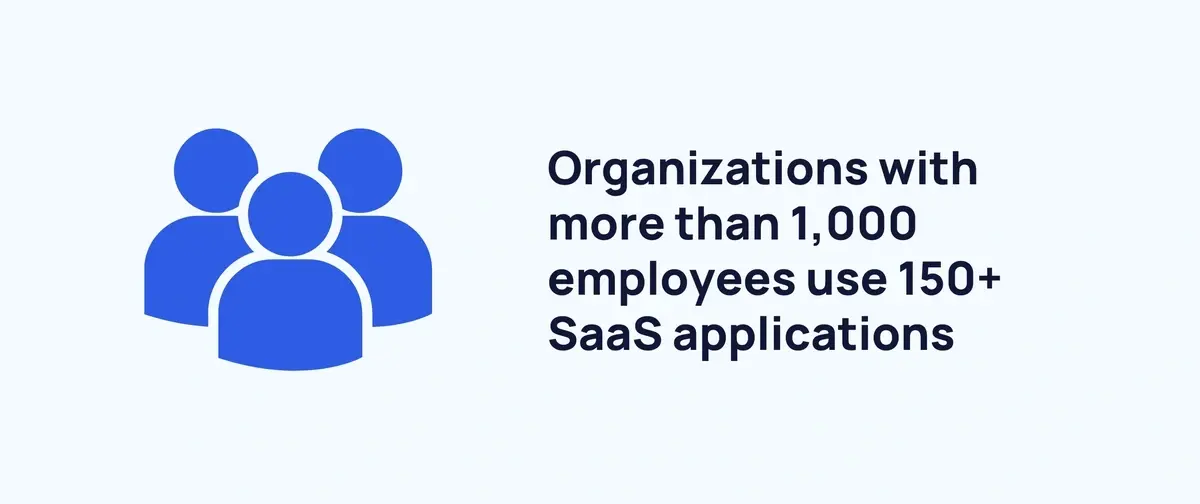
Image Source: https://explodingtopics.com/
What is SaaS Application Development
SaaS, or "Software-as-a-service," represents a cloud-based way of software delivery. In this method, a third-party vendor hosts and provides software applications to users via the Internet. Unlike the traditional approach that allows users to buy and install software on servers or individual PCs, SaaS apps allow users to access the software using an internet browser or an API.
By providing adaptive, cost-effective, and scalable software solutions, SaaS mobile application development and web application development are transforming the way businesses run. The cloud-based applications allow users to access software services from any location, device, or time. According to Statista, the SaaS market is expected to be worth over 197 billion dollars in 2023 and rise to 232 billion dollars in 2024.
Businesses can optimize processes, automate jobs, and foster improved teamwork using SaaS web application development. SaaS mobile application development provides mobile connectivity by providing customers with fast access to essential features with a simple tap of their thumbs.
Key Features of SaaS Applications
Here are the fundamental features of SaaS cloud application development products:
Single Sign-On (SSO): SSO streamlines user access by securely encrypting initial logins and using tokens for automatic logins into other systems. This feature eliminates the need for users to enter their usernames and passwords repeatedly and reduces password-related issues while increasing productivity.
Subscription Options: SaaS software pricing is based on subscription levels, allowing you to choose the best pricing plan. These options can range from free trials to premium versions to enterprise-level plans.
Multi-Tenancy: In SaaS app development, a multi-tenancy model provides a single solution to multiple users (tenants). It simplifies app maintenance and optimizes resource utilization.
Scalability: SaaS apps are designed to handle changing user counts since predicting usage can be challenging. Scalability assures that the system can adapt to changing demands over time.
5 Popular Examples of SaaS Applications
Here are some great examples of SaaS products to get you started on developing SaaS apps, figuring out how to monetize them, and deciding on price plans.
Salesforce
Salesforce is a CRM platform designed to increase businesses' ROI by linking sales, marketing, and other departments. It has almost 150,000 customers worldwide, placing it on par with HubSpot. Salesforce is not free. However, it offers a free trial period and demo. Furthermore, it provides various free learning resources covering Salesforce features and general topics such as business growth and lead generation.
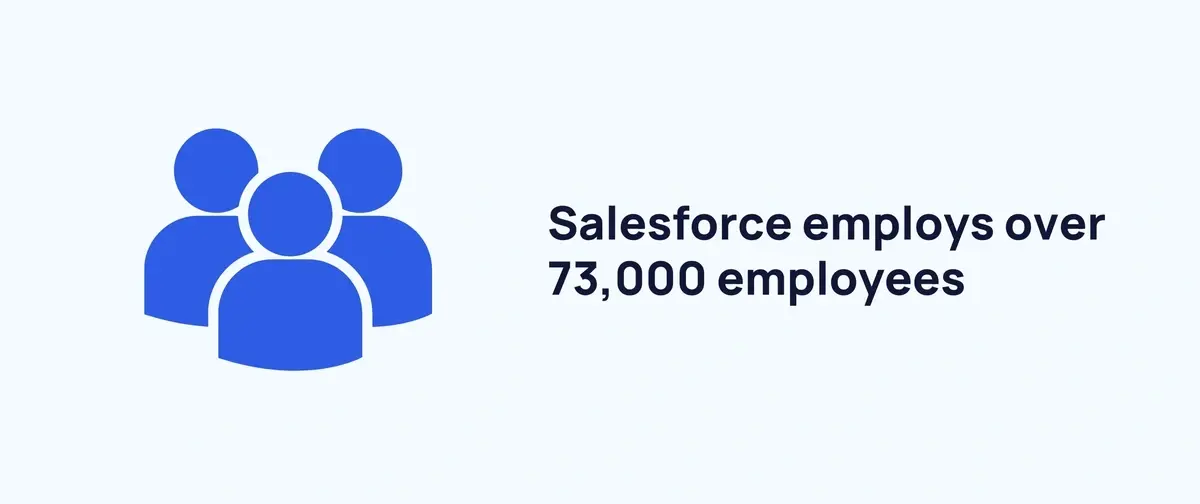
Image Source: https://explodingtopics.com/
Zoom
Zoom, a widely used video-conferencing app, served as a crucial solution during the pandemic, with around 300 million daily users. It's a successful SaaS application with a freemium model and upgrades starting at $120. Zoom allows for screen sharing, customizable whiteboards, and large group meetings. Its focus on innovation and diverse user cases makes it a popular SaaS development model.
Slack
Slack is a messaging app for businesses that has revolutionized communication within companies. With over 10 million daily users, it offers enhanced security than email. Salesforce purchased Slack in late 2021 due to its exceptional success and revenue prospects.
Amazon Web Services
Amazon Web Services (AWS), valued at 380 billion USD, is a cloud computing service provided by Amazon. It is designed for many users, from app developers to business decision-makers looking to improve their businesses. AWS provides essential services like cloud computing, storage, content delivery networks, analytics, machine learning, and Internet of Things (IoT).
Google Workspace
Google Workspace, formerly known as Google Suite, is a bundle of everyday business tools, including Gmail, Drive, Docs, Forms, Meet, Calendar, and more. With Google Workspace used by around 96% of Next Billion-Dollar Startups, it's an ideal example of how a SaaS service can generate substantial revenue while offering free features and applications.
Advantages & Disadvantages of SaaS Application Development
Here are some key advantages and drawbacks of SaaS development services.
Advantages
Cost Efficiency: Because SaaS is a cloud-based platform, resulting in cost savings as you only pay for the data you use. You also avoid the costs of managing a costly server network.
Higher Speed: Cloud-based solutions are quicker to deploy, significantly reducing your product's time-to-market.
Development Flexibility: The SaaS business model has exceptional flexibility for generating, modifying, and updating code, which is advantageous when adding new features to your product.
Disadvantages
Security Concerns: SaaS apps need to keep user information safe. Companies must ensure that data is secure and that their products are regularly updated with the latest security requirements.
Low Energy Barriers: Some companies may copy your SaaS product. Because SaaS is typically based on subscriptions, you must always provide your users with the best value. If customers are dissatisfied, they might switch to a similar-priced competitor.
Getting and Keeping clients: Depending on your SaaS product and the nature of your business, it may take a short or long period to convert interested people into clients. Good SaaS account management can cut this time in half and keep users committed to your product for longer.
Types of SaaS Application Development Solutions
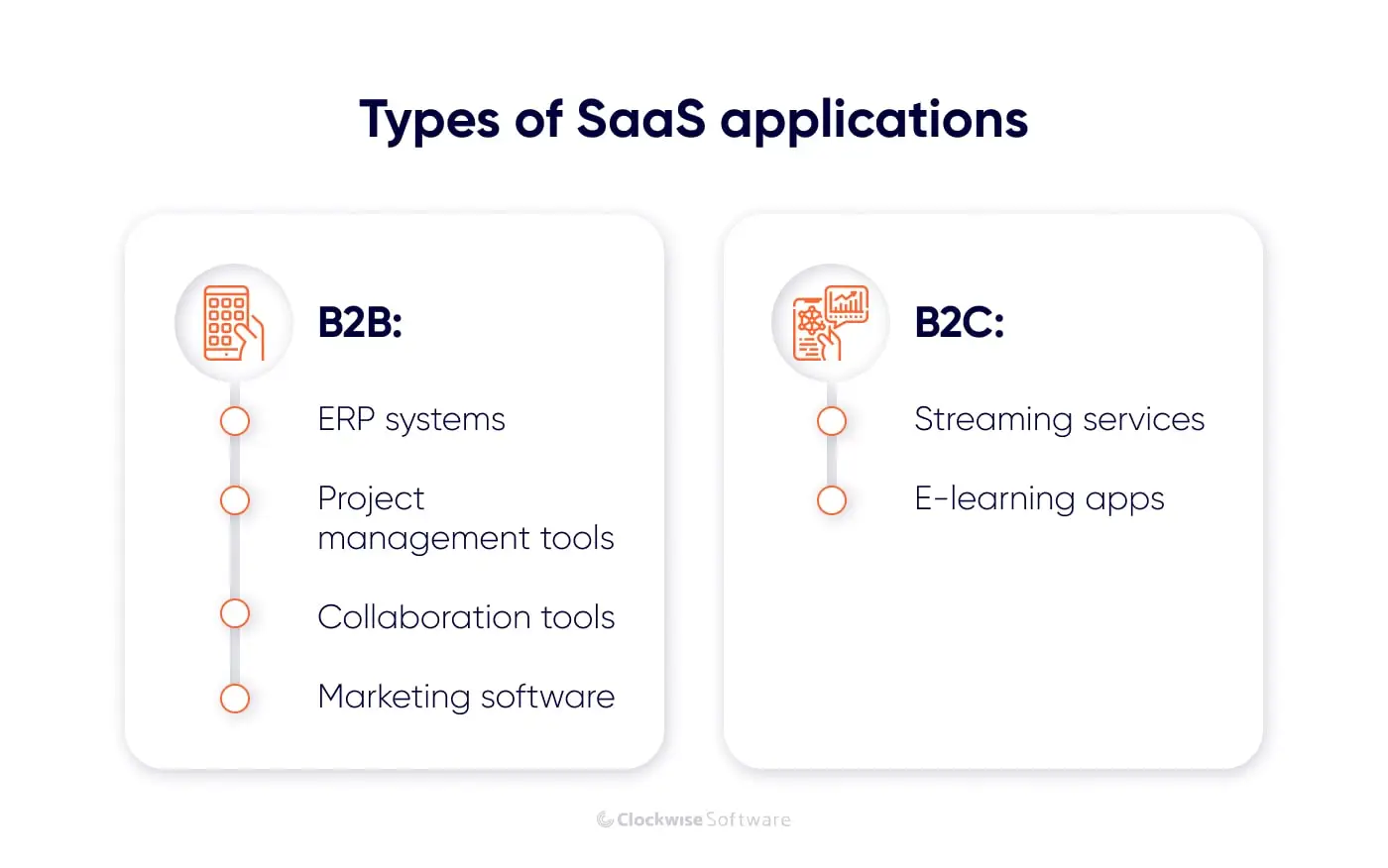
Image Source: https://clockwise.software/
Custom Relationship Management (CRM) Software
This software helps businesses efficiently organize customer data, information, and history. It's used in various industries, including healthcare, retail, and entertainment. Salesforce, SugarCRM, and Zoho CRM. are popular CRM software development companies.
Enterprise Resource Planning (ERP) Software
ERP Software is designed to manage employee schedules, tasks, billing, inventories, and client orders. Large corporations use ERP solutions, e.g., Microsoft Dynamics 365.
Project and Task Management Software
This software helps project management by assigning tasks and tracking online development. It's perfect for businesses running numerous projects with different teams. ClickUp is a well-known project management software.
Communication Platforms
These platforms allow businesses to interact with their clients and within their companies. They provide services like video chats, emails, and texts. Examples are Zendesk Chat and Slack.
e-Commerce Platforms
HRM software helps in personnel tracking, payroll, hiring, onboarding, training, and other tasks. Tools like SuccessFactors HCM and Dynamics 365 Human Resources simplify HR tasks and advanced reporting.
Customer Support
This software allows client service representatives to manage all customer interactions from a single interface, including chat, phone calls, and email, e.g., Freshdesk, Zoho Desk, and Zendesk.
Things to Consider Before SaaS Application Development
After understanding a SaaS application, it's important to consider critical technical and non-technical requirements for its development.
Technical Aspects
Technology Stack: Select appropriate tools for effective SaaS app development, such as testing tools, deployment tools, and Integrated Development Environments (IDEs).
Development Tools: Select appropriate tools for effective SaaS app development, such as testing tools, deployment tools, and Integrated Development Environments (IDEs).
Infrastructure: Determine the infrastructure required to host your SaaS app, such as databases, servers, and storage solutions.
API Design: Create a clear and user-friendly Application Programming Interface (API) for perfect integration with other apps and services.
Data Security: Implement strong data security measures to protect user information and prevent security breaches.
User Experience: Create a simple and user-friendly interface that responds to the needs of your target audience.
Non-technical Aspects
Team Size and Expertise: Determine the size and skill level of your app development team. Consider the experience and skills required for positions like designers, project managers, developers, and QA engineers. SaaS apps need to keep user information safe. Companies must ensure that data is secure and that their products are regularly updated with the latest security requirements.
Budget: Calculate the budget for SaaS app development that covers infrastructure costs, development costs, and ongoing maintenance and support.
Timeframe: Determine how long it will take to develop your SaaS applications, including the testing, development, and deployment phases.
Business Model: Determine the business model for your SaaS application, including pricing, revenue sources, and target market.
Market Research: Conduct extensive research to determine what your target users want and how your competition looks.
Image Source: https://explodingtopics.com/
8 Steps of SaaS Application Development
1. Ideation and Planning
Working with a digital product development company (like ownAI) to create a well-thought-out plan is the first step in developing a custom SaaS app from scratch. The strategy entails:
- Brainstorming Concepts
- Identifying Your Target Audience
- Identifying the Problem Your App Addresses
You can use the "Five Ws" strategy to understand better your market: who, what, when, where, and why. For instance, if you're developing an app for small businesses:
- Who'll use it? Small business owners who lack time and resources for marketing.
- What do they require? A simple way to manage marketing campaigns.
- Where can they utilize it? On desktops, mobiles, laptops, or tablets.
- Why would they need it? To save money and time on marketing.
- When should they employ it? During the day, most people don't work at night.
Understanding your target audience is vital to ensure that your SaaS solution fits their requirements. Once you know their requirements, build a development strategy that includes features, a timetable, and a budget.
2. Validate the Idea
After creating a plan, you must determine whether your idea is viable. You'll not want to spend time and resources on something that people won't want or need. The CJM (Customer Journey Map) and VPC (Value Proposition Canvas) are useful tools.
VPC (Value Proposition Canvas):
The VPC helps you understand how your product will meet your customers' needs and what differentiates it from competitors. It's all about understanding the value your product offers to customers.
CJM (Customer Journey Map):
CJM involves tracking all interactions between a company and its customers, from initial interaction to post-purchase. This helps organizations understand the needs and expectations of their customers at every stage.
Before spending a lot of money on the product's development, a SaaS development company must validate your idea to make sure there is a market need for it.
3. Understand Users' Financial Capacity
One of the most important steps in building a SaaS app is knowing if your customers can afford it. You must understand the incoming earnings instead of your product's revenue potential. You can't predict your revenue without understanding your customer acquisition costs.
It is important to strike a balance between profitability and affordability. If your pricing is high, your potential clients may be turned off, and if it is low, you may not be able to keep your business running.
Do market research, analyze your rivals, and determine whether your target market will pay for your products or services.
4. Create the Initial Design Prototype
After understanding your audience and their payment capacity, the next step is to create the initial prototype. It involves planning the features and visualizing the application's look; perfection is not required at this stage. Here's how SaaS development companies achieve it:
User Flow Definition: Developers must map out the user's path within the application, describing screens and actions.
Layout Sketching: The screen layout of the application is roughly sketched out, either manually or digitally.
Wireframe Development: Detailed wireframes are created to display the framework and functioning of the app without focusing on design intricacies.
Adding Visual Design: Visual elements like fonts, colors, and images are integrated to bring the prototype to life,
This designed prototype helps identify flaws early on, refine the design, and meet user needs by getting feedback. It is a valuable tool for refining the final SaaS product.
5. Select the Right Monetization Strategy
Choosing the best approach to monetize your SaaS product is important. After understanding your target market and creating a prototype, you must choose a monetization strategy.
Subscriptions, pay-per-feature, pay-per-use, and advertising are all options.
- Subscriptions generate consistent income but may not be suitable for infrequent users.
- Pay-per-use is great for regular users.
- If your application has many features, pay-per-feature is a good option.
- Advertising generates revenue through advertisements, but it may not be appropriate if you want an ad-free application.
6. Define the Technology Stack
Selecting the right technology stack is necessary, as it affects the performance, scalability, and success of SaaS app development. Consider the following factors when making your decision:
- Scalability: Select a stack that can manage growing user and traffic volumes.
- Community Support: Look for a stack that has a robust developer community.
- Integration: Consider its capacity to combine with other popular SaaS solutions.
- Security: Prioritize stacks with strong security measures.
Popular tech stacks include MEAN, LAMP, MERN, Ruby on Rails, and Django (Python). Your selection should be based on your app's requirements, your team's expertise, and available resources.
7. Minimum Viable Product (MVP) Development
Now that you've got your business plan, customer research, pricing model, and technology stack, it's time to kickstart the development of your MVP. The MVP must include the essential features of your SaaS app to assess your business model and get user feedback.
Prioritize efficiency and simplicity during MVP development. You don't have to add every feature right away. Focus on the essential functions that provide the most benefit to users. You can add features later, as MVP is an ongoing process.
Collaborating with your digital product development company or hiring expert developers is critical. Set clear objectives, timeframes, and communication channels to keep everyone on the same page.
8. Launching and Maintenance
The launch of a SaaS application is a big achievement, but it is not the end of the process. Maintenance is vital to ensure that your app remains efficient and effective over time. Consider the following important factors for the launch and ongoing maintenance of your SaaS product:
- Testing: Before launch, thoroughly test the app to ensure it operates properly and is easy to use.
- Marketing: Develop a marketing approach to advertise the app and attract customers.
- Onboarding: Develop a streamlined onboarding process to help new users get started and understand the app's functionality.
- Analytics: Utilize analytics tools to track performance and collect user data for future updates.
- Customer Support: Provide responsive customer service to address user concerns and questions.
SaaS app maintenance is an ongoing process. By continuously monitoring, enhancing, and supporting the application, you can ensure it meets user needs and remains competitive.
Challenges in SaaS Application Development
Building SaaS apps may be tough, and there are a few common challenges that developers and development teams might encounter. Let's have a look at some of the major challenges:
Software Complexity
SaaS apps may provide a wide range of features to meet the users' demands. This complexity can make the development process more challenging, requiring careful planning, design, and coding to ensure the app remains user-friendly, scalable, and up-to-date.
Customization
SaaS apps often serve a diverse user base with unique requirements. Designing an app that allows customization while maintaining core functionality might be challenging. It can be difficult to maintain the balance between standardization and personalization.
Payments and Subscriptions Management
Managing payments and subscriptions in a SaaS app can be tricky. Integrating multiple payment gateways, providing secure and seamless payment processing, managing user subscriptions, and dealing with recurring payments can all be challenging.
Standards and Security Compliance
SaaS programs must adhere to industry-specific standards and security compliance regulations like HIPAA, GDPR, and PCI DSS.
Downtime Minimization
SaaS programs are expected to be available to customers around the clock. Even a little downtime can result in customer dissatisfaction and financial loss. Building a system with redundancy, failover techniques, and continuous monitoring is crucial to ensure high availability.
Turn Your SaaS Application Development Idea into Reality with ownAI
ownAI is a leading SaaS app development company designed to bring your SaaS app ideas to life. We have skilled developers, designers, and project managers who work together to transform your vision into reality. We know each app is unique, so we offer custom development services tailored to your needs.
Whether it's for project management, accounting, or CRM, we can create a strong and reliable system that matches your business goals. Our team has extensive experience in developing scalable and effective SaaS cloud-based applications while adhering to security and quality standards. We provide regular updates, prioritize on-time delivery, and offer support whenever you need it.
Conclusion
Now, you have a good understanding of how to start the process of SaaS application development and how to do it efficiently. While cloud-based applications might not be a good fit for all businesses, the SaaS model will stay popular due to its cost-saving and flexible development features.
If you decide to partner with a specific digital product development company for SaaS application development, be sure they have the necessary experience and use cutting-edge technology. Fortunately, ownAI offers both. Our team is ready to help you develop a strong, scalable, and secure software solution.
Contact us to build a dedicated development team for your SaaS application project!
FAQs
How much does it cost to develop a SaaS application?
The cost of developing a SaaS application can vary greatly depending on complexity, technology, required features, and team location. A simple SaaS app may cost between $30,000 and $50,000, whereas more complex ones may cost more than $100,000.
How long does it take to develop a SaaS application?
From validating your business idea to deploying the MVP product, developing SaaS software takes four to ten months. However, the timeline might vary depending on the app's complexity, chosen tech stack, scalability requirements, and development team size.

Let’s discuss about your next AI, Cloud or Digital Transformation.
 AI-Skilled & Agile
 Transparent, Trustworthy &
Vetted team Not tech, but business &
customer first approach





 Turn your idea into MVP in 8-16 weeks