



Since the emergence of websites and smartphones, combining these two technologies to provide customers with an amazing experience has been a big challenge for web app developers. It wasn't until 2015 that we saw a breakthrough.
The introduction of Progressive Web Apps (PWAs) in 2015 marked a turning point in web development. Google Chrome Engineer Alex Russell and designer Frances Berriman coined the term "Progressive Web Apps" (PWAs). Although it took a few years for the concept to become widely known, the web industry took notice when Google began promoting PWAs.
PWAs are powerful tools for businesses looking to provide users with great experiences across various devices. However, you may find it difficult to lay a solid foundation for Progressive web app development as a newbie. This is a typical problem because numerous progressive web app frameworks are available, each with its own set of features and specifications. Don't worry, we're here to help you!
In this article, you'll find a list of PWA tools and frameworks in 2024 that businesses can choose from. Our Progressive Web App developers selected these frameworks based on their ease of use and potential for widespread adoption. So, without further ado, here's the list on which we rely as a top PWA development company.
What are Progressive Web Apps (PWAs)?
Before getting into progressive web app frameworks, let's first define progressive web apps (PWAs). Progressive web apps are a distinctive technique for developing cross-platform web-based applications. They allow users to install web pages on their desktops or mobile devices, thereby converting them to native desktop or mobile apps.
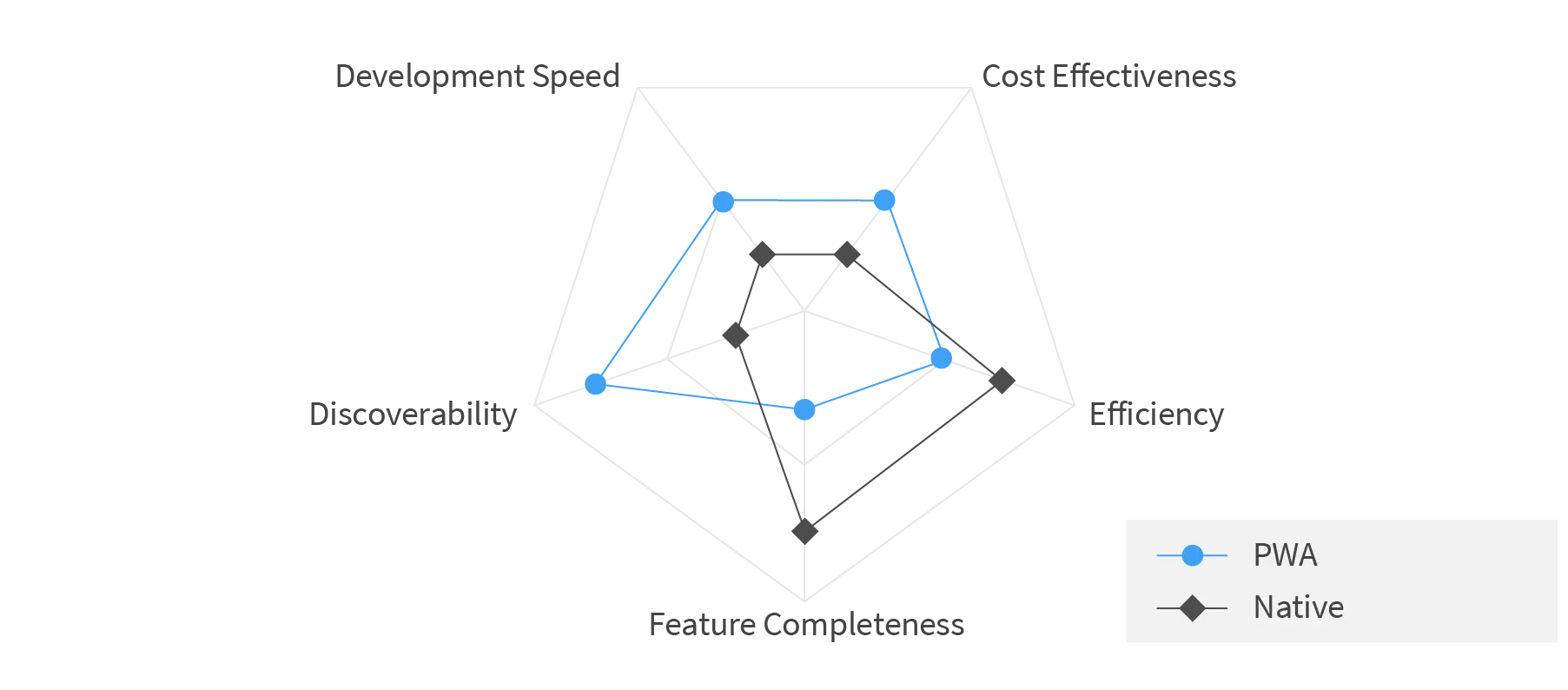
Image Source: https://www.griddynamics.com/
PWAs include features similar to native apps, such as easy installation, offline operation, push notifications, the option to add them to the home screen, and shareability. PWAs, which combine the features of a mobile website and a native app, use popular standard web technologies such as CSS, HTML, and JavaScript to create a native app-like experience.
Top 9 PWA Frameworks and Tools in 2024
1. Angular JS
Google introduced AngularJS in 2010 to develop powerful and scalable PWAs by using the JavaScript environment. PWA support in Angular started with Angular 5, released in 2017. As a result, Angular has emerged as one of the most popular and frequently used frameworks for developing impressive web solutions.
Angular Command Line Interface (CLI) provides tools and commands to generate the necessary files and configurations for PWA development.
Numerous businesses have turned to this advanced web application framework to meet a wide range of requirements for the development of single-page web applications. PWAs developed with Angular benefit greatly from the outstanding compilation system known as "Ahead of Time" (AOT). This system improves the application rendering system by transforming Angular HTML and TypeScript code into efficient JavaScript code before the browser downloads and executes the application.
Pros
Highly modular components.
MVC framework.
A strong developer community.
The Command Line Interface (CLI) and automation features provided by Angular increase developer productivity.
A well-defined methodology simplifies implementation.
A large number of third-party extensions are available.
The AOT approach provides exceptional performance and security.
Cons
Beginners face a steep learning curve initially.
Understanding TypeScript is required to get the full benefits of PWA development.
Frequent upgrades need to stay up-to-date with the latest versions.
2. React
React is a JavaScript framework for developing progressive web applications. It was created by Facebook in 2013 and has since found applications in companies such as Airbnb, Instagram, and Tesla. Because of its huge JavaScript library, it remains one of the most popular and widely used solutions among developers.
While React is built with pure JavaScript, it uses JSX to implement rendering functions that connect HTML components. It creates single-page and multi-page apps with dynamic content that loads and transitions smoothly between pages. React efficiently manages the virtual DOM (Document Object Model), allowing for quick rendering and component updates.
Pros
It provides greater flexibility and comes with additional packages.
It allows the use of the same code for native apps.
Increases rendering speed by using the virtual DOM.
Offers extensive JavaScript libraries for creating API interactions.
Cons
It is necessary to have prior knowledge of JSX.
React is a higher-level language than regular JavaScript.
Implementing React can be challenging without a specified procedure.
Migrating from Angular to ReactJS can be difficult due to JSX.
3. Vue.js
Introduced in 2014, Vue is a relatively new PWA framework with a large user base, making it a significantly popular framework, as seen by its GitHub page stats. Vue.JS shares similarities with 'React' in its utilization of the virtual DOM to generate a lightweight and effective version of the real DOM. However, the key difference lies in how Vue addresses and improves the web-based technological stack, focusing on CSS and HTML, whereas React predominantly relies on JavaScript.
As a result, many novice front-end developers find Vue's learning curve to be significantly smoother and easy to use, making it a viable option for newcomers.
Pros
The ease of use of coding helps beginners in their learning process.
Backed by industry titans such as Alibaba and Laravel.
Extensive documentation provides considerable support.
The use of virtual DOM considerably improves rendering speed.
It includes additional packages similar to ReactJS.
It may be seamlessly integrated with TypeScript and JSX to achieve the best results.
Cons
Limited availability of Veju developers in the market.
In comparison to other frameworks, it has a smaller support team.
Requires significant conversion of legacy code from Angular 1.5.
The freedom it provides can cause challenges in progressive web app development.
4. Polymer
Developed by Google, this open-source PWA framework has recently gained significant popularity. It has an extensive library of web components, building blocks, and development tools. Its extremely simple methodology makes it an excellent choice for PWA development.
Furthermore, the framework's tools and components are compatible with all popular web browsers. As a result, Polymer-based apps become more accessible and versatile. Notably, Polymer is an independent progressive web app framework because it has been developed with pure CSS, HTML, and JavaScript.
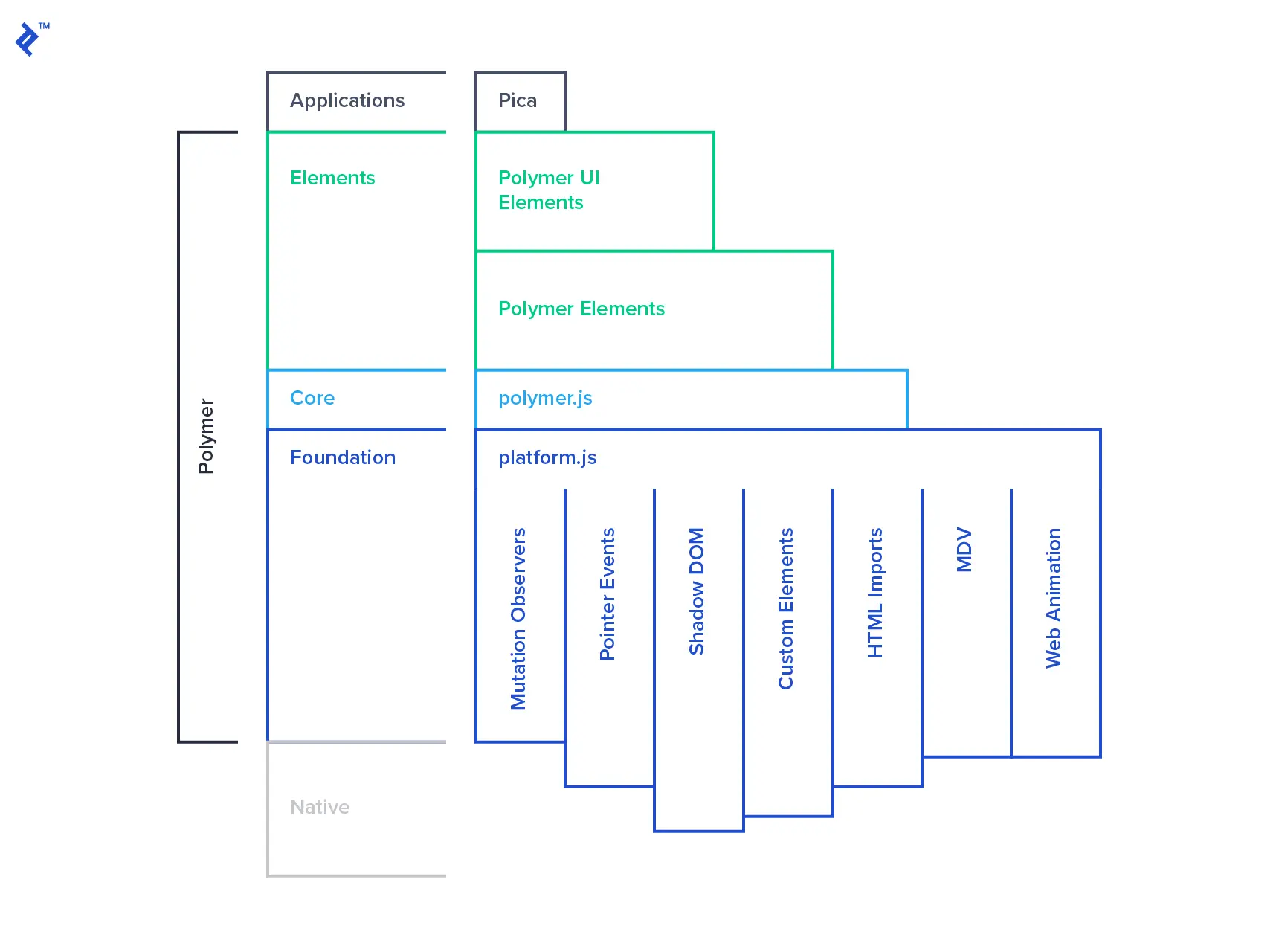
Image Source: Polymer Architecture
Pros
Comprehensive web app development support, including data management, routing, and responsive layouts.
Outstanding documentation.
Its exceptionally user-friendly APIs distinguish it as a unique PWA app development tool or framework.
Provides a wide range of basic components that are interoperable with many browsers.
Cons
No officially certified integrated development environment (IDE).
Lacks server-side rendering, resulting in:
Reduced SEO optimization.
An increased number of HTTP requests.
Prolonged loading times.
5. Preact
The next PWA framework on our list is Preact, a lightweight, performance-driven alternative to 'React.' Preact has recently gained popularity, and if you're looking for a quick, streamlined platform that matches your needs, it could be the ideal choice. The fact that it is fully compatible with React has piqued the interest of the PWA community.
Migrating from React to Preact is also a simple process. Preact's user-friendliness makes it a good choice, especially for developers new to web development.
Pros
Reduced script loading, resulting in faster app performance.
Compared to React, achieving the same user interface with less code is possible.
Ease of learning and application.
The same ES6 API as React is used, ensuring seamless compatibility.
It includes server-side rendering, routing, and add-ons.
Provides the Preact CLI for building a seamless Preact PWA in a couple of minutes.
Cons
Requires preact compatibility for using React components or packages.
6. PWABuilder
PWABuilder is an open-source framework initiated by Microsoft and led by the community. It facilitates the development of web components for both Android and iOS applications. PWABuilder is one of the quickest ways to create web components that function optimally across many devices.
Furthermore, the framework has a large user community, contributing to a highly supportive ecosystem for its users. It has also extended its official support to include WebKit-powered web browsers. This is a full-featured resource that compares native apps with PWAs.
Pros
Backed by Microsoft.
Provides a more comprehensive and user-friendly development approach.
Extensive documentation.
Allows you to use Vue for app development.
Cons
Limited flexibility, making web app customization challenging.
Automation can sometimes complicate tasks.
7. ScandiPWA
ScandiPWA is a free, open-source, advanced web app framework built upon Magento PWA Studio. It allows for the use of the Magento eCommerce platform for PWA development. ScandiPWA provides a broad set of features, including PWA construction, deployment, and management, user interface development, data management, and application testing.
Pros
Leverages Magento's current infrastructure, saving significant time and effort.
Provides you with a comprehensive set of PWA management features.
Simplifies the app updating process
Cons
Complexity in handling APIs.
Challenges related to GraphQL caching.
8. Svelte
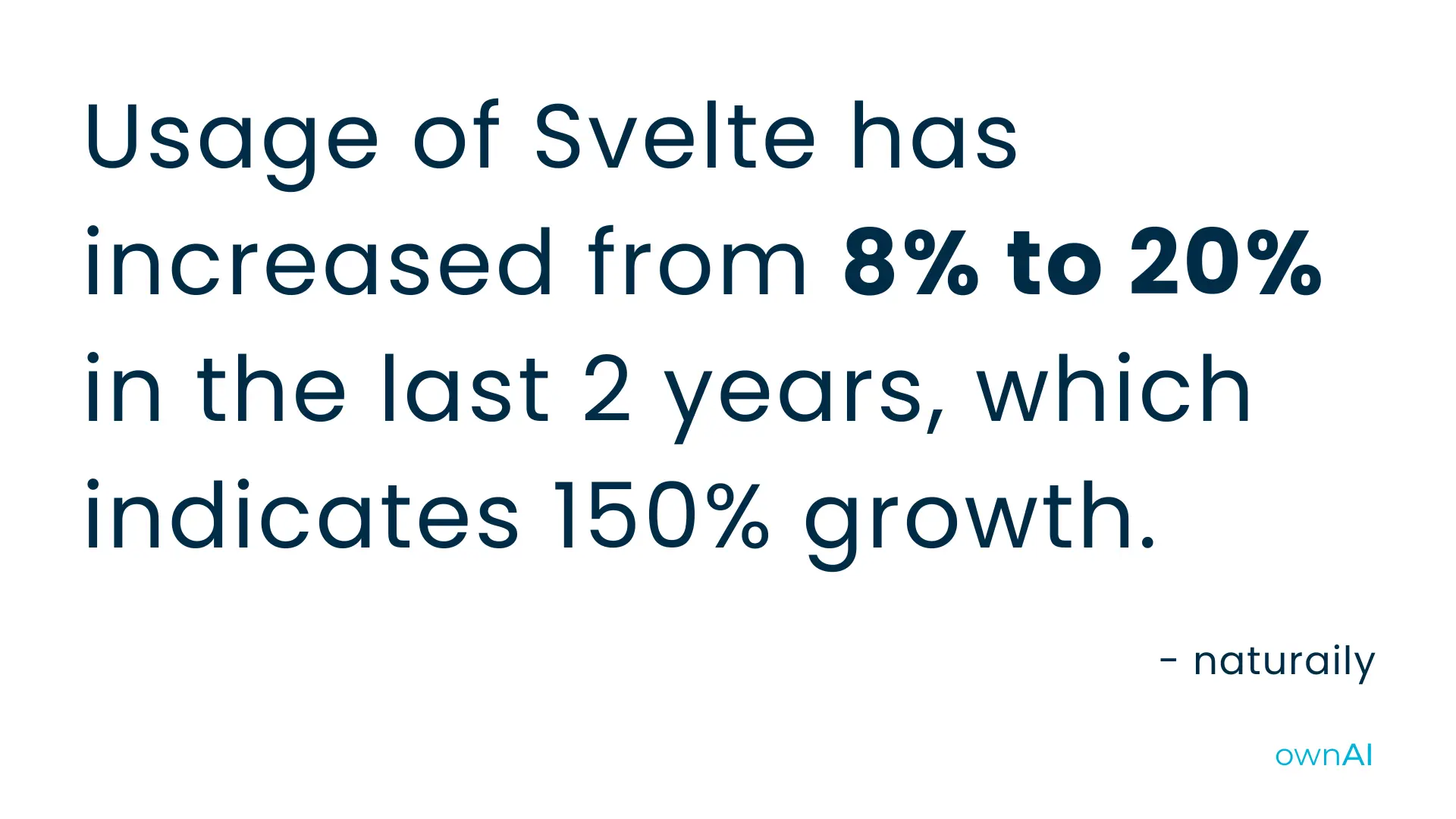
Svelte, a highly compatible progressive web app framework, made its debut in 2019. Svelte is a JavaScript-based framework designed specifically for creating user interfaces. Notably, Svelte is built with accessibility in mind, making it a good choice for new web developers.
This component-based system uses simplified code to promote quick page loading, notably in syntax analysis and execution. However, it does not rely on a virtual DOM. Svelte has quickly gained worldwide recognition, prompting big names such as The New York Times and GoDaddy to choose Svelte as their trusted partner for PWA development.
Pros
Its compiler-driven method speeds up page loading and execution.
Offers versatility in development.
Supports standard CSS and many other CSS frameworks.
Cons
Documentation is not as extensive.
Due to its relative novelty as a framework, it has a smaller community support.
Debugging in Svelte apps may bring slightly more challenges than in other frameworks.
It does not support TypeScript.
9. Lighthouse
Last but certainly not least! Lighthouse, introduced by Google, aims to improve the quality of web apps. This PWA application development tool evaluates every component of your website and provides a checklist of essential factors to help you build a high-quality PWA.
Pros
Its automated functionality helps to improve the quality of web pages.
Capable of running assessments on any web page.
Conducts accessibility, performance, and SEO audits.
Cons
Lighthouse runs in a synthetic mode, intending to reproduce 85% of user experience, which may reduce overall speed and performance.
The Bottom Line
By now, it should be clear that Progressive Web Apps (PWAs) can provide significant advantages to businesses.
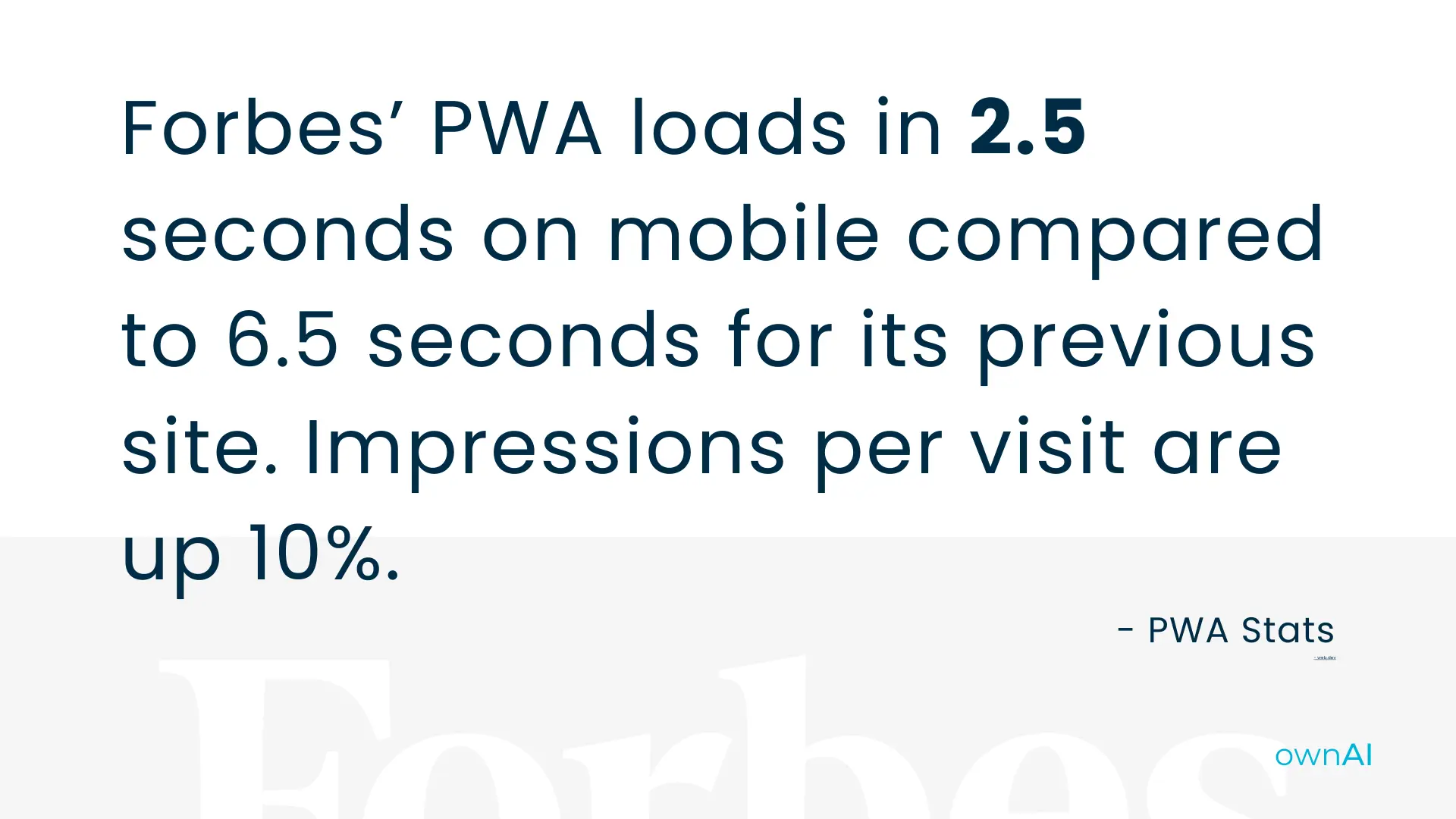
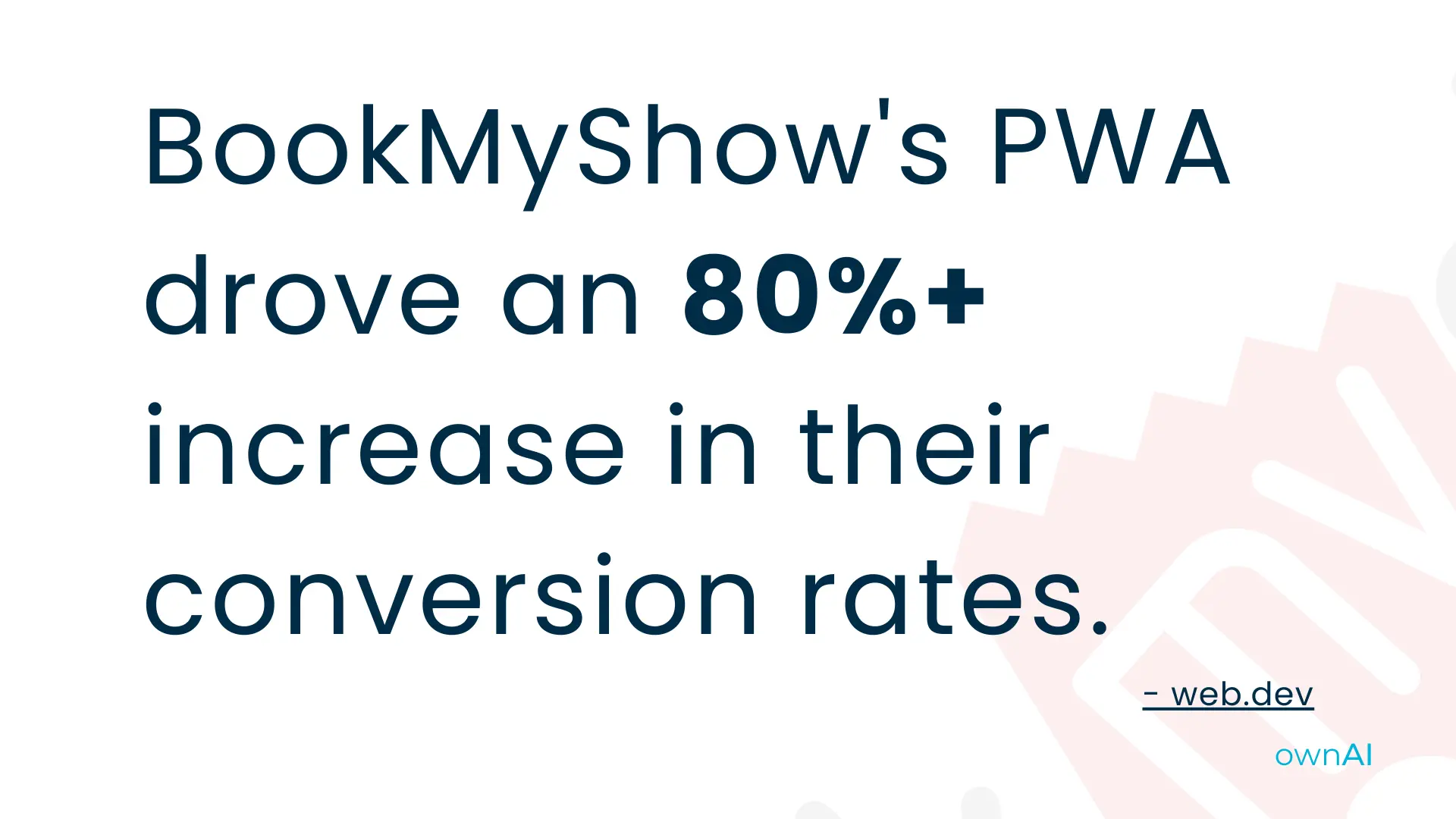
So, if you're thinking about building a progressive web app like Starbucks, Twitter, or Spotify but aren't sure which framework to use. In this article, we've provided an overview of the popular and rending PWA frameworks in 2024 to help you get started. Each of these frameworks has its own set of strengths and drawbacks, so choosing the one that best fits your project requirements is important. Moreover, it's essential to partner with a Progressive Web App development company with relevant industry expertise.
At ownAI, we have vast experience in building progressive web apps for an extensive list of businesses in various niches. Over the years, we've polished our expertise in developing high-performance, long-lasting apps that enable our clients to grow their businesses. Contact us today to get started on your dream project!

Let’s discuss about your next AI, Cloud or Digital Transformation.
 AI-Skilled & Agile
 Transparent, Trustworthy &
Vetted team Not tech, but business &
customer first approach





 Turn your idea into MVP in 8-16 weeks