


Profitability is the primary goal of all businesses. With the rise of digital transformation, businesses are constantly seeking the best ways to create top-notch digital products and monetize them. The global digital transformation market is anticipated to grow at a CAGR of 23.1% from 2022 to 2030, reaching $3.8 billion by 2030. These stats show that digital transformation highly impacts the growth of a business in today's world.
Many digital entrepreneurs and developers create digital products because they think they can easily make money from them. Although applications or software can generate good revenue, businesses must have a solid monetization model to make the products profitable. Several monetization strategies are available for digital products, which can make it confusing to choose the one that best fits your business. Choosing the right monetization strategy can be a game-changer for your business.
In this post, we will decode digital product monetization and discuss the two popular monetization models to help you choose the best one.
What is Digital Product Monetization?
Monetization is a process of adding value to your digital product and generating revenue from it. The digital product can be a mobile application, web application, SaaS software, or enterprise website. The monetization model involves implementing various strategies to convert the product's value into financial returns. Businesses employ different monetization models to earn revenue from the products, ensuring that the resources invested in digital product development are repaid.
The benefits of monetization include:
- Generates consistent revenue and maximizes ROI
- Increases user experience and brand exposure
- Creates opportunities for business growth
- Give businesses a competitive edge in the market
Read More: How to Create a Successful Digital Product Business in 2024
Best Strategies for Digital Product Monetization
Let's get to the main topic of this blog: two of the most popular digital product monetization strategies. As mentioned earlier, there are multiple monetization strategies that can be applied to a business, but we will discuss the two common and widely used strategies. Understanding these strategies is critical to choosing the one that suits your product, business nature, and market demands.
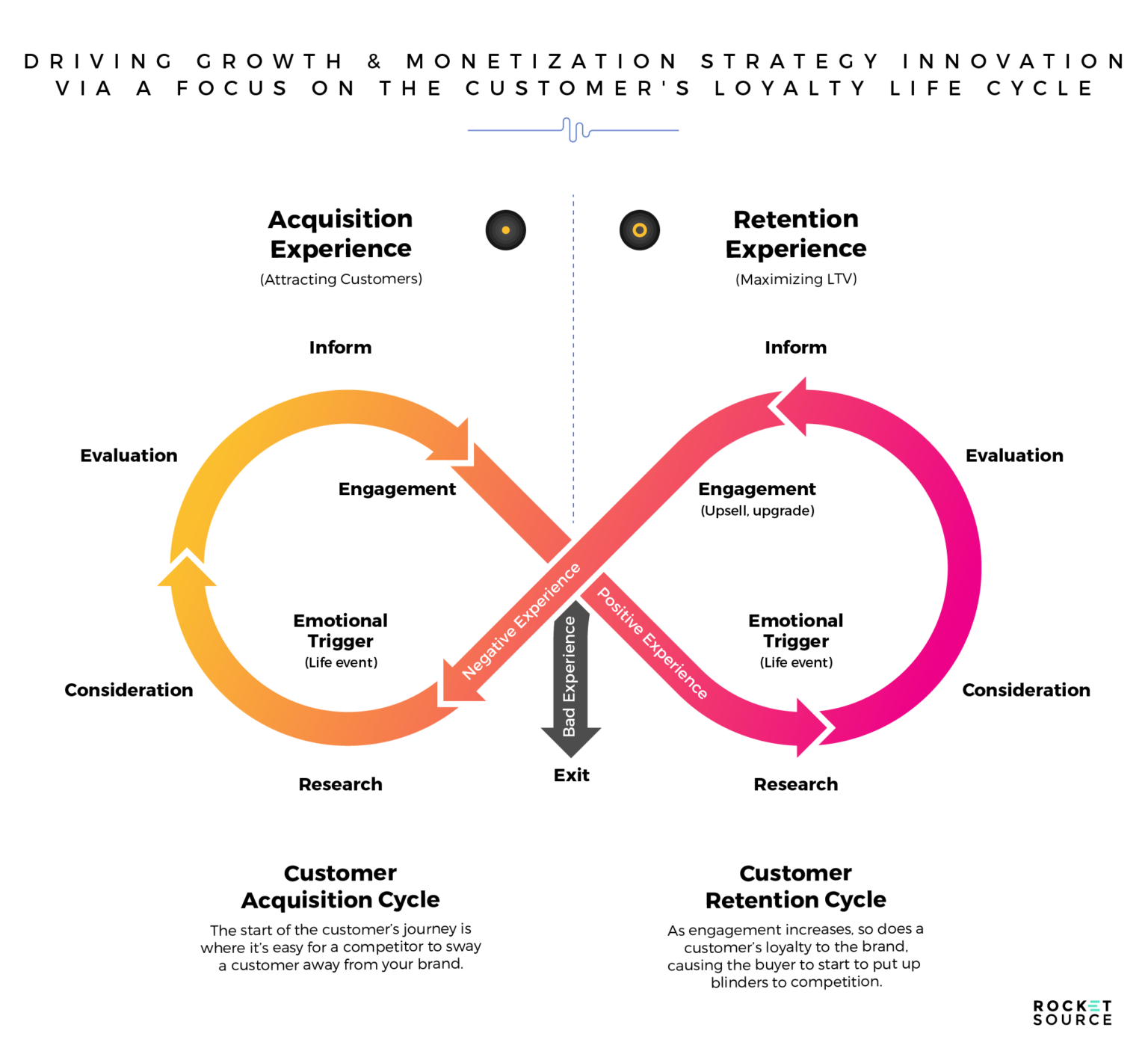
Image Source: Rocket Source
Subscription Model
A subscription model has become an extremely popular digital product monetization strategy, especially for products that provide ongoing value, like streaming platforms, educational platforms, SaaS, subscription boxes, and productivity tools. In a subscription model, users pay a recurring fee to access a digital product (app's content) or service. The fee is usually monthly or annually. A subscription provides access to exclusive content, features, or benefits.
This monetization model provides multiple benefits, including a predictable revenue stream, a loyal user base, and scalability. On the other hand, this model requires constant value delivery to retain subscribers. Use a subscription model to improve customer experience through regular updates, maximize revenue through recurring payments, and monetize existing customers.
Examples of Subscription Model
Netflix, Amazon Prime Video
Netflix and Amazon Prime Video are streaming platforms that use a subscription model. Customers buy a monthly subscription to access unlimited movies, TV shows, and documentaries. By using this monetization strategy, these streaming platforms can improve platform features and enhance customer retention.
HubSpot
HubSpot has also adopted this monetization strategy, offering all products on a subscription basis. Daily product updates ensure that all customers can access a wide range of products at the same price.
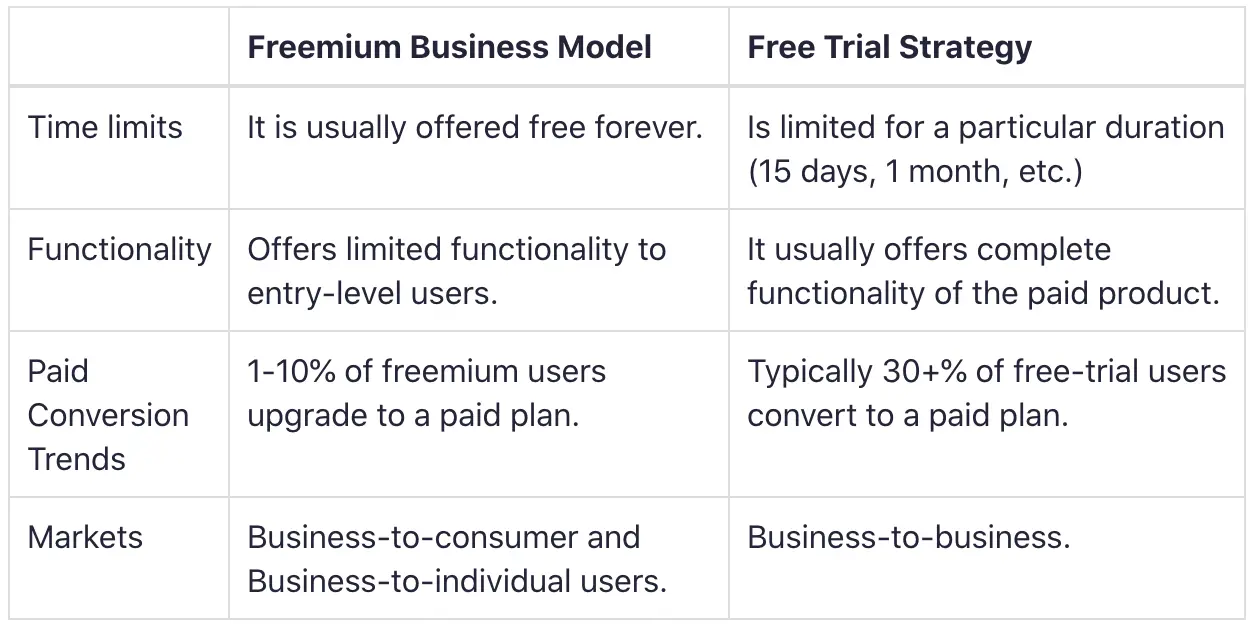
Freemium Model
Freemium is a combination of words, free and premium. In a freemium model, businesses offer a free version of a product with limited features that all users can avail of while providing the option to upgrade to a paid version to unlock advanced features or premium content. The main goal of this pricing strategy is to acquire customers through free experience and then convert them into paying customers.
If the product is strong and there is a loyal user base, the freemium model can do wonders by having a high-volume user base. You can use the freemium strategy to prove to your customers that your digital product can provide an excellent and engaging user experience in both free and premium versions. This approach works well for web or mobile apps, software, and online platforms.
Examples of the Freemium Model
Spotify
Spotify employs a freemium monetization model. It offers a free ad-supported version with skip limits and a premium ad-free subscription. Both free and premium users can access the same music resources but can benefit from enhanced features in the upgraded version. Music enthusiasts appreciate the control and quality of the paid version.
Canva
Canva also thrives on a freemium model. It provides free access to user-friendly design software. Professional templates and add-ons are available in a pro plan.
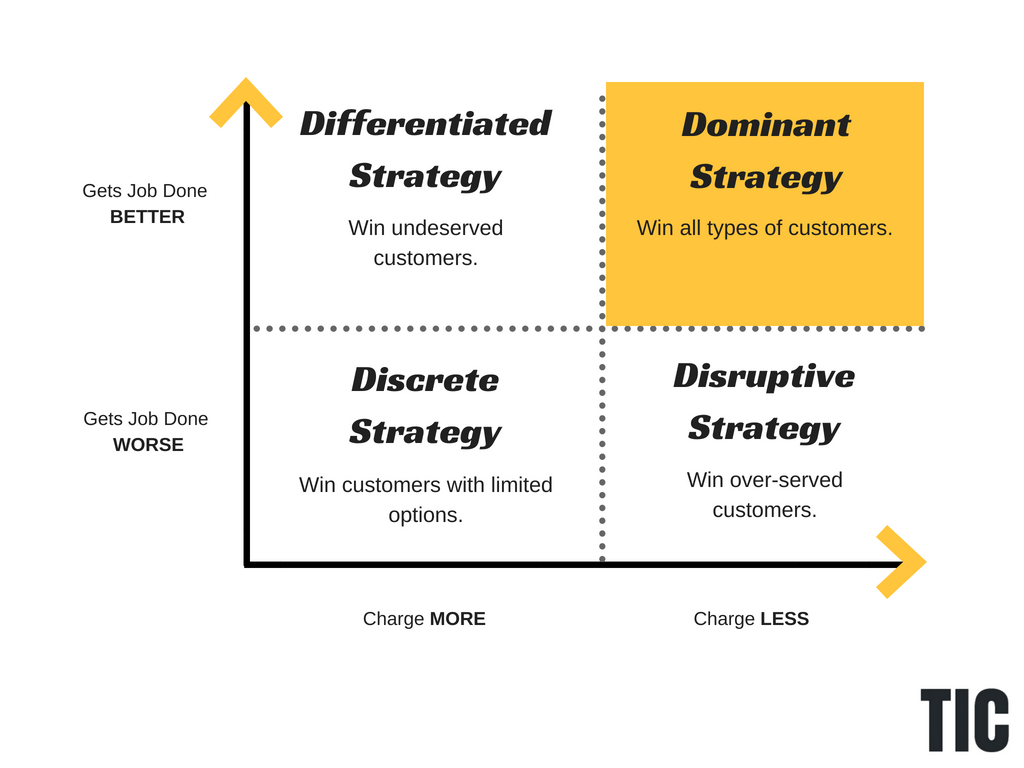
Image Source: Appcues
How to Choose the Best Digital Product Monetization Strategy
To choose the best strategy for your product, you should consider a few factors mentioned below.
Understand the Target Audience
Understand the preferences and behavior of your target audience. Determine their willingness to pay for access to your product features. Different users respond differently to different monetization models; thus, it is crucial to tailor the strategy to meet user expectations.
Consider the Nature of Your Digital Product
The type of product, its core functionality, and unique selling points play an essential role in determining the most suitable way to monetize it. Determine the most valuable features of your app or software and discover how to monetize them.
Analyze Competitors
Analyze their pricing strategies and compare your product in terms of features and pricing. Differentiating your product by offering a unique value proposition can help it stand out in a crowded market.
Consider the Product Development Costs
Consider the costs associated with digital product development and ongoing maintenance. The best monetization strategies may require large initial investments, so developers must evaluate the long-term ROI.
How to Measure Digital Product Monetization Success
Once you have chosen the best monetization strategy for your digital product, it is critical to continuously measure its success. This will assist you in identifying what is working and what is not. You can track the success of your monetization strategy using the Key Performance Indicators (KPIs).
Mobile app KPIs are key to tracking the performance of your app. According to Statista, the mobile app market is highly competitive, with 257 billion app downloads in 2023. Tracking the KPIs can help you improve your app and make your app stand out in the market.
Some critical KPIs to measure monetization success include:
- Average Revenue per User
- Cost per Acquisition
- Customer Acquisition Cost
- Daily Active Users
- Monthly Active Users
- Retention Rate
- Total Revenue
- Subscription Revenue
Tips for Maximizing Revenue from Digital Product Monetization Strategies
Once the monetization strategy is in place, maximizing profits, engagement, and consistent revenue requires constant optimization and effort. Here are tips to enhance the revenue potential of your digital product.
Focus on User Engagement: It is crucial to prioritize user engagement to boost purchases. Use user data to deliver a personalized experience. Personalized content, tailored recommendations based on user preferences, regular updates, and interaction features can enhance engagement and drive revenue.
Prioritize User Retention: Focusing on retention is more cost-effective than acquiring new users. Implement effective user retention strategies, such as offering exclusive content to long-term customers and creating loyalty programs. These approaches will encourage continuous app usage and foster a loyal user base.
Optimize Pricing: Pricing optimization is important for applications with subscription models. Conduct market research and determine user willingness to pay to determine the best pricing plan and improve monetization.
Consider Industry Trends: Stay up to date on market trends, technological advancements, and user expectations regarding pricing models. Adaptation and continuous learning are key to standing out in the digital product landscape.
Conduct A/B Testing: Experiment with different monetization models and measure their impact on consumer behavior and revenue. By comparing the user response and performance of different approaches, software developers can make data-driven decisions to increase revenue.
Leverage Analytics: Use analytics tools to gain data-driven insights into user behavior and then tweak your monetization strategy for optimization. These tools help understand user behavior, uncover areas for improvement and spot potential pain points. This data will help developers optimize product performance, implement a better monetization strategy, and maximize revenue.
Final Thoughts
Choosing the right monetization strategy is a decision that can highly impact your product's overall success. Digital product monetization provides you the opportunity to not only survive in the competitive market but thrive. The right monetization strategy can take your business to new heights of profitability. Whether you choose a subscription or freemium model, each approach has strengths and challenges. Before going ahead with one model, consider all possibilities and ensure it is the best fit for you. The key is to align your decision with your product, target audience, consumer behavior, market trends, and growth goals.
ownAI, a top digital product development company, can help you find the best digital product monetization strategy for your product. If you're still unsure about the right model, we would love to help you choose the winning strategy for your product and then develop a top-notch product that matches the revenue strategy.
Get in touch to bring your digital product to life and make it the next huge success story!

Let’s discuss about your next AI, Cloud or Digital Transformation.
 AI-Skilled & Agile
 Transparent, Trustworthy &
Vetted team Not tech, but business &
customer first approach





 Turn your idea into MVP in 8-16 weeks