


![Digital Product Development Process: The In-depth Guide [2024]](/assets/img/female-web-designer-with-papers-notes-office.webp)
The digital era has arrived, and digital product development is now crucial to any thriving business. Whether you're an entrepreneur who's trying to solve a problem within a business or a new company planning to launch a service, the only solution is a digital product. However, going digital is way more than just setting up an online store or website. Now it integrates funnels, processes, services, user experiences, and product deliveries.
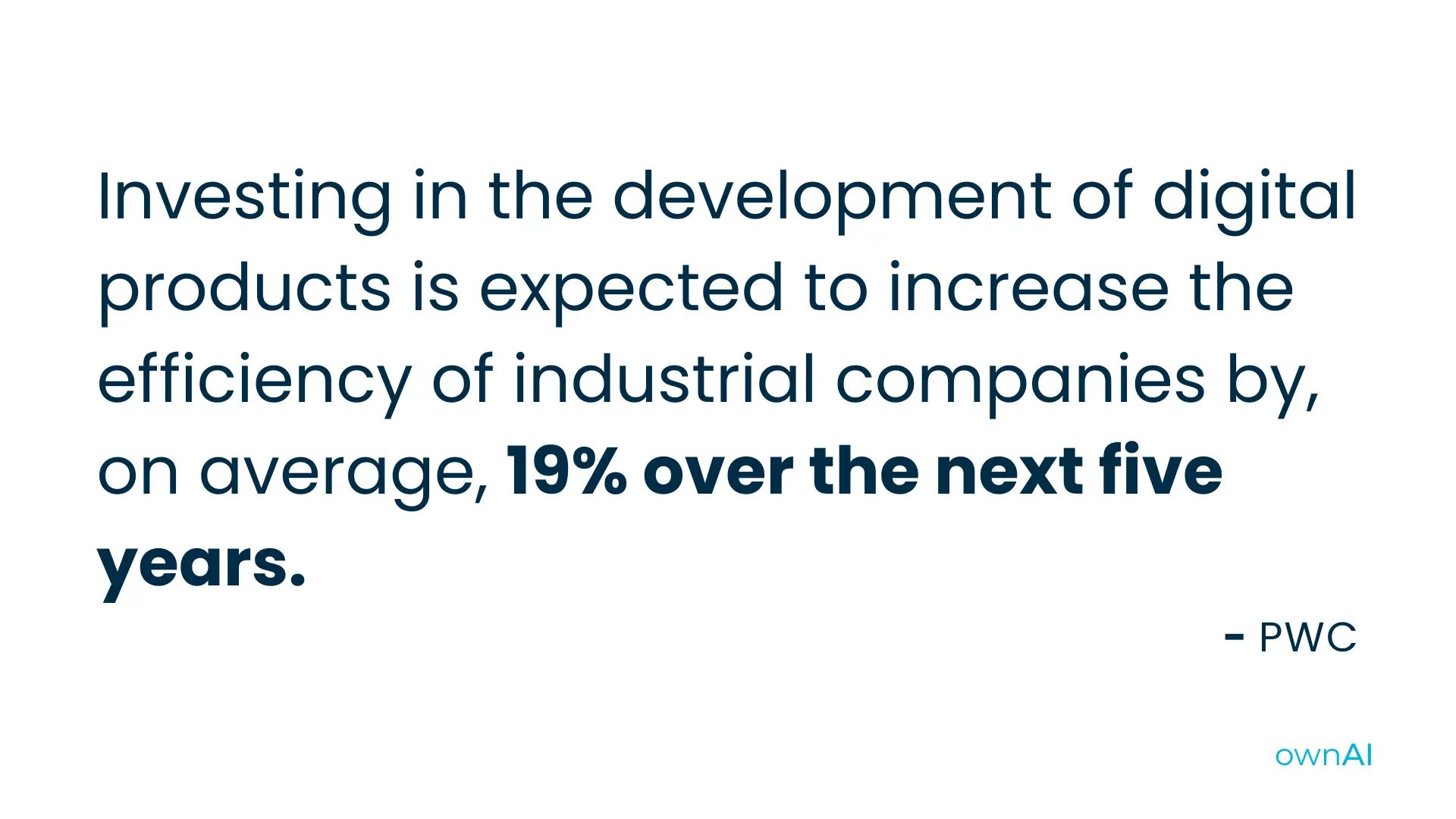
The integration of digital product strategies has increased company profits and provided many other incredible benefits. Successful companies always generate new ideas, follow the latest trends and refine their products to rise in the market and meet every customer demand. It's a time that each business should embrace digital product development to upgrade and enhance profit margins.
Moreover, 49 percent of companies do not follow a consistent digital product development process, so 21 percent of them fail to create digital products that customers need. Developing digital products is challenging; therefore, it is imperative to approach the digital product development process in a logical and correct way.
In this blog, we're going to walk you through a brief introduction to digital product development, its business benefits, and the crucial stages of the digital product development process that every developer and digital product development company needs to follow. As a Digital Product Development Company, ownAI will share its knowledge and experience on the digital product development process that will help you unlock the potential of your business. Without further ado, let's get started!
What is Digital Product Development?
Digital product development is a defined methodology of creating a digital experience that connects your customers to your business electronically. The company's engineering teams use this process to develop digital products at speed with an intricate user interface while testing regularly.
Digital product development mainly focuses on the consumer and aims to improve the consumer journey. This process improves the digital product that meets user demand using consumer analytics, innovative technology, design thinking, actionable data, and marketing principles.
Digital products are programming-based business assets that bring value propositions to the end user. They can be digital platforms, digital applications, digital dashboards, or a combination of software and hardware that produce new revenue streams for the company. Some common digital products include Mobile Apps, SaaS, Web Apps, the Internet of Things, and IT solutions.
Business Benefits of Digital Product Development
Every business owner should know that a successful digital product development process significantly benefits the company in various ways. Let's take a look at how digital product development is super beneficial for your business in this digital age!
- The major benefit of digital product development is that it delivers digital products using the latest technology and methodology to maximize the user experience.
- Digital product development is scalable, constantly adapting to meet ever-changing consumer needs.
- Digital products help create new revenue streams for the company.
- It also decreases workflow friction by keeping the team on the same page and up to date. The clear visibility into product status allows for greater team efficiency and rapid decision-making.
- Digital products attract customers and generate brand loyalty.
- Digital product management solutions improve profitability and margins by negotiating reasonable prices and lowering overall costs.
- Lastly, user-oriented product development can lead to success and viability.
7 Essential Stages of Digital Product Development Process
Now we know what digital product development is and what benefits businesses can gain by deploying digital products. It's time to look at the steps involved in digital product development. Here are the seven important elements of the digital product development process:
1. Ideation
As the name shows, the first and foremost step to creating a digital product is brainstorming, generating ideas, and identifying your customers' needs. Analyze the problem and gaps in the market to solve. You need to understand customer challenges, pain points, and goals. In addition, do a benefit structural analysis that recognizes a product concept's benefits. Another method to find a problem is to do a SWOT analysis and assess the strengths, weaknesses, opportunities, and threats behind your ideas.
Here is the canvas by itonics showing the steps involved in an ideation process…
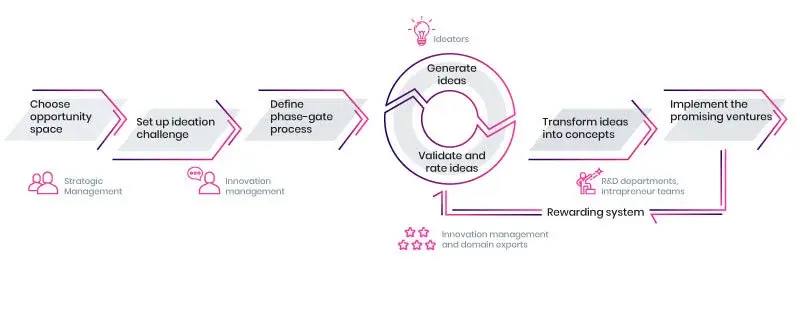
The key is to gather as a team and unravel your creativity. You can also collaborate with various stakeholders in the business to generate ideas and analyze things. Besides, get to know the customers' reviews about your current products.
2. Research and Planning
Once you've come up with ideas, now there is a need to verify their demand by engaging in research. Research lets you understand your target customer, identify the facts of your idea, and see what other companies are doing in the market.
In addition, research and idea screening allows you to see how you can commercialize the product and where the product fits in your digital product development strategy. It is recommended to run surveys to validate demand for your idea or launch a PPC campaign to see if your idea can intrigue people and get engagement.
3. Detailed Design
This is where we start building the digital product. The first step to introducing User Interface and User Experience is prototyping. Its purpose is to get feedback from prospective users and stakeholders. It allows you to visualize your product.
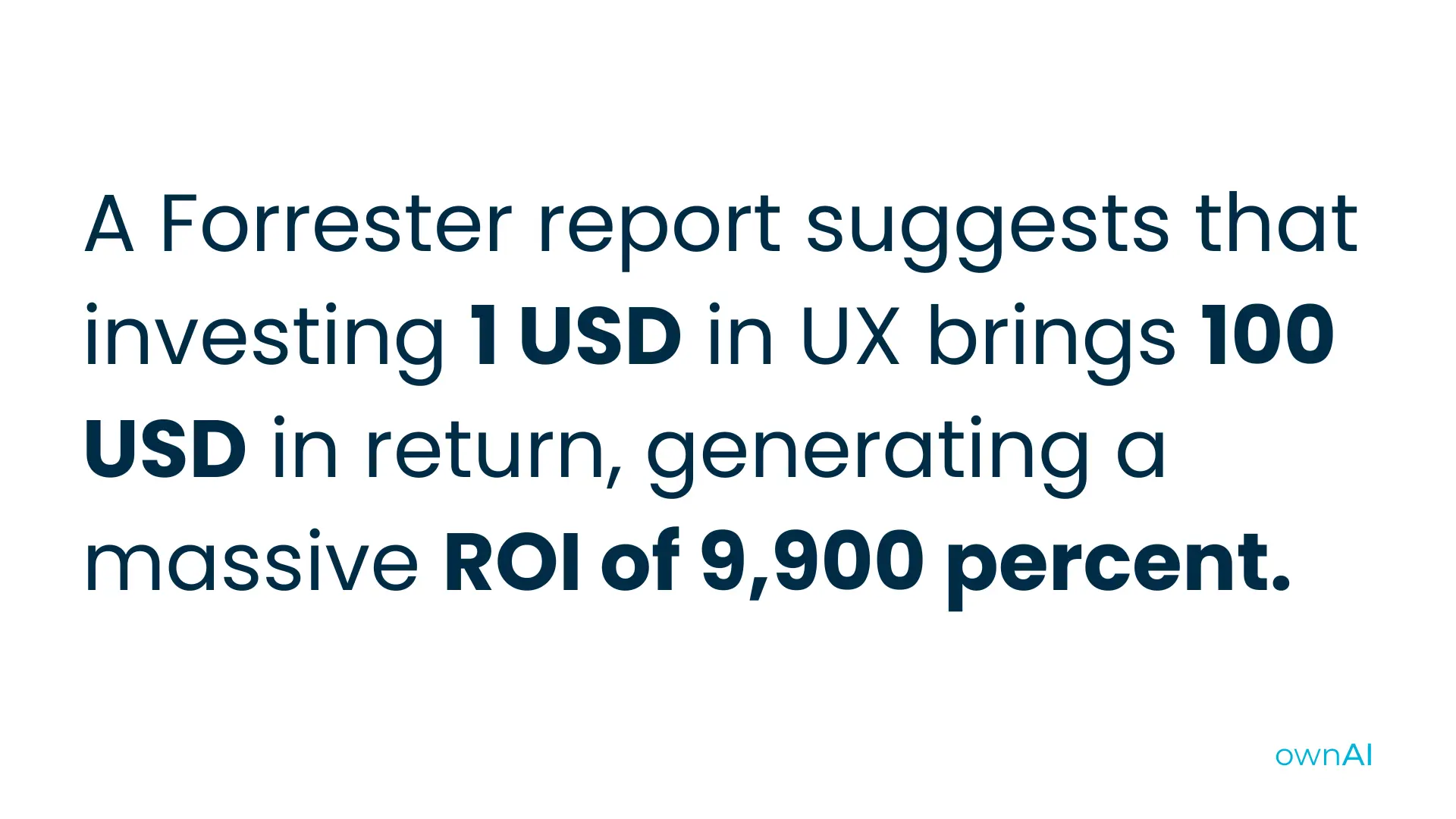
Create an interactive design of the product and interact with it on devices where it'll be used. It'll help you view your product visuals and experience it from a user perspective.
4. Development
As designers hand over designs, developers use them to bring them to reality. After the design, the software developers write the product's code, spin up cloud infrastructure, build hardware, and take all the other necessary steps required in development.
For the development process, it is recommended to use Agile methodology. Agile implementation gives you more control, highly increases development productivity, and gives you an end product that will provide real value to your customers and users.
5. Validation and Testing
At this stage of the digital product development process, you engage in the final validation and testing of your digital product. This step is to ensure your product is meeting user requirements. For it, you can run remote usability tests to observe how people comment on your product.
The goal is to give people the independence to test your product and see how they use it. Besides, check out for any issues in the product and address them.
6. Launch
Finally comes the peak moment you've been building your product for. Launch your digital product and make it available to users on all platforms, including mobile, cloud, or web. Launching a digital product is a start. Once you've launched the product, start analyzing statistics, traffic analytics, and user engagement metrics.
The critical thing to remember here is that you need to decide whether you want a soft launch or a public launch, depending on how refined your product is.
7. Maintenance and Support
Last but not least, the final essential step in the digital product development process is maintaining the product and identifying improvement areas. If your digital product is successful, maintenance and support will be the longest step.
Support users and monitor user feedback to ensure your product is relevant and fulfilling its purpose. This stage helps realign your digital product as well as help your business respond to any emerging requirements.
Digital Product Metrics
There are certain metrics we need to consider to constantly improve our product. Here are some of the metrics that will show product success level,
- Customer Retention Rate

- Monthly Recurring Revenue

- Churn Rate

To know more about the Product Metrix, check out an article by UPPLABS
Final Thoughts
There you have it- a simplified digital product development process. Big companies are using digital products to maximize the full potential of their business and expand into new markets. Remember, your SaaS, website, or app development process might look slightly different, but it should follow all the above-mentioned steps.
To gain the benefits of digital product development, you should know what your digital product is, why it should exist, and who it serves. However, with the increase in Digital Product Development, startups need to choose a thoughtful plan of action to avoid any risks. So, doing a lot of research and understanding your market, target audience, goals, and budget is crucial to step up your business game.
Whether you're an entrepreneur or new in the market who needs help regarding the digital product development process, ownAI has a solution. ownAI has been creating innovative digital solutions for years. As a Digital Product Development Company, we offer a huge range of digital product development services. We have a professional team of digital product developers with years of experience that ensure a flawless product development process.
team of digital product developers with years of experience that ensure a flawless product development process.
Unlock the potential of your business with our quality Digital Product Development Services! Reach out to us today!

Let’s discuss about your next AI, Cloud or Digital Transformation.
 AI-Skilled & Agile
 Transparent, Trustworthy &
Vetted team Not tech, but business &
customer first approach





 Turn your idea into MVP in 8-16 weeks