



The broad use of cloud computing has had a significant impact on several ground-breaking technology developments that have emerged in recent years, including machine learning, artificial intelligence, and financial operations, to name just a few.
Gartner stated in a recent post that they anticipate more than 85% of enterprises to adopt cloud-first concepts by the year 2025.
The cloud has been at the top of almost every analyst's "one to watch" technology list for the last 20 years. This is mostly because the cloud has a high accessibility potential, usability, and efficiency.
Applications, data storage, and the maturation of the concept of software as a service were the focal areas of the first generation of cloud computing.
During the second iteration, the IT teams upgraded their capabilities and streamlined their operational procedures. What the next generation of cloud computing will prioritize heavily?
The following is a list of the top 10 cloud computing trends for the year 2024 and beyond:
1. Hybrid cloud servers are becoming more popular
It combines the benefits of both public and private cloud servers, giving you the ability to design a custom information technology architecture that operates across a variety of different contexts. In the past, you had to choose between private and public cloud servers based on what the needs of your application required. The public cloud provides convenient data access, almost limitless scalability, no upfront capital investment, and services that are paid for on a pay-per-use basis. When it comes to managing sensitive data that has to have its access and management regulated, the best option is to use a private cloud.
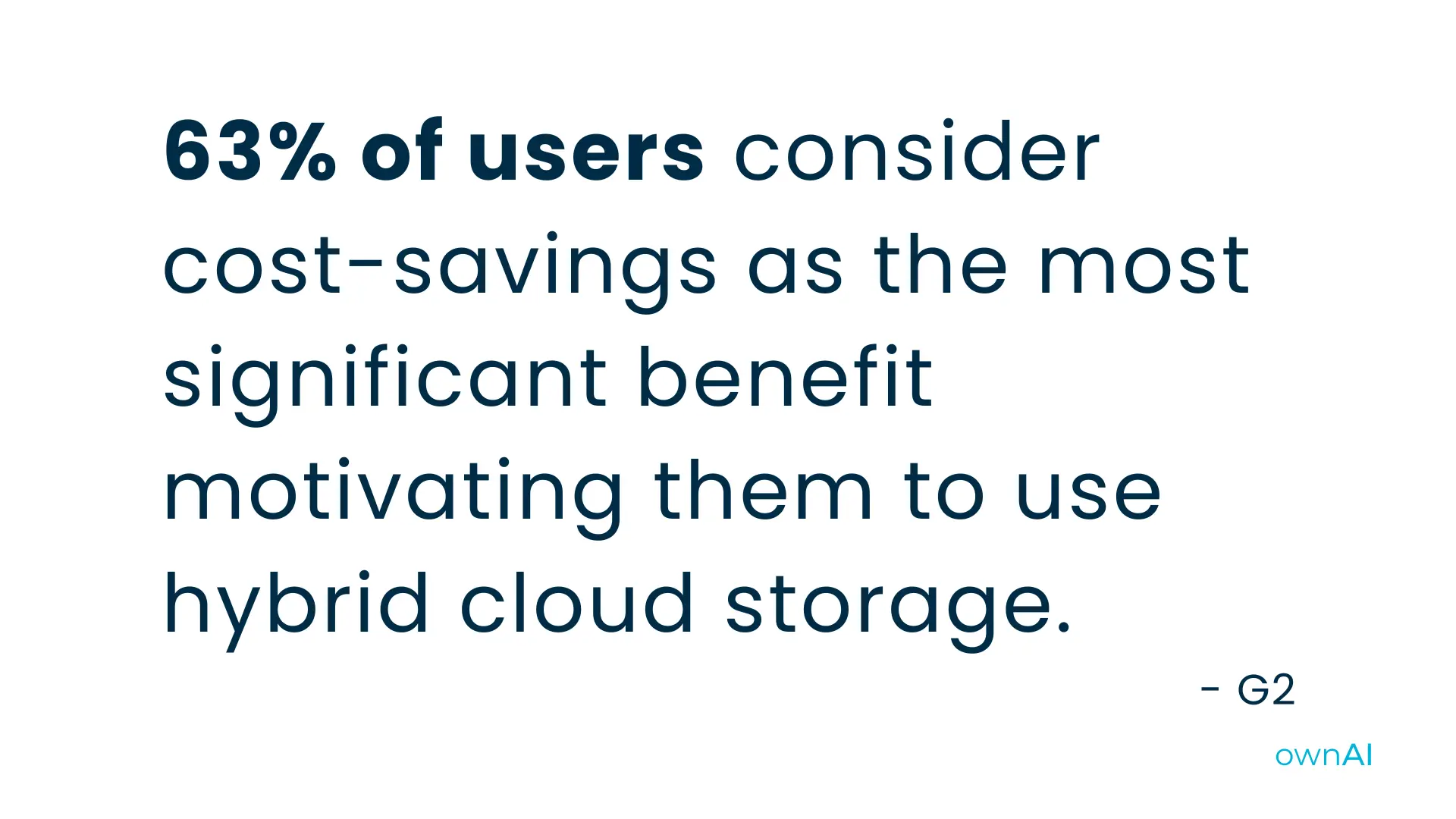
You can develop a public-private cloud solution that is unique to your needs by using a hybrid strategy. In addition, it is possible to include multi-cloud solutions by selecting services offered by several different cloud suppliers or providers.
2. Cloud computing costs are being optimized
The use of cloud computing is expanding at an exponential rate, and associated expenses are also growing. On the other hand, recent indications of a sluggish economy suggest that businesses will turn to cloud-based cost-cutting strategies that do not compromise the cloud's security or performance. This will be the case even if these indicators have just emerged.
It is anticipated that by 2024, we would see improvements in both the optimization of cloud services and the provision of cost-effective options. In addition, effective monitoring has always served as the central focus for achieving cost efficiency, optimizing resource management, and bolstering overall safety. It shouldn't come as a surprise if there is an increase in innovation in monitoring methods as well, particularly for the optimization of cloud computing costs and utilization.
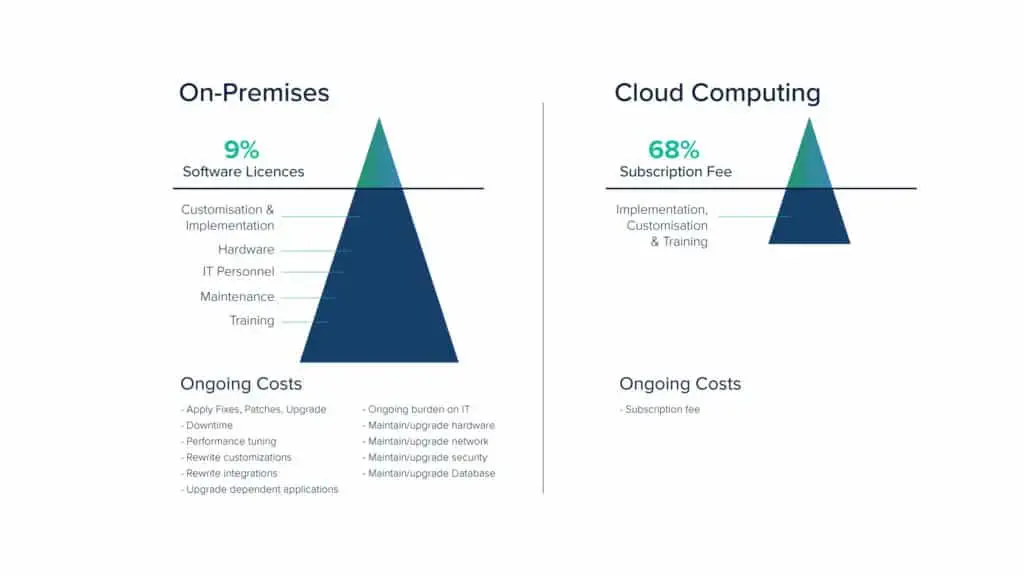
Image Source: https://www.cuelogic.com/
Get in touch with us to learn more about how much cloud computing costs if you consider us as your cloud-based application development partner.
3. Number of FinOps is increasing
The major investment banks in the world anticipate that the growth of the global economy will drop even more by the end of 2024. Organizations will increase their expenditure on the cloud, but at the same time, they will rigorously monitor any spending that is tied to the cloud. They will work to improve how they make use of cloud computing to speed up the delivery of commercial value.
FinOps, a culture that was built inside businesses to assist them in managing and optimizing cloud expenses by bringing together DevOps, IT, and finance teams to handle cloud costs throughout the company cooperatively, will surely gain popularity shortly. It will make it possible for companies to improve their economic value while also increasing their financial responsibility. To have an accurate understanding of their cloud expenditure, businesses should anticipate making further investments in the formation of partnerships with third-party platforms that assist with cost optimization and cost management.
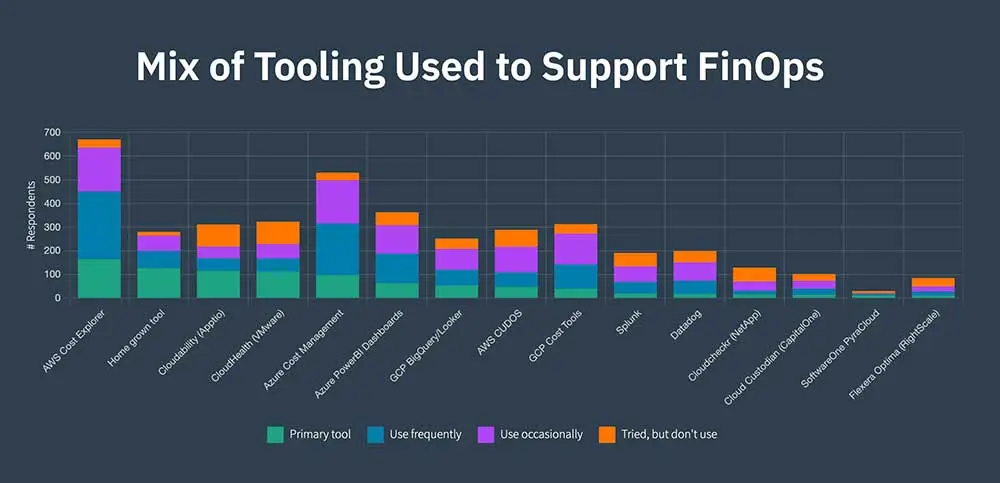
In addition, Cloud cost optimization tools are essential to an effective FinOps strategy.
Let us have a look at the chart prepared by ProsperOps showing the the statistisitcs on tools that have been used to support FinOps…
4. Data security is enhancing
Whether they use the cloud or not, businesses cannot afford to take any chances when it comes to the safety of their data. Multiple instances of data breaches posing challenges to organizations have been brought to our attention recently. Managing and securing multi-cloud settings is very difficult, and these environments run the risk of experiencing a larger number of security breaches. With the development of new strategies to keep the cloud environment secure, the topic of intelligent security for storing and transmitting data need to once again take precedence as the most discussed topic.
To prevent data breaches, encryption, and multiple-factor authentication should become the standard security measures. Reviewing privacy policies, backups, and disaster recovery systems will be a top priority to reduce the amount of data that is lost. Testing the system's security will get a lot of attention to identify any vulnerabilities and close them in advance. There will be a shift toward proactive security techniques as opposed to reactive security in the future.
Let us have a glimpses of how to enhance the data security on cloud…
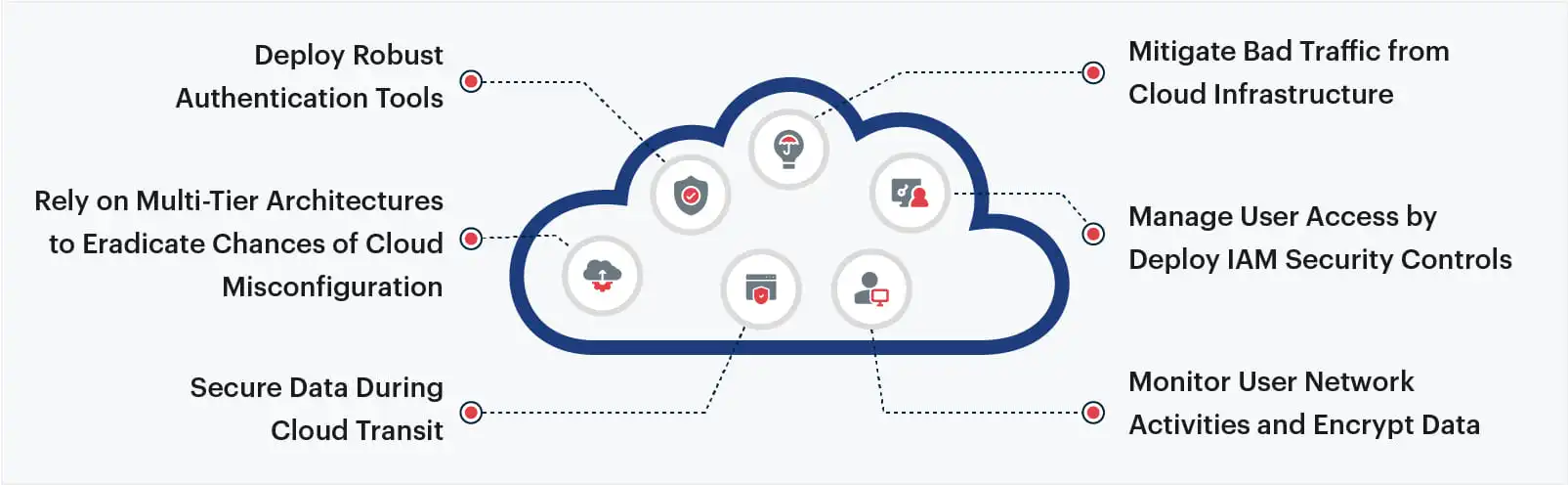
Image Source: https://www.sigmoid.com/
5. Data sovereignty is getting more steam
Current geopolitical tensions have resulted in corporations and governments being compelled to preserve their data by storing it inside the confines of their geographic regions. Countries will wish to limit the amount of control that other nations have over their data. This indicates that by the year 2024, nations will have enacted stricter restrictions and sharing laws regarding the sovereignty of data and the privacy of individuals.
In addition to the CCPA, the EU, and GDPR, the restrictions on data privacy and the laws between nations will be stricter than they have ever been. Rules and regulations governing the encryption of data will be brought up to date, as will procedures for the management, storage, archiving, and deletion of data. Because of this, businesses will be forced to take preventative measures to draft their own data handling and governance policies to guarantee seamless integration and exchange across the IT environment.
Logical Replication, which allows users to create geo-fence subsets and other constraints to restrict data to certain regions so that it can't be duplicated and used anywhere else other than where it was meant to be used, will see changes in the future about open-source data communities. These upgrades will be made available to users shortly.
6. Artificial Intelligence (AI) will get more responsible
The current state of affairs reveals that artificial intelligence has already been put to use in both ethical and immoral ways. In 2024, rogue companies and people will continue to increase their use of AI to achieve socially damaging goals. As a result, governments, corporations, and academic institutions will feel the need to manage AI to ensure that it is used responsibly and ethically. A great number of companies and organizations will start taking measures to guarantee that their AI is dependable and trustworthy.
In addition to this, artificial intelligence that can forecast the future will also show indications of promise. The only way to prevent a disaster is to be able to predict data breaches before they take place. Because of this, businesses will be motivated to create predictive artificial intelligence and combine it with other data security methods.
7. Machine Learning (ML) will be enhanced
In terms of both usability and the amount of time and money it saves, machine learning is a technology that is of the utmost importance. When it comes to providing improved services, cloud computing service providers themselves primarily rely on machine learning. This includes the management of huge and widespread networks that provide clients with storage resources, the regulation of cooling and electricity systems in their data centers, and the creation of security solutions to preserve both their data and the data of their customers.
Businesses that need a high level of dependability from their mission-critical systems will employ machine learning as a means of ensuring that they achieve the appropriate level of performance. Machine learning is already being used to improve efficiency in operations across a variety of industries, including education, healthcare, digital marketing, and search engines.
8. Solutions will require little to no coding at all
Writing code from scratch and developing code that does the same thing over and over again are both seen as time-wasting practices by more inventive technologies and the more intelligent engineers behind such technologies. If they are going to build huge and complicated applications, IT professionals could require extra bandwidth. In certain instances, the need for highly qualified software engineers has resulted in a rise in the requirement for low-code and no-code platforms to enter the picture.
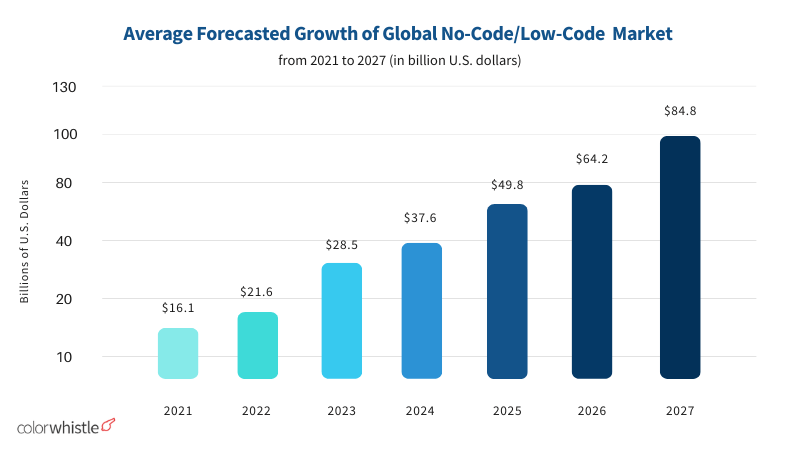
Image Source: https://colorwhistle.com/
Users can achieve higher coding agility while also saving time and money while using these platforms. Users have reported seeing the advantages it provides mirrored across the company and have reported feeling the beneficial influence it has had on them. The impact of enhanced speed and a reduced likelihood of mistakes plays a significant part in the overall quality of the experience that a client has. It is very desirable to minimize the requirement for difficult coding; as a result, low-code and no-code services are going to be quite popular in 2024 and beyond.
9. XaaS cloud computing offerings will mature
The market for everything as a service, also known as XaaS, is expected to expand because an increasing number of enterprises are transitioning to cloud computing as the fact that consumers expect to have a greater degree of control over the services in which they have registered. The expansion of cloud-based services and the incorporation of cutting-edge features such as decreased downtime, management, and reduced monitoring costs would have the effect of broadening the market's potential customers.
The development of the XaaS market in 2024 will also benefit from the increased interest in subscription-based business models, which is expected to continue throughout the forecast period. The benefits that users get from using XaaS include cost reductions, scalability, accessibility, quicker deployment, rapid change, improved security, and greater flexibility.
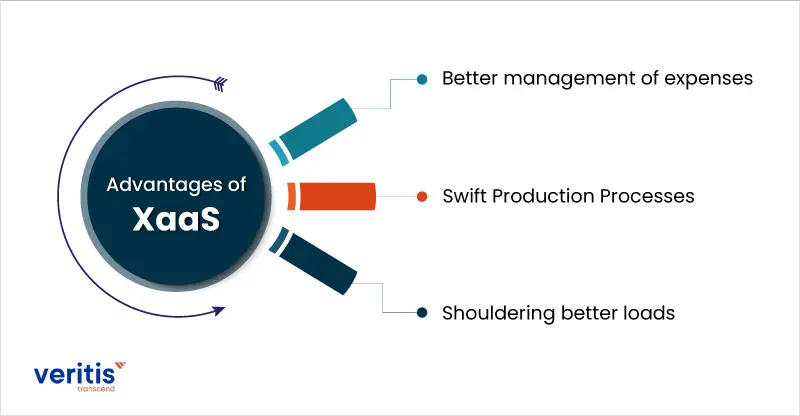
Image Source: https://www.veritis.com/
10. Serverless computing is moving forward in a big way
Serverless computing offers organizations a pay-as-you-go strategy for purchasing backend services. Instead of charging consumers for the servers they engage, serverless computing bills users depending on how much they utilize the service. Serverless computing is a kind of autoscaling service that eliminates the need for companies to maintain their backend server infrastructure or care about where their servers are located.
It is a cutting-edge technology that enables a wide variety of businesses to save expenses, boost agility, and cut down on the number of backend failures. As a result of the fact that it is now an ideal method for consumers to access the cloud without having to deal with the complications of maintaining its infrastructure, it is also expected to be a prominent cloud computing trend in 2024 and beyond.
Summary
Cloud computing enables developers to design infrastructure that is more effective, adaptable, and environmentally friendly, hence improving the process of software development. To be ready for expansion, developers should familiarize themselves with the most recent developments in cloud computing trends and experiment with new ways of thinking.
Making the switch to hybrid cloud servers allows you to combine the benefits of both public and private cloud computing. The performance of your application may be significantly improved by including edge computing. Utilizing serverless computing allows you to delegate the process of maintaining and provisioning services.
The regulations governing governance and the management of cloud data will become more strict. A significant amount of focus will be placed on improving cloud security by analyzing existing vulnerabilities and filling those gaps with additional, more robust precautions. Now, enterprises will have access to more detailed security features, and those features will eventually make their way down to end users as well.
Both AI and ML will continue to make strides forward and will become more in demand. As more intelligent technology becomes widespread, there will be increased incorporation of AI and ML. They will alter how data is acquired, protected, stored, and interpreted in the cloud, thus opening the way for ready-to-use AI models.
The next year will bring about considerable shifts in cloud computing, because service providers will modify their offerings and businesses will implement preventative measures to maintain their competitive edge.
ownAI Helps You Get The Most Out Of Your Cloud Computing Investment
With ownAI's assistance, your firm will be able to maximize the benefits of cloud features and increase its resistance to disruption.
By teaming up with ownAI, you can be certain that your cloud environment will be optimized to its greatest potential, allowing you to get the most out of your investment.
Talk to us now to learn more about how you can take advantage of ownAI’s digital product development services to thrive in your cloud journey.

Let’s discuss about your next AI, Cloud or Digital Transformation.
 AI-Skilled & Agile
 Transparent, Trustworthy &
Vetted team Not tech, but business &
customer first approach





 Turn your idea into MVP in 8-16 weeks