


When choosing a cloud computing provider, what criteria should be met?
Since the pandemic of 2020, cloud computing has seen explosive growth and is poised to become the dominant computing model in the information technology industry.
According to Gartner, by 2025, a whopping 95% of fresh digital workloads will be launched on cloud-native platforms. That's a massive increase from just 30% in 2021!
The proliferation of cloud computing service providers is directly proportional to the industry's explosive expansion, providing consumers with a plethora of alternatives.
Instead of investing the same amount of money (or possibly less) into maintaining your own data center, you could instead use that money to pay a cloud service provider for data storage, resources, security, and hardware capabilities, relieving you of the burden of worrying about the underlying infrastructure.
The proliferation of cloud service providers, each promising top-tier offering at rock-bottom prices, makes it difficult to zero in on the best option for any given firm.
The cloud computing provider may make or break your organization, so it's crucial to think about what factors you should weigh when deciding on a cloud service.
Let’s hope on the points one-by-one to choose the right Cloud Computing Provider.
- 1. Cost Advantages
- 2. Company Profile
- 3. Certifications, Licences, and Standards
- 4. Advancement in Technology
- 5. Governance and Data Security
- 6. Integrations and Partnerships
- 7. Contracts & Service Level Agreements (SLAs)
- 8. Performance & Reliability
But before that let’s make sure…
Why is it Important to Choose the Right Cloud Service Providers?
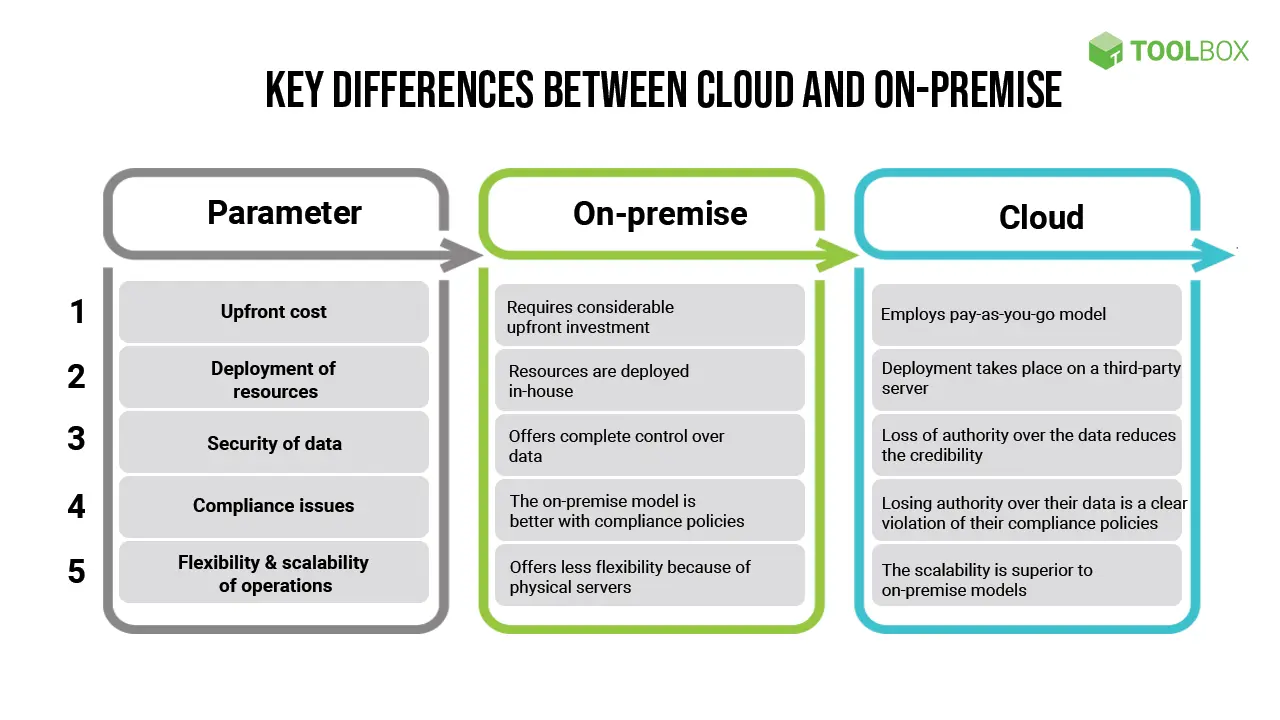
For starters, rather than spending time and money on resource-intensive tasks like infrastructure upkeep, businesses may instead concentrate on creating and improving their products and services. Cloud service providers require a recurring payment (either monthly or yearly) to maintain access. The provider is responsible for the infrastructure's upkeep, licensing, and any other necessary provisions.
What's more, you don't need to be a tech whiz to use the cloud. It's especially important for smaller organizations that can't afford to employ a large IT department and whose owners lack the expertise to handle infrastructure maintenance on their own. Cloud services and help desk assistance are available whenever they are required.
Additionally, the cloud is extremely scalable. Changing a cloud service provider's subscription plan is all it takes to scale up or down. When using an on-premises solution, this requires reorganizing the workforce and/or the physical location of the business, which may be costly, time-consuming, and a significant barrier to growth.
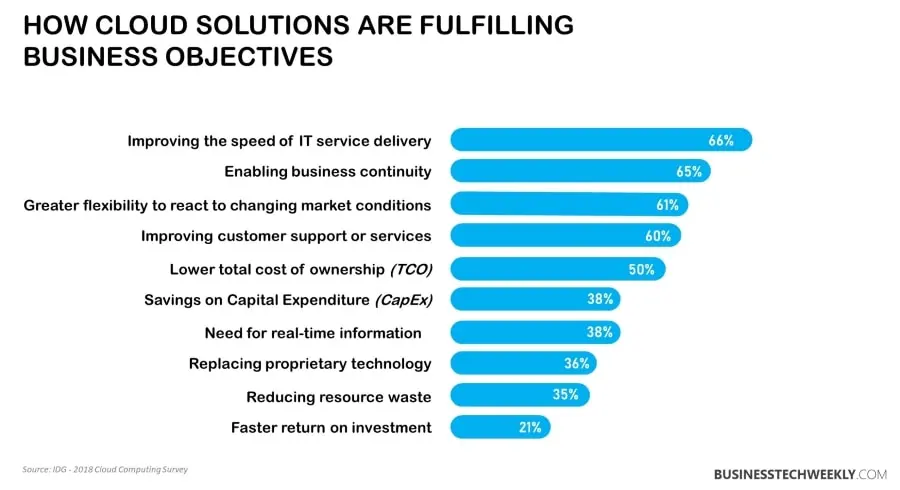
Another factor is flexibility, and we know that it is a byproduct of scalability. The cloud simplifies the process of linking remote workers and providing them with all the resources they need to do their jobs. It also helps the whole staff, which is more mobile to use mobile devices to get things done.
The safety of a cloud-based service is another point in their favor. Although security is a major issue for customers, reputable cloud services make it a priority. Information is encrypted and stringent password restrictions are standard practice. They are secure and compatible with the General Data Protection Regulation (GDPR). Some businesses, notably those in the financial sector, insist on using only on-premise software. If there are no such constraints, though, cloud computing makes the most sense.
The decision is now no more whether or not to use a cloud platform, but rather, which cloud computing provider offers the greatest services.
8 Things to Consider When Choosing the Right Cloud Computing Service Providers
The market for cloud computing is inundated with several cloud service providers, from modest startups to well-known and successful cloud giants.
When there are many options, choosing the best cloud service provider becomes more difficult because the company must weigh the advantages and disadvantages of each vendor. After all, it isn't recommended to switch to cloud service providers hurriedly.
What factors should one take into account while deciding on a cloud service provider?
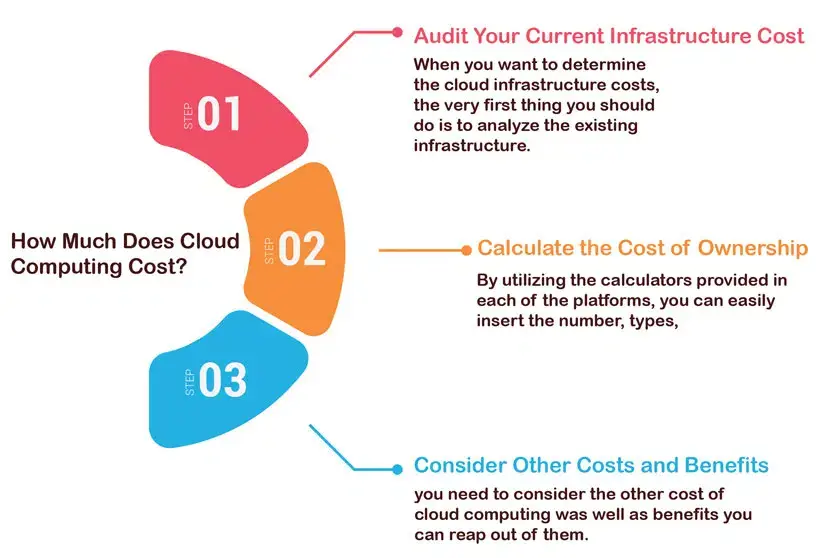
1. Cost Advantages
Make sure you are receiving the following cost advantages if you are searching for the ideal cloud provider for your company:
- Custom pricing and plans
- No period for lock-in
- Get discounted offers for a long-term commitment
- Small ongoing billing modes
- Easy scaling and termination service
2. Company Profile
You should evaluate your company's needs and make sure the cloud computing provider complements your overall business objectives. Keep in mind the following guidelines as you narrow down your search for a cloud service provider:
- First, you should see if the services offered fit in with your overall business goals
- See whether your company benefits from their service approach
- Investigate the length of time they've spent working in the field
- Check out what other customers have said about their service
- Verify how quickly issues are addressed for their customers
Consider many more criteria, particular to your organization and its needs, before settling on a cloud service provider than just the ones listed above.
3. Certifications, Licences, and Standards
Thirdly, and most crucially, you need to place attention on the licenses and certifications that your cloud computing service providers have since they give you an idea of whether or not they are complying with the most effective industry practices and the essential standards in the cloud sector.
Cloud service providers are obligated to adhere to all industry certifications, most notably ISO 27001, in addition to additional restrictions prescribed by a variety of national governments.
4. Advancement in Technology
The next thing is to determine whether or not the cloud service provider provides a diverse range of services and indicates that it will maintain its level of development and innovation over time.
Check to see whether the technologies that are supplied by the cloud provider are compatible with the needs of your firm.
Evaluate the complete portfolio and get a better understanding of the overall services that are supplied, including any commitments to specific technologies.
5. Governance and Data Security
You should select a cloud service provider that provides you with individualized data protection for the most important data you store, in addition to certified firewalls that you can rely on in any situation.
You should defend your network from any unwanted attack by ensuring that your cloud computing provider offers a cloud-based Intrusion Prevention System (IPS) that provides you with unparalleled protection for your data. Given that cloud data is vulnerable to hazardous security risks, you should secure your network from any unwanted assault.
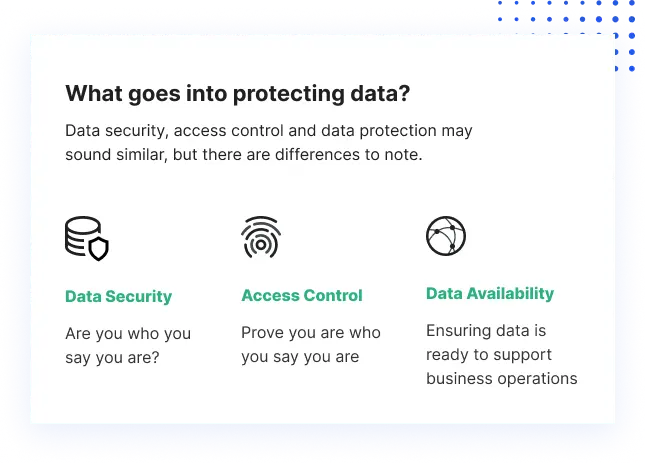
Image Source: https://www.imperva.com/
Conduct in-depth research on the website of the cloud service provider to determine whether or not it provides adequate data protection and has legal data management policies in place. If it does, then the cloud service provider will be able to handle and manage your data effectively without any loss.
Make sure they are authorized cloud providers who are reputable and well-established, and that they will protect your data by creating a backup once a week or once a month and maintaining its confidentiality.
Also, make sure that your cloud computing service provider complies with important safety standards like GDPR especially if you use cloud storage.
6. Integrations and Partnerships
Checking if the cloud service provider is involved in many partnerships or vendor integrations that will be beneficial for your firm is the next step.
A cloud provider that maintains ties with different vendors will be in a better position to efficiently meet the requirements of your company by accessing the most cutting-edge technology.
7. Contracts & Service Level Agreements (SLAs)
Next, before agreeing to the cloud service provider's terms, you should conduct a thorough check for service delivery and legal protection. Understanding the language and nuances of a cloud provider's service level agreement may be challenging.
You should have a legal firm review these conditions before you agree to them so that you understand your rights to a refund and the level of service availability you may anticipate from the cloud provider. If you have a complaint and want to know how quickly customer service will reply, read their terms and conditions.
- Vendor lock-in: Don't choose a cloud service whose rules and technology are too complicated to enable you to move to another provider in the future.
- Migration Support: Try to find a cloud computing service that provides migration support. To ease customers' concerns throughout the application migration process, most cloud service providers provide clients with evaluation tools. Inquire about any migration assistance services offered by the company.
8. Performance & Reliability
Focus on the performance and the reliability of the cloud service provider, carefully examine the previous six to twelve months of their service level agreements (SLAs), and then plan your future moves. This phase is certainly not the least important.
Make sure that the cloud computing provider has incorporated a monitoring and reporting mechanism, and if there isn't any documentation available on their website, ask the provider for this information directly. Investigate the cloud computing service provider in great detail by reading up on them on the internet and checking out their track record.
Verify that they have a plan for dealing with server outages as well as how their support staff handles client complaints.
Reasons why ownAI Solutions will be the Best Fit
ownAI Solutions is a trusted cloud computing service provider that caters to startups, small businesses, and large corporations. ownAI's cloud experts help/consults companies decide what cloud service provider to go with among the most popular cloud platform providers such as AWS, GCS, Azure, etc… and what cloud services are best suited for their needs.
If you’re not familiar with them, let’s discuss a little bit about them in brief.
Amazon Web Services (AWS)
Amazon Web Services has been around since 2002, and in that time it has become the undisputed leader in the cloud computing business. The sheer size of this cloud and the breadth of its services is likely major factor in its widespread adoption. Amazon Web Services offers a variety of cloud computing options, including IaaS, PaaS, and SaaS. In addition to serving as a platform for deploying and managing applications and services including mobile and web-based ones, private IP addresses, subnets, and virtual machines are also available. Size, processing speed, amount of storage space, etc. are all customizable for the users.
A major benefit of AWS is that it can be used by both large enterprises like Netflix (it can serve practically endless numbers of users) and smaller enterprises looking to maximize their cloud potential. Another advantage stemming from its widespread use is that it has more readily accessible resources than its competitors. Because of this extensive body of information, it is simple to understand and use. Apps hosted on AWS can be easily scaled up or down since their cost is dependent on the amount of consumption and storage that is adjustable. However, the sheer variety of AWS services can be overwhelming, and the vast majority of AWS customers of small and medium-sized enterprises(SMEs) only require the barest minimum.
Google Cloud Services (GCS)
Launched in 2010, the Google Cloud platform is the newest cloud provider available today. As with its rivals, GCS enables advanced computation and provides storage, databases, and networking. The services offered by Google Cloud Platform mirror those of AWS and Azure. Because its App Engine product frees developers from having to manage the server, Google's cloud platform is ideally suited to mobile applications.
GCS is also well-known for its safety. It is commonly regarded as very safe because of its various levels of data encryption, authentication, and numerous security-oriented teams. Deep learning, artificial intelligence, and machine learning are just a few of Google's well-known analytic techniques that offer GCS an edge.
Microsoft Azure
Both AWS and Azure are formidable rivals due to the maturity and completeness of their respective offerings in the cloud computing space. Although it didn't debut until 2010, Microsoft is a seasoned industry veteran. IaaS, PaaS, and SaaS are all available on Azure, just as they are on Amazon Web Services (AWS), and both Linux and Microsoft Windows are supported.
Unlike the highly adaptable AWS, Azure is targeted at enterprise applications. This is not surprising given Microsoft's extensive background in this area; the company simply converted its on-premises programs like Windows Server, SQL Server, Sharepoint, Office, Dynamics Active Directory, Net, and others into cloud-based equivalents. Users who are already familiar with Microsoft's other offerings are more likely to put their faith in Azure. Microsoft Azure is also regarded as one of the quickest cloud services out there. Its strength lies in the fact that it's a hybrid cloud that can operate a data center and communicate with other clouds.
Sometimes cited as a drawback of Azure is the fact that smaller users are left struggling with support, training, and other important parts of using the cloud because the service is geared majorly toward enterprises.
Conclusion: What You Need to Know Before Choosing a Cloud Computing Provider
The best cloud computing provider is one that can adapt quickly to meet even the most specific requirements of its clients. Even more crucial than having a strategy is making sure the plan has clear execution milestones and business goals.
Rushing to the cloud may cause more difficulties than it solves. Early planning and due diligence may spare your company from time-consuming and perhaps expensive complications down the line.
And always keep in mind that there is no such thing as a flawless cloud transition model; the goal is to get started, explore without fear, fail fast, and learn as you go.
Get in touch with us to find out more about how having us on your side can help you grow your business leap and bounds.

Let’s discuss about your next AI, Cloud or Digital Transformation.
 AI-Skilled & Agile
 Transparent, Trustworthy &
Vetted team Not tech, but business &
customer first approach





 Turn your idea into MVP in 8-16 weeks