


Telecom and utility companies deal with one constant problem. Thousands of calls, not enough time.
Customers call for everything. Whether it's billing issues, network problems, service outages, or plan changes. And most of these conversations are repetitive, time-sensitive, and high-volume.
That’s when things start breaking down.
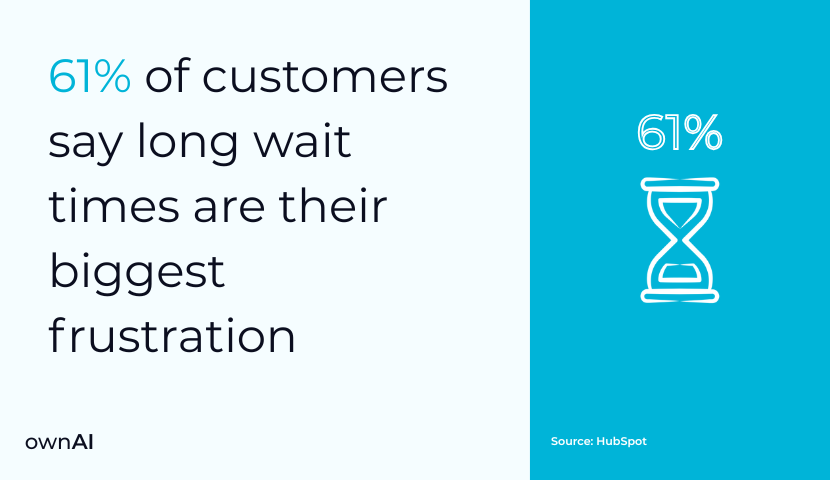
Long wait times frustrate customers. Agents get overloaded. Costs keep increasing. And still, the experience does not improve.
This is where Voice AI agents are changing everything.
They can answer calls, understand intent, resolve issues, and even take actions in real time. All without putting pressure on your support team.
But here is the catch.
Not every Voice AI agent provider can handle telecom or utility environments. Some work well in demos but struggle with real conversations, integrations, or scale.
Choosing the best voice AI agents for telecom and utility providers is not just a tech decision. It directly impacts your customer experience, operational cost, and scalability.
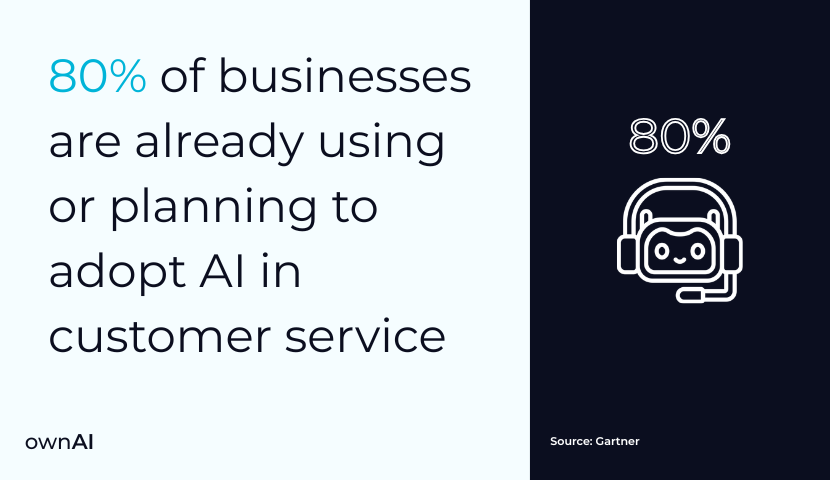
Most businesses are planning to adopt voice AI agents, but don't know which platform is suitable for them. No worries, we've got you covered!
In this guide, you'll explore:
- What is a voice AI agent?
- Must-have features to look for
- 10 best Voice AI agents for telecom and utility providers
- Benefits of using a voice AI agent
- How to find the right voice AI agent
But first, let's begin with a basic understanding of a voice AI agent before choosing the best voice AI agents for telecom and utility providers.
What is a Voice AI Agent?
A Voice AI agent is an AI-powered system that can handle phone conversations with humans in real time.
It listens to what the person says, understands their request, and replies in a natural voice in real time. It can also take actions like answering questions, resolving issues, or routing the call to the right place.
All of this happens within seconds during a live call.
Unlike old IVR systems, where you press numbers and follow menus, a Voice AI agent can hold natural conversations, understand context, and manage multi-step interactions.
It can answer questions, resolve issues, book requests, or route calls intelligently without needing constant human involvement.
In simple terms, it acts like a virtual phone agent that can listen, understand, and take action just like a trained support executive, but at scale and without breaks.

8 Must-have Features in a Voice AI Agent
Here are some key features you must consider while looking for the best voice AI agents for telecom and utility providers:
Low-Latency & Real-Time Response: The agent should respond instantly during a call. Even a small delay can break the conversation flow and frustrate users. Fast responses make interactions feel natural and smooth.
High-Accuracy Speech Understanding (ASR + NLP): It must clearly understand what the user is saying, even with different accents, background noise, or short replies. Without this, everything else fails.
Natural, Human-Like Voice Output (TTS Quality): The voice should sound real, not robotic. Tone, pauses, and emotion should match the situation so the conversation feels comfortable and trustworthy.
Intelligent Interruption Handling (Barge-in): People don’t wait for their turn while talking. A good Voice AI should detect interruptions and adjust instantly, just like a human would.
Context Retention & Memory: The system should remember what the user said earlier in the call. This avoids repetition and makes the interaction feel intelligent and connected.
Omnichannel & Backend Integration: A Voice AI agent must do more than talk. It should connect with CRM, billing systems, and backend tools to fetch data, update records, and complete real tasks during the call.
Smart Human Handoff with Full Context: When the issue needs a human, the agent should transfer the call smoothly along with all the details. The customer should never have to repeat everything again.
Security, Compliance, and Data Control: Since voice calls involve sensitive data, the system must follow strict security standards and allow control over where and how data is stored and processed.
10 Best Voice AI Agents for Telecom and Utility Providers
Here are the ten best AI voice agents for telecom and utility providers:
Cognigy: Enterprise-grade platform for automating complex contact center workflows at scale.
PolyAI: Voice-first solution built for handling natural, human-like customer conversations.
Teneo.ai: High-accuracy AI platform designed for reliable and compliance-heavy operations.
Rasa Voice: Self-hosted voice AI system offering full control over data and infrastructure.
Telnyx: Telecom-grade voice infrastructure with real-time AI capabilities for custom solutions.
Twilio: Flexible API-based platform for building scalable voice communication systems.
Bland AI: High-volume voice automation platform for handling large-scale inbound and outbound calls.
Retell AI: Low-latency voice AI focused on real-time support and call automation.
Vapi AI: Developer-first platform for building highly customizable voice workflows.
Twixor Voice AI: Telecom-focused voice automation platform with strong workflow and omnichannel capabilities.
Let's explain each in detail!
1. Cognigy
ALT: Cognigy
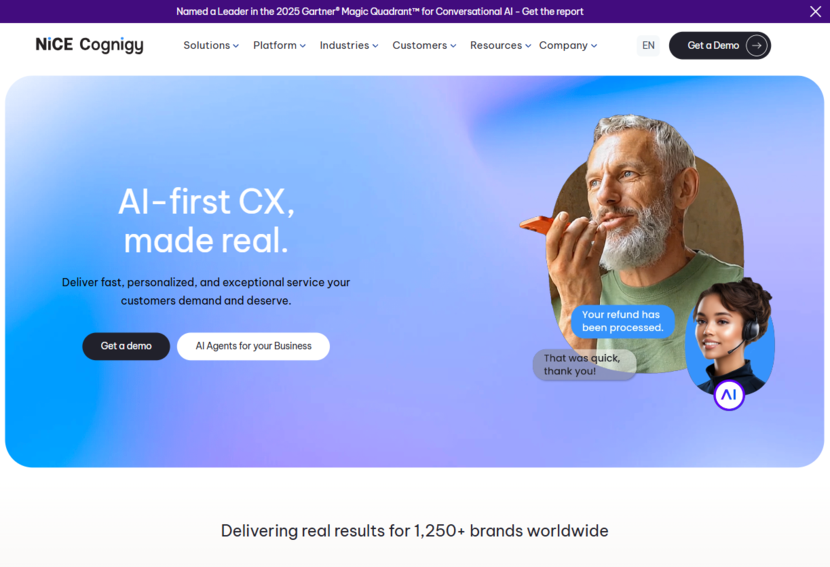
Cognigy is a Voice AI platform built for large telecom and utility contact centers where conversations are complex, and volume is high.
It allows you to automate real customer interactions end-to-end. The system can understand intent, access backend data, and complete actions during a call without switching tools. This makes it useful for handling billing queries, service requests, and technical issues in one flow.
A key advantage is its Voice Gateway, which connects directly with telecom and contact center platforms like Avaya, Genesys, and Amazon Connect. This removes the need for additional telephony setup and speeds up deployment.
It also provides a visual builder where teams can design conversation flows, define escalation logic, and control how the AI behaves in different scenarios. Along with this, built-in analytics help track performance and improve automation over time.
Cognigy is designed for enterprise scale. It supports thousands of concurrent calls and multiple languages, but implementation usually requires technical involvement and structured setup.
Key Features:
- Advanced conversational AI for handling complex, multi-step interactions
- Built-in Voice Gateway for seamless telephony integration
- Low-code interface for designing and managing workflows
- Real-time access to CRM and backend systems
- Context-aware conversations without repetition
- Supports 100+ languages
- Performance analytics and optimization tools
- Agent Copilot for real-time human assistance
Pros and Cons
Pros
- Built for high-volume enterprise environments
- Handles complex customer journeys effectively
- Strong integration with telecom and contact center systems
- Flexible control over conversation logic
Cons
- Requires time and technical effort to implement
- Not suitable for small teams or simple use cases
- Pricing is high and not publicly available
Pricing
- Custom enterprise pricing. Typically starts at a high annual cost depending on usage, integrations, and deployment scale.
2. PolyAI
ALT: PolyAI
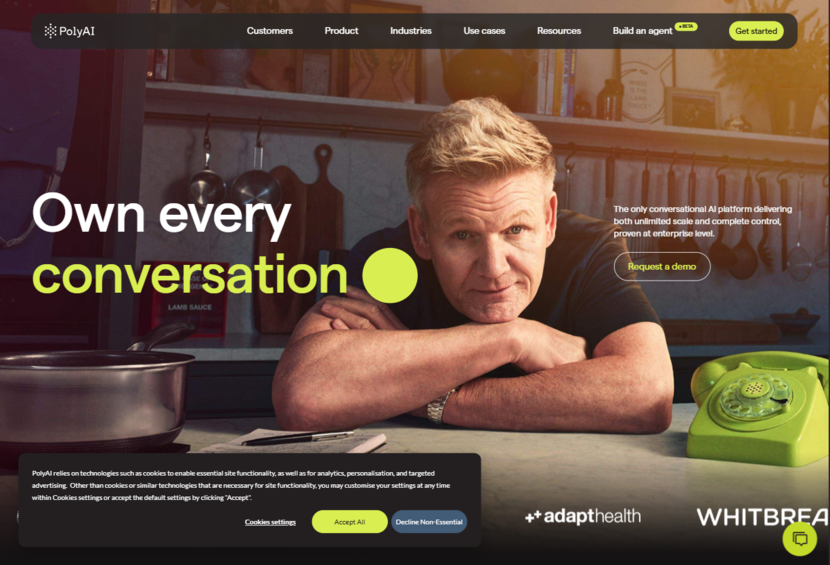
PolyAI is built for one thing and does it extremely well. Handling real phone conversations at scale without making them feel automated.
Most voice systems struggle when conversations become unpredictable. People interrupt, change topics, or explain things in messy ways. PolyAI is designed to handle exactly that. It can keep up with how people actually speak, not how systems expect them to speak.
This makes it a strong fit for telecom and utility environments where customers call with urgency. Billing confusion, outages, or service issues are rarely simple. PolyAI can manage these conversations smoothly while maintaining context throughout the call.
Another important strength is consistency. Every interaction sounds natural, follows the same quality standard, and reflects your brand tone. This matters a lot when you are handling thousands of calls daily.
It also connects with existing systems like CRM and contact center platforms, so it can pull customer data and update records during the call. But unlike some of the best voice AI companies, its focus is more on conversation quality than deep backend workflow automation.
PolyAI is best suited for enterprises that want to improve call experience and automate a large portion of support calls without compromising how those conversations feel.
Key Features:
- Handles natural, free-flowing conversations without rigid scripts
- Adapts to interruptions, topic changes, and multi-step interactions
- Agent Studio for designing and refining conversation flows
- Integrates with CRM and contact center platforms
- Supports 45+ languages and accents
- Real-time insights from call data and performance
- 24/7 availability with instant response handling
- Built with enterprise-grade security standards
Pros and Cons
Pros
- Strong ability to handle real, unpredictable conversations
- Maintains context across longer interactions
- Scales easily during high call volumes
- Consistent and natural customer experience
Cons
- Requires vendor involvement for setup and updates
- Limited flexibility for quick internal changes
- Pricing is not publicly available
- Less focused on deep backend workflow execution
Pricing
- PolyAI follows a custom per-minute pricing model that includes support and ongoing improvements. Exact rates are not publicly disclosed.
3. Teneo.AI
ALT: Teneo.ai
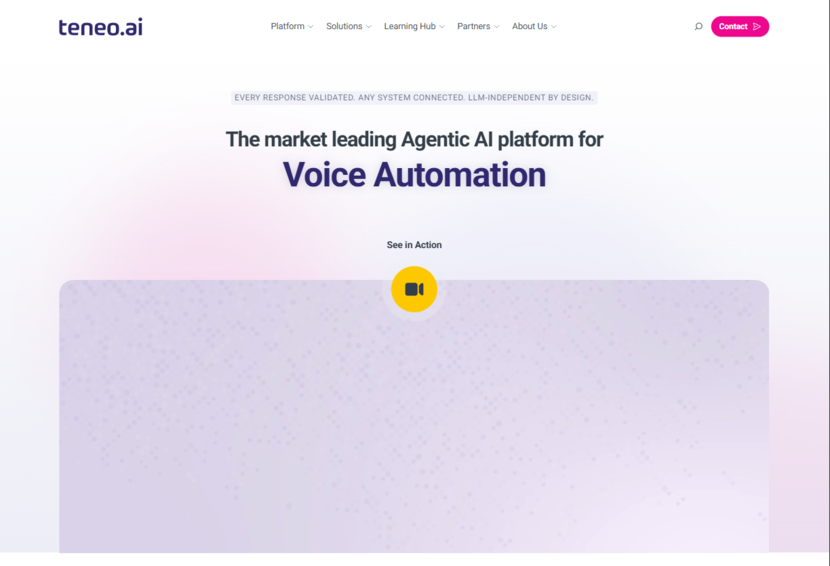
Teneo.ai is one of the best voice AI agents for telecom and utility providers, built for enterprises that cannot afford mistakes in customer conversations. It focuses on accuracy, control, and reliability, especially in high-volume and regulated environments like telecom and utilities.
What makes it different is its Hybrid AI approach. Instead of relying only on generative AI, Teneo combines LLMs with rule-based logic. This ensures conversations stay natural while still following strict guardrails. The result is far more predictable and safe compared to typical AI systems.
This becomes critical when handling sensitive use cases like billing, service issues, or compliance-heavy interactions. Teneo can manage complex, multi-step queries while maintaining context and accuracy throughout the call.
It also replaces traditional IVR systems with intent-based conversations. Instead of forcing users through menus, it understands what they want and routes or resolves the issue directly. This improves resolution rates and reduces frustration.
With strong multilingual support and deep integrations into backend systems, Teneo is designed to operate at enterprise scale. It is already used by large organizations handling hundreds of thousands of calls every month.
Key Features:
- Hybrid AI combining LLMs with rule-based control for higher accuracy
- Visual low-code platform for building and managing voice agents
- Handles complex, multi-step conversations with context awareness
- Supports 86+ languages for global operations
- Replaces IVR with intent-based conversational routing
- Integrates with CRM and backend systems for real-time actions
- Built for high security and compliance standards
- Scales to handle millions of interactions
Pros and Cons
Pros
- Very high accuracy in real-world enterprise use cases
- Strong control and safety for regulated environments
- Handles complex workflows without breaking context
- Proven performance at large scale
Cons
- Requires enterprise-level setup and resources
- It can be complex for smaller teams
- Less flexible for quick experimentation
Pricing
- Custom enterprise pricing based on deployment scale, use case complexity, and integration requirements.
4. Rasa Voice
ALT: Rasa Voice
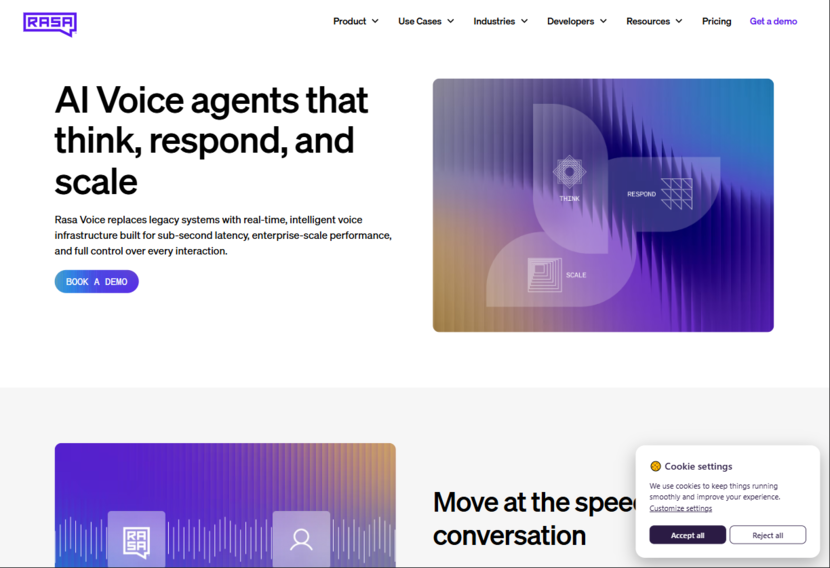
Rasa Voice is built for teams that want full control over how their voice AI works, not just a ready-made tool. It is widely used in industries where data privacy, compliance, and accuracy cannot be compromised.
What sets Rasa apart is its CALM framework, which combines the flexibility of language micromodels with strict rule-based logic. This means conversations stay natural while still following business rules, reducing the risk of incorrect or unpredictable responses.
It is also one of the few platforms that support on-premise and private cloud platform deployment. This gives enterprises complete control over customer data, which is critical for telecom and utility providers handling sensitive information.
Rasa is highly customizable. You can design complex, multi-step conversations, connect with backend systems, and choose your own AI models. It also maintains context across channels like voice and chat, so customers do not have to repeat themselves.
However, this level of control comes with complexity. It requires technical expertise and is better suited for organizations with strong engineering teams.
Key Features:
- CALM framework for controlled, accurate conversations
- Full customization of conversation logic and workflows
- On-premise and private cloud deployment for data control
- Maintains context across voice, chat, and other channels
- Supports custom LLM selection and integration
- Real-time, low-latency voice performance
- Deep backend and API integrations
- Built for high security and compliance needs
Pros and Cons
Pros
- Complete control over AI behavior and data
- Strong fit for regulated industries
- Highly customizable for complex use cases
- Prevents unpredictable AI responses
Cons
- Requires technical expertise to implement
- Setup and maintenance can be complex
- Higher entry cost for enterprise usage
- Limited out-of-the-box features
Pricing
- Rasa follows a conversation-based pricing model. It offers a free developer version for testing, while paid plans start around $35,000 per year and scale based on usage and enterprise requirements.
5. Telnyx
ALT: Telnyx
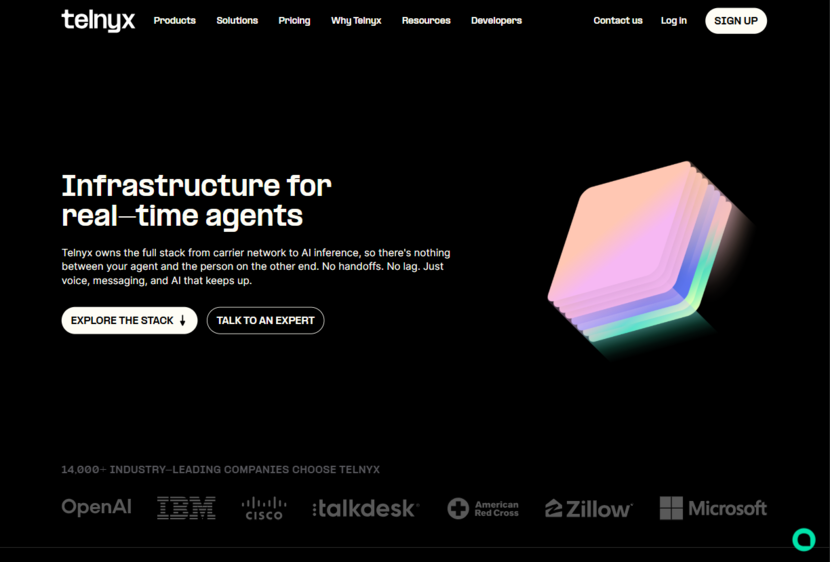
Telnyx is not just a voice AI platform. It is a full telecom infrastructure combined with AI, which gives you complete control over how voice interactions are built and delivered.
Unlike platforms that rely on third-party carriers, Telnyx runs on its own private network. This allows it to deliver extremely fast, real-time conversations with very low latency. For telecom and utility providers handling high call volumes, this makes a noticeable difference in call quality and response speed.
It also gives you flexibility to build custom voice agents using APIs or low-code tools. You can choose from multiple AI models, connect with CRM systems, and design workflows based on your exact use case. This makes it a strong fit for teams that want to build rather than use pre-defined solutions.
Because it owns the entire stack, from telephony to AI processing, Telnyx ensures better reliability and fewer integration issues. However, it is more developer-focused, so non-technical teams may find it slightly complex to manage at first.
Key Features:
- Full-stack platform combining telephony and AI in one system
- Ultra-low latency with real-time voice processing
- API-first approach for building custom voice workflows
- Supports multiple AI models and voice customization
- Built-in speech-to-text and text-to-speech capabilities
- CRM and webhook integrations for automation
- Strong security and compliance standards
- Scales easily for high-volume voice operations
Pros and Cons
Pros
- Complete control over voice infrastructure and AI
- Very fast and reliable call performance
- Transparent and flexible pricing model
- Strong for large-scale inbound and outbound automation
Cons
- Requires technical understanding to fully utilize
- Interface and setup can feel complex initially
- Less suited for plug-and-play use cases
- Limited for highly complex conversational logic compared to specialized AI platforms
Pricing
- Telnyx offers a pay-as-you-go model starting around $0.06 per minute, with additional costs based on AI processing and usage.
6. Twilio
ALT: Twilio
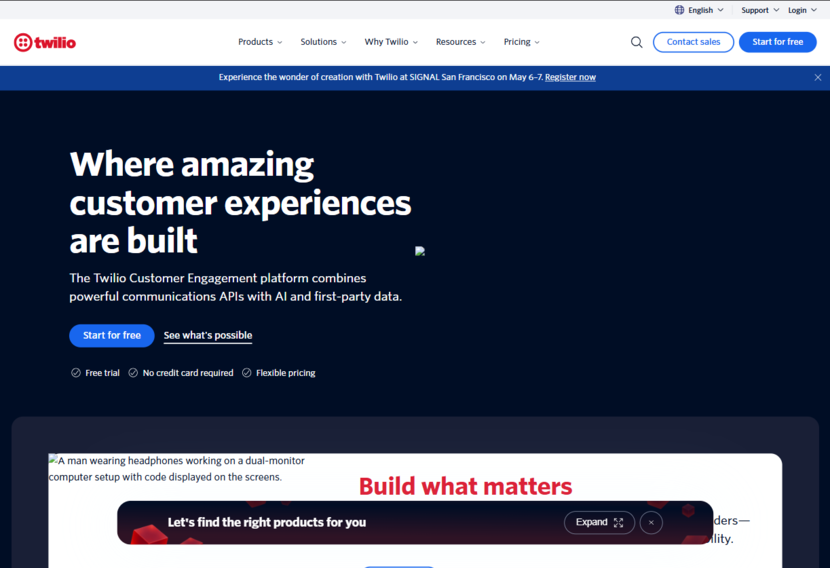
Twilio is a powerful AI voice agent for small business platforms that lets you build highly customized AI voice agents from the ground up. It is widely used by enterprises that need flexibility, global reach, and full control over how voice interactions are handled.
At its core, Twilio connects real-time voice with AI systems using its orchestration layer. This allows conversations to feel fast, natural, and responsive, even when handling interruptions or multi-step queries. Instead of being limited to one AI model, you can plug in your preferred LLMs, speech-to-text, and voice engines.
This makes Twilio a strong choice for telecom and utility providers that need to integrate voice AI deeply into their systems. Agents can access customer data, trigger backend actions, and maintain context across channels like voice, SMS, or WhatsApp.
However, Twilio is not a plug-and-play solution. It requires development effort to connect all components and manage workflows. It works best for teams that already have technical resources and want to build a tailored system rather than use a pre-built one.
Key Features:
- Real-time voice orchestration with low-latency conversations
- Flexibility to use any LLM, TTS, and STT providers
- Handles interruptions and multi-turn conversations naturally
- Deep integration with APIs, CRMs, and backend systems
- Omnichannel support across voice and messaging channels
- Real-time transcription, sentiment analysis, and insights
- Agent assist features for human support teams
- Global telephony infrastructure for scalable deployment
Pros and Cons
Pros
- Highly flexible and customizable platform
- Strong global voice infrastructure
- Supports complex workflows and integrations
- Natural and responsive conversation handling
Cons
- Requires strong technical expertise
- Setup and orchestration can be complex
- Costs can increase with multiple components
- Not ideal for quick, ready-made deployments
Pricing
- Twilio follows a pay-as-you-go model, with voice AI costs typically ranging from $0.08 to $0.15 per minute, depending on usage and components.
7. Bland AI
ALT: Bland AI
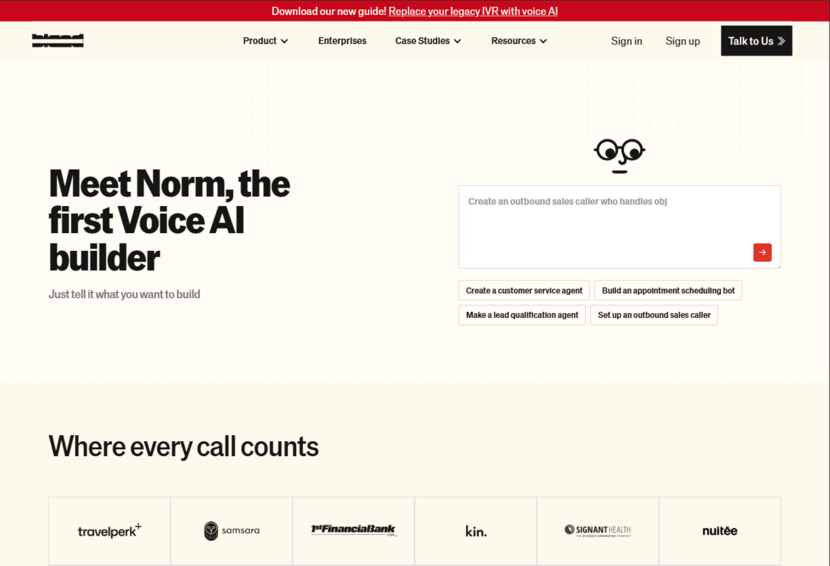
Bland AI is built for one clear goal. Automating phone calls at a massive scale while keeping conversations natural and human-like.
It is an API-first platform, which means you can design highly customized voice agents that fit directly into your existing systems. Whether it is outbound sales calls, support follow-ups, or appointment handling, Bland AI can manage thousands of calls simultaneously without breaking performance.
One of its strongest advantages is voice quality. The platform offers advanced voice cloning and personalization, allowing you to match tone, accent, and even emotion. This helps maintain a consistent brand experience across every call.
It also supports complex conversation flows, where agents can extract data, remember past interactions, and take actions like updating CRMs or triggering workflows. This makes it useful for telecom and utility providers dealing with repetitive but structured call scenarios.
However, Bland AI is not built for beginners. It requires technical setup and lacks a simple visual interface. Pricing can also be difficult to predict, especially at scale.
Key Features:
- Handles high-volume inbound and outbound calls at scale
- API-first platform for full customization and control
- Human-like voices with cloning and personalization
- Supports complex, multi-step conversation flows
- Real-time data extraction and memory handling
- Integration with CRM, APIs, and backend systems
- Enterprise-grade security and compliance standards
- High uptime and reliable infrastructure
Pros and Cons
Pros
- Very natural and realistic voice quality
- Built for large-scale call automation
- Highly flexible for custom workflows
- Strong performance and reliability
Cons
- Requires technical expertise to set up
- No simple no-code interface
- Pricing can be complex and hard to estimate
- Limited support experience reported by users
Pricing
- Bland AI uses a hybrid model with per-minute charges (around $0.09–$0.14) along with optional monthly plans based on usage and scale.
8. Retell AI
ALT: Retell AI
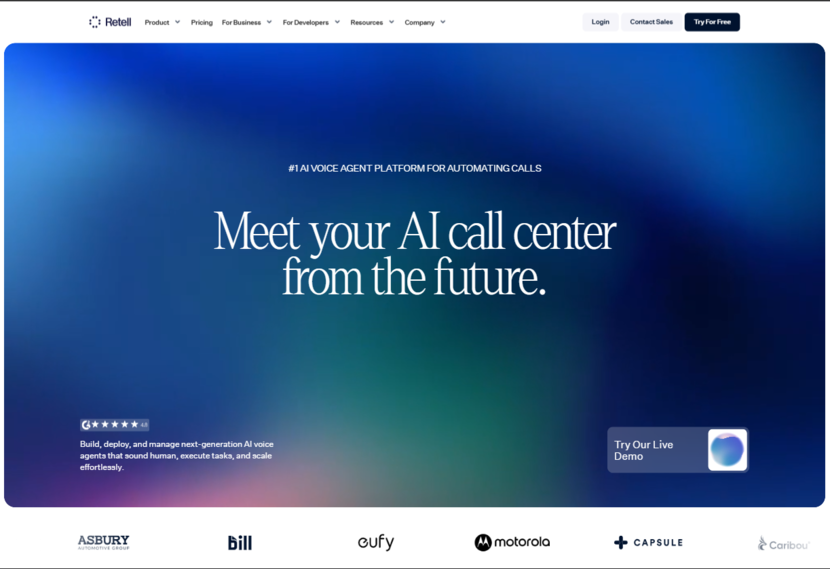
Retell AI is among the best voice AI agents for telecom and utility providers, built for teams that want fast, natural voice automation without getting stuck in heavy setup or complex infrastructure. It focuses on making conversations feel smooth while still giving you enough control to design real workflows.
What stands out is its conversation handling. Retell uses a proprietary turn-taking system that keeps responses quick and avoids awkward pauses. This makes interactions feel closer to a real human conversation, even during longer calls.
It is also easier to get started compared to many enterprise platforms. You can build and deploy conversational AI voice agents using a simple interface, connect your knowledge base, and define how conversations should flow. This makes it a strong option for telecom and utility teams that want quicker implementation.
Retell also goes beyond just answering calls. It captures structured outcomes from conversations, updates CRM systems, and triggers follow-ups automatically. This helps turn every call into actionable data rather than just a conversation.
However, as usage grows, costs can increase quickly, and more advanced workflows may still require some technical understanding.
Key Features:
- Low-latency voice conversations with natural turn-taking
- No-code builder for quick agent creation and deployment
- Supports inbound and outbound call automation
- Integrates with LLMs like GPT-4o for dynamic responses
- CRM and workflow integrations for automation
- Post-call analytics with outcomes and insights
- Multilingual support for global use cases
- Scales to handle high concurrent call volumes
Pros and Cons
Pros
- Fast and natural conversation experience
- Easier setup compared to many enterprise tools
- Strong post-call insights and automation
- Flexible integrations with business tools
Cons
- Costs can increase at higher call volumes
- Limited support on lower plans
- Advanced workflows may need technical effort
- Primarily focused on voice-based use cases
Pricing
- Retell AI uses a pay-as-you-go model, starting around $0.07 per minute, with costs increasing based on AI models and usage.
9. Vapi AI
ALT: Vapi AI
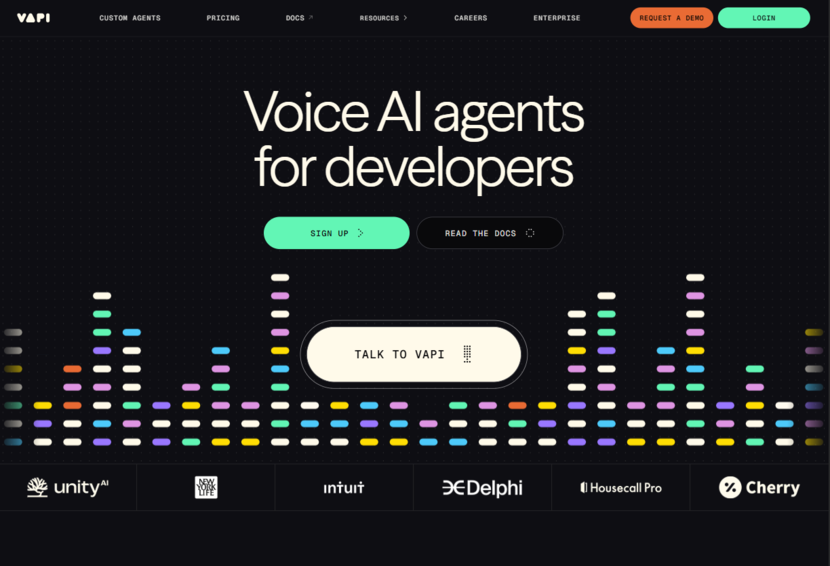
Vapi AI is picked from the biggest voice AI companies built for teams that want maximum control over how their voice agents behave. It is a developer-first platform designed to create highly customized, real-time voice experiences rather than relying on pre-built workflows.
What makes Vapi stand out is its flexibility. You can choose your own speech recognition, language models, and voice engines, then combine them into a system tailored to your exact needs. This allows you to design advanced conversational flows that go beyond basic automation.
It also delivers very fast response times, making conversations feel smooth and natural. For telecom and utility providers handling real-time support or outbound calls, this speed can significantly improve user experience.
Vapi supports both inbound and outbound calls, along with integrations through APIs and webhooks. You can connect it to databases, CRMs, or internal tools to automate actions during calls. It also supports multi-agent setups, where different agents handle specific tasks within the same interaction.
However, this level of flexibility comes with complexity. It requires engineering effort to build and maintain, and costs can vary depending on the models and tools you use.
Key Features:
- API-first platform for full customization and control
- Ultra-low latency for real-time, natural conversations
- Supports custom STT, LLM, and TTS integrations
- Handles inbound and outbound voice workflows
- Multi-agent architecture for complex use cases
- Webhook and database integrations for automation
- Supports 100+ languages for global deployment
- Built-in testing tools to validate performance
Pros and Cons
Pros
- Extremely flexible and customizable platform
- Very fast and responsive voice interactions
- Strong for building advanced, tailored workflows
- Scales well for high-volume use cases
Cons
- Requires strong technical expertise
- Setup and maintenance can be complex.
- Costs can increase depending on integrations.
- Limited support compared to enterprise platforms
Pricing
- Vapi uses a pay-as-you-go model, starting around $0.05 per minute, with total costs typically ranging from $0.13 to $0.33 per minute based on usage and integrations.
10. Twixor Voice AI
ALT: Twixor Voice AI
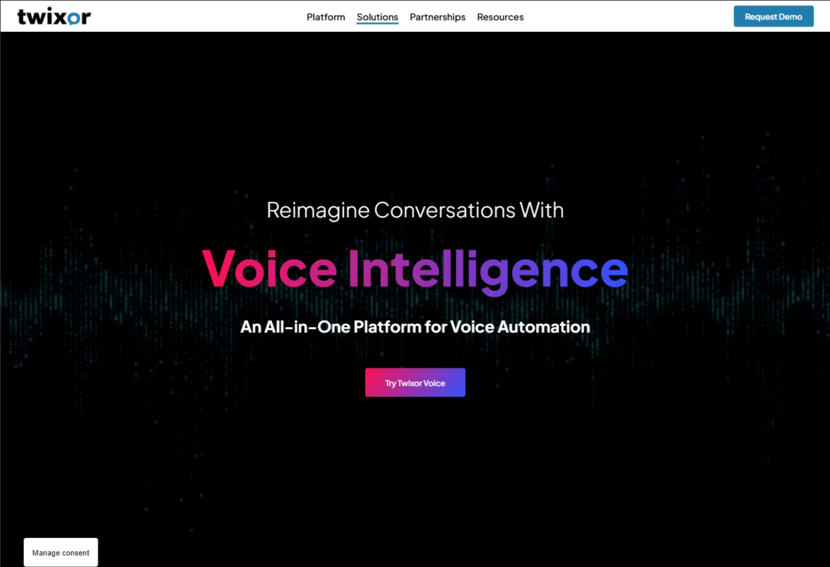
Twixor Voice AI is another best voice AI agent for telecom and utility providers, designed for businesses that want to deploy voice automation quickly without heavy technical dependency. It focuses on simplifying how voice agents are built, managed, and scaled across customer interactions.
The platform uses a low-code approach, allowing teams to design complete voice workflows visually. This makes it easier to automate tasks like customer support, reminders, and service updates without deep engineering effort.
What makes Twixor stand out is its omnichannel capability. Voice is not treated as a separate system. It connects seamlessly with channels like WhatsApp, web, and messaging platforms, so conversations can continue without losing context.
It also supports both inbound and outbound automation, making it useful for telecom and utility providers handling high volumes of support calls as well as proactive communication. The system can manage complex conversations, handle interruptions, and adapt based on user intent.
With built-in analytics and high scalability, Twixor helps teams monitor performance and continuously improve customer interactions while maintaining consistent service quality.
Key Features:
- Visual workflow builder for creating voice journeys without coding
- Omnichannel integration across voice and messaging platforms
- Supports both inbound and outbound voice automation
- Handles complex conversations with context awareness
- Multilingual and accent-aware voice capabilities
- Real-time analytics and performance tracking
- Seamless integration with CRM and backend systems
- Built for high-volume, scalable deployments
Pros and Cons
Pros
- Easy to use with a low-code setup
- Strong omnichannel capabilities
- Suitable for high-volume automation
- Fast deployment without heavy engineering
Cons
- Limited deep customization compared to developer-first platforms
- May require tuning for highly complex workflows
- Enterprise pricing not publicly transparent
Pricing
- Twixor offers custom pricing based on usage, integrations, and deployment scale, with both subscription and usage-based options available.
These are the 10 best Voice AI agents for telecom and utility providers.
6 Benefits of Using Voice AI Agent in Telecom and Utility
Here are six major benefits of using the best voice AI agents for telecom and utility providers:
1. Significant Cost Reduction in Support Operations
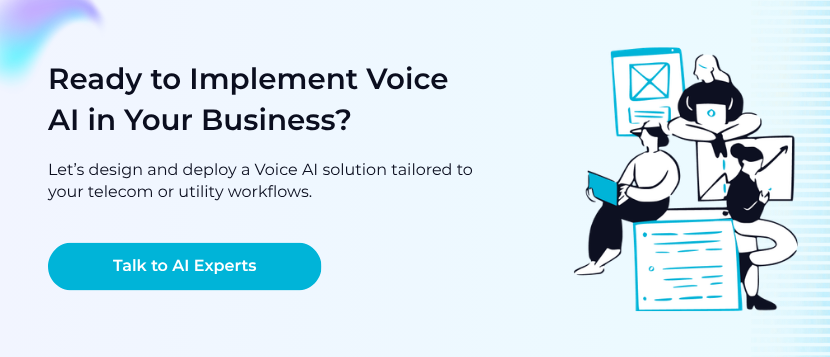
Voice AI agents handle a large portion of repetitive queries like billing, plan changes, and service requests without human involvement. This reduces dependency on large call center teams and cuts per-call costs significantly. Over time, this leads to better margins while maintaining service quality.
2. 24/7 Availability with Instant Response
Customers no longer have to wait in queues or call during working hours. Voice AI agents are always available and respond instantly, whether it is a late-night issue or a weekend outage. This is especially critical for utilities where delays can directly impact customer experience.
3. Ability to Handle High Call Volumes Without Breaking
During peak times like outages or network failures, call volumes can spike massively. Voice AI agents can handle thousands of calls at the same time without delays or performance drops. This ensures consistent service even during high-pressure situations with the help of an AI agent development company.
4. Faster Resolution with Better First-Call Success
Modern voice AI understands intent and context, which helps resolve issues in a single interaction instead of multiple transfers. Whether it is troubleshooting or account-related queries, customers get answers faster without navigating complex IVR menus.
5. Proactive Customer Communication During Critical Events
Voice AI can automatically notify customers about outages, maintenance, or service disruptions before they even call. This reduces inbound call load and builds trust, as customers feel informed rather than left in the dark.
6. Data-Driven Insights to Improve Service and Revenue
Every conversation generates valuable data like customer intent, sentiment, and common issues. This helps telecom and utility providers identify gaps, improve services, and even create targeted offers. Over time, this leads to better decision-making and higher customer retention.
Factors to Consider While Choosing the Best Voice AI Agent Provider
Here are some key factors to consider while choosing the best voice AI agents for telecom and utility providers:
Conversation Quality and Speed: The agent should respond instantly, sound natural, handle interruptions, and maintain context without breaking the flow.
System Integrations: It must connect smoothly with your CRM, billing systems, and telephony to fetch data and take real actions during calls.
Scalability and Reliability: The platform should handle high call volumes without delays, downtime, or performance issues, especially during peak demand.
Security and Compliance: Ensure it meets standards like GDPR, HIPAA, or SOC 2 and gives full control over customer data handling.
Customization vs Ease of Use: Choose between a quick no-code setup or deep customization based on your technical capability and use case complexity.
How Does ownAI Help You Implement a Voice AI Agent for Telecom and Utilities?
Implementing Voice AI in telecom or utilities is not just about choosing a platform. It is about solving the right problem and making it work in real conditions.
ownAI does it differently.
The team understands your call flows, challenges, and goals before suggesting any solution. This helps identify where Voice AI will create the most impact, whether in support, outages, or customer queries.
The team understands your call flows, challenges, and goals before suggesting any solution. This helps identify where Voice AI will create the most impact, whether in support, outages, or customer queries.
After deployment, the system is continuously monitored and improved to ensure better accuracy, faster resolution, and long-term value.
If you are thinking about Voice AI but unsure where to start, don’t guess.
Book a free consultation with our AI experts today to get clear guidance on how to implement Voice AI in your telecom or utility business the right way.
Conclusion
Voice AI agents are no longer optional for telecom and utility providers. They are becoming essential to handle high call volumes, reduce costs, and deliver faster, more reliable customer support.
But the real impact depends on choosing the right platform and implementing it correctly. As you saw, each solution offers different strengths. Some focus on conversation quality, others on infrastructure, customization, or scalability.
The key is to align the technology with your actual use case, not just features.
We hope this guide helps you understand how Voice AI works, the best voice AI agents for telecom and utility providers, what to look for, and which platforms are best suited for telecom and utility environments.
If you are planning to implement Voice AI, take a step back, evaluate your needs clearly, and choose a solution that fits your operations, not just your expectations.
Hire an experienced AI development company and let the professional help you implement a voice AI agent smoothly in your business.
FAQs
1. Which Voice AI agent is best for telecom and utility providers?
The best platform depends on your needs. For large-scale automation, Cognigy and Teneo.ai are strong. For natural, human-like conversations, PolyAI stands out. For custom-built solutions, Telnyx and Twilio are better choices. Always match the tool with your use case, not just features.
2. Can Voice AI agents handle real telecom use cases like billing, outages, and support?
Yes. Advanced Voice AI agents can resolve billing queries, handle outage-related calls, process service requests, and even update backend systems during live conversations without human intervention.
3. What features matter most when choosing a Voice AI agent?
Focus on real-time response, accurate speech understanding, natural voice quality, context retention, system integrations, scalability, and strong security compliance. These directly impact performance in real environments.
4. How is Voice AI different from traditional IVR systems?
IVR systems rely on fixed menus and button inputs. Voice AI agents understand natural language, handle interruptions, and manage full conversations, making the experience faster and more user-friendly.
5. Can Voice AI handle high call volumes during peak situations like outages?
Yes. Voice AI agents can manage thousands of concurrent calls without delays or quality issues, making them ideal for handling sudden spikes in demand.
6. How do Voice AI agents integrate with telecom and utility systems?
They connect through APIs or built-in integrations with CRM, billing, and contact center systems. This allows them to fetch customer data, perform actions, and update records in real time.
7. What are the biggest challenges in implementing Voice AI in telecom and utilities?
The main challenges include handling real conversations, integrating with legacy systems, maintaining low latency, and ensuring accuracy at scale. A poor platform choice can lead to failure.
8. How should I choose the right Voice AI agent provider?
Start with your actual use case. Then evaluate conversation quality, integrations, scalability, security, and ease of implementation. The right provider is the one that works smoothly within your existing operations and delivers measurable results.





 Turn your idea into MVP in 8-16 weeks