


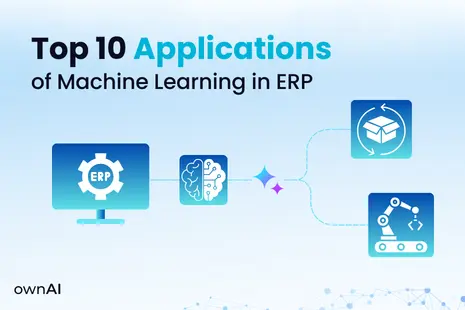
ERP systems sit at the center of every growing business. They manage finance, inventory, procurement, HR, and customer data. They store everything that happens inside the company.
Yet most ERP systems only record what has already happened. They generate reports. They track numbers. But they do not learn from patterns or anticipate what comes next.
This is the core reason many businesses still struggle with stockouts, forecasting errors, fraud risks, production delays, and inefficient workflows.
That is where machine learning in ERP comes in to make a real difference.
Machine learning transforms ERP from a reactive system into an intelligent one. Instead of just storing data, it analyzes trends, identifies risks, predicts demand, detects unusual activity, and uncovers opportunities hidden in operational data.
Businesses that integrate machine learning into ERP are not just improving software. They are changing how decisions are made. Instead of guessing, they can make decisions based on insights.
So, if you are struggling with ERP limitations but are interested in knowing how machine learning can transform it, this blog is all you need.
In this blog, you will understand the role of machine learning in ERP systems and the application of machine learning in ERP.
By the end of this blog, you will clearly understand the benefits of integrating machine learning with ERP in your business.
So, without any further delay, let's dive in!
Role of Machine Learning in ERP
Machine learning helps ERP systems do more than just store and report data. Traditional ERP records transactions and creates reports. Machine learning helps the system learn from that data and use it to improve business decisions.
It can automate routine tasks like data entry and invoice processing. This saves time and reduces mistakes.
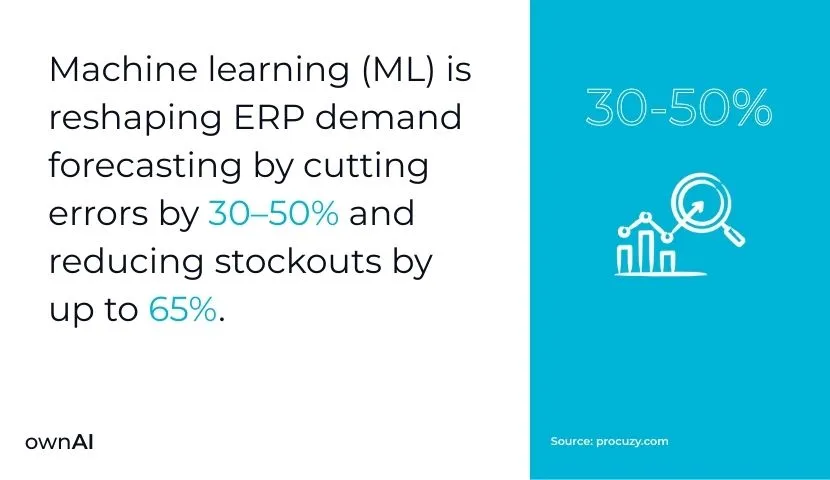
It also studies past data to find patterns. Based on those patterns, it can predict future demand, identify risks, and warn about possible equipment failures before they happen.
As a result, processes become smoother. Errors decrease. Teams make better decisions with real insights instead of guesswork.
In short, machine learning turns ERP into a smarter system that supports faster, more accurate, and more efficient operations.
Top 10 Applications of Machine Learning in ERP
Here are the applications of machine learning in ERP:
1. Predictive Maintenance and Failure Prevention
If you run manufacturing operations, your ERP already stores equipment history, service logs, and usage data. Machine learning studies this data and learns what usually happens before a machine fails.
When it detects similar warning patterns, it alerts you early. This allows maintenance teams to fix issues before a breakdown stops production.
Also reduces unexpected downtime, production loss, and lowers repair costs. It shifts maintenance from reactive to preventive.
Over time, the system becomes better at recognizing early warning signs and improves reliability across operations.
2. Intelligent Demand Forecasting
ERP holds detailed sales history, customer buying patterns, and production data. Machine learning processes this information and identifies seasonality, recurring demand cycles, and behavioral trends that humans may miss.
Instead of relying on static forecasting methods, the system continuously improves its predictions as new data comes in. It can recommend increasing or decreasing production based on expected demand.
This allows businesses to adjust production levels accurately, avoid overproduction, reduce storage issues, and eliminate costly last-minute production runs. Better forecasting directly lowers operational costs and improves revenue planning.
3. Inventory Optimization
ERP tracks stock levels, reorder points, supplier lead times, and material flow. Machine learning analyzes these variables together instead of treating them separately.
If demand increases or supplier delays become frequent, the system adapts inventory levels accordingly. If demand slows, it reduces excess stock recommendations.
This reduces excess inventory investment, improves cash flow, prevents stockouts, and ensures smoother warehouse management. It creates a balance between availability and cost control.
4. Fraud Detection and Risk Monitoring
Your financial modules inside the ERP process payments, invoices, and procurement transactions daily. Machine learning learns what normal transaction behavior looks like.
If a transaction appears unusual, such as irregular spending or unexpected changes, the system flags it immediately. It can also assign risk scores to certain activities based on historical patterns.
This strengthens internal control, improves compliance, and reduces financial risk. Instead of relying only on audits, the system continuously monitors activity in real time.
5. Intelligent Automation of Routine Tasks
Many ERP tasks are repetitive, such as invoice processing, data entry, payment verification, and purchase order matching. These tasks are prone to human error.
Machine learning recognizes patterns in documents and transactions. It can verify details, match invoices to purchase orders, input data from paper orders, and update inventory automatically.
This reduces manual errors, increases processing speed, and allows employees to focus on strategic responsibilities rather than repetitive tasks. It also improves overall productivity across departments.
6. Supply Chain and Logistics Optimization
ERP stores supplier performance history, delivery timelines, material movement data, and logistics information. Machine learning analyzes this to evaluate supplier consistency in quality, cost, and reliability.
It can optimize delivery routes by considering operational conditions and improve carrier selection. It also helps identify disruptions early by detecting changes in supply patterns.
This reduces transportation costs, avoids supply disruptions, and improves overall supply chain stability. Decisions become based on performance data, not assumptions.
7. Manufacturing Efficiency and Quality Control
Production data within ERP reveals machine output, defect rates, and energy usage. Machine learning studies these patterns to detect inefficiencies or abnormal production behavior.
It can support automated visual inspection systems to identify defects faster and more accurately than manual checks. It can also highlight processes that consume excessive energy or create waste.
This improves product quality, reduces material waste, lowers energy consumption, and keeps production running smoothly from planning to shipping.
8. Customer Behavior Analysis and Retention Prediction
ERP systems contain customer purchase history, order frequency, transaction values, and interaction records. Machine learning analyzes this data to identify buying patterns and behavior changes.
If a customer starts purchasing less frequently or shows signs of disengagement, the system can flag churn risk early. It can also suggest personalized product recommendations based on previous purchases.
This allows businesses to act before losing customers and improve engagement with targeted offerings.
Which leads to better customer engagement, strengthens retention strategies, and helps businesses identify new target segments that were previously overlooked.
9. Workforce Analytics and Smarter Talent Management
HR modules in ERP store recruitment data, employee performance records, and training history. Machine learning evaluates this information to identify performance trends and skill gaps.
It can screen candidates based on performance trends rather than just keywords. It can identify skill gaps, suggest training opportunities, and predict employees who may be at risk of leaving.
This helps HR teams make informed hiring decisions, design better training programs, and improve employee retention.
10. Advanced Analytics and Opportunity Discovery
ERP systems generate massive amounts of cross-departmental data. Most businesses use it only for basic reporting.
Machine learning connects data across finance, sales, manufacturing, supply chain, and HR to uncover hidden insights. It may reveal profitable customer segments that were overlooked, inefficient production practices, or supplier inconsistencies affecting cost.
This turns ERP from a reporting tool into a strategic intelligence system. Businesses gain deeper visibility into operations and can make decisions backed by real patterns and measurable insights.
These are the most important applications of machine learning in ERP.

6 Benefits of Using Machine Learning in ERP
Integrating machine learning into ERP does more than improve software performance. It changes how businesses operate, plan, and make decisions.
Here are six major benefits of using machine learning in ERP:
1. Early Problem Detection and Faster Root Cause Analysis
Traditional ERP tells you what already happened. Machine learning helps you see what is about to happen.
It helps your ERP system detect problems before they turn into serious failures. It studies past equipment data, maintenance history, and system behavior to find patterns that usually lead to breakdowns.
When similar signs appear again, the system alerts your team early. It can even help identify the exact part or component causing the issue.
Whether it is equipment failure, stock shortages, or operational inefficiencies, the system detects risks in advance and supports faster root cause analysis.
This means fewer surprises, fewer shutdowns, and much faster root cause analysis. Instead of firefighting, you stay in control.
2. More Accurate Forecasting and Planning
Forecasting is one of the biggest pain points for businesses. Wrong demand estimates lead to stockouts or excess inventory.
Machine learning looks at your past sales, buying behavior, seasonal trends, and product movement. It learns patterns over time and keeps improving its predictions as new data comes in.
The result is stronger planning, lower operational costs, and improved revenue protection, especially during supply chain disruptions.
3. Automation That Reduces Errors and Saves Time
ERP systems handle many repetitive tasks such as invoice processing, data entry, and payment matching.
Machine learning can automate these tasks by recognizing patterns in documents and transactions. This reduces human errors and speeds up processing.
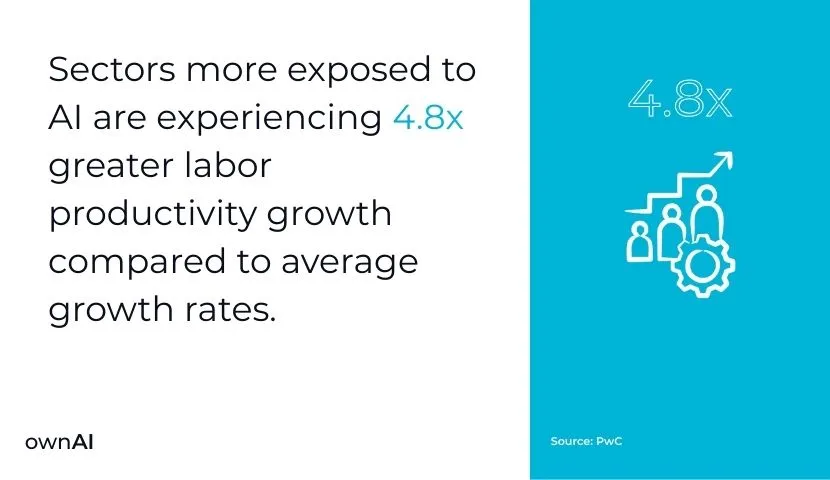
Your team spends less time on routine work and more time on important decisions. Productivity improves without adding more staff.
4. Better Decision Making with Clear Insights
ERP systems collect data from sales, finance, production, supply chain, and HR. But raw data alone does not help much.
Machine learning connects this data and finds patterns that are hard to see manually. It can show which suppliers perform better, which products sell faster, or where processes are slowing down.
It can also provide personalized dashboards based on user roles. This leads to smarter supplier selection, better inventory planning, improved production scheduling, and more confident leadership decisions.
5. Stronger Fraud Detection and Risk Control
Financial transactions and operational activities often contain subtle irregularities that are difficult to identify manually.
Machine learning continuously monitors transactional behavior and learns normal activity patterns. When anomalies occur, the system flags them immediately and can assign risk scores to transactions or business activities.
This strengthens internal controls, improves compliance, and reduces financial exposure without relying solely on periodic audits.
6. Higher Efficiency, Better Quality, and Lower Costs
Machine learning improves operational efficiency by analyzing workflows and production data in real time. It identifies waste, inefficient processes, and areas where energy or materials are overused.
It also helps improve product quality by detecting issues in processes that affect output standards, including quality performance benchmarks like Six Sigma.
The result is better yield rates, less material waste, lower operational costs, and improved production capacity.
How ownAI Can Help Implement Machine Learning in ERP?
Implementing machine learning in ERP is not just about building models. It is about solving real business problems and making the system work smoothly in daily operations.
ownAI helps businesses turn machine learning potential into systems that deliver real operational value.
Before recommending any implementation, we carefully assess your processes, data quality, and operational goals.
If machine learning does not create clear value, we will say so. Our priority is business outcomes, not unnecessary development.
What makes ownAI the right partner?
- Full lifecycle ownership from planning to deployment
- Clear alignment with business objectives
- Systems built for real operational use, not isolated models
- Scalable architecture that grows with your ERP
- Strong focus on data security and regulatory compliance
Whether you are introducing machine learning into ERP for the first time or scaling existing initiatives, ownAI brings clarity and accountability throughout the journey.
If you want machine learning in ERP that improves forecasting, reduces risk, increases efficiency, and supports smarter decision making, the first step is having the right plan.
👉 Book a free consultation with AI/ML experts today and get a clear roadmap tailored to your business needs.
Conclusion
Machine learning is no longer an optional upgrade for ERP systems. It is becoming a practical way to improve forecasting, reduce risk, automate repetitive tasks, and make better business decisions.
From predictive maintenance and demand forecasting to fraud detection and workflow optimization, ML in ERP helps businesses move from reactive reporting to proactive management.
We hope this guide helps you understand the role of machine learning in ERP, the application of machine learning in ERP, and the benefits of using it.
So, if you are ready to implement AI and Machine Learning in ERP, it is time to connect with professionals and start with the right plan.
FAQs
1. What is the most impactful application of machine learning in ERP?
Demand forecasting, predictive maintenance, and fraud detection usually deliver the fastest and most measurable impact. These areas directly affect revenue, downtime, and financial risk, making them strong starting points for most businesses.
2. How does machine learning improve demand forecasting in ERP?
Machine learning analyzes historical sales data, seasonal trends, and buying behavior stored in the ERP. It continuously learns from new data and improves prediction accuracy, helping businesses plan production better and avoid stockouts or overstocking.
3. How does predictive maintenance work inside ERP systems?
ERP systems store equipment usage data, maintenance history, and service logs. Machine learning studies past breakdown patterns and detects early warning signals. When similar patterns appear, it alerts teams before equipment fails, reducing downtime and repair costs.
4. Can machine learning help reduce inventory costs in ERP?
Yes. It evaluates stock levels, demand patterns, and supplier lead times together. By adjusting reorder points and safety stock dynamically, it lowers excess inventory while ensuring product availability.
5. How does machine learning detect fraud in ERP financial modules?
Machine learning learns normal financial transaction behavior from historical ERP data. If unusual spending patterns or irregular procurement activities occur, the system flags them in real time and may assign risk levels for review.
6. What challenges should businesses consider before implementing machine learning in ERP?
The biggest challenges include poor data quality, unclear business objectives, and a lack of integration planning. Machine learning works best when goals are clearly defined, and ERP data is clean and structured.
7. How do you choose the right machine learning use case for ERP?
Start with the area causing the highest financial or operational impact, such as forecasting errors, downtime, fraud risk, or inefficient workflows. The best initial use case should deliver clear and measurable value. Once you identify the cause, consult a tech expert to leverage insights, address the issue, and deliver measurable outcomes.
8. Can machine learning be integrated into an existing ERP system without replacing it?
Yes. Machine learning enhances your existing ERP by integrating with modules like finance, supply chain, HR, and production. It adds intelligence on top of your current system without requiring a full replacement.





 Turn your idea into MVP in 8-16 weeks