



The advent of AI and Machine Learning has revolutionized market trend analysis and the decision-making process for investors and business owners. The ability to predict trends accurately by leveraging advanced and insightful AI algorithms gives investors a competitive edge in analyzing market trends and helps them make better decisions with detailed insights. Machine Learning, an advanced branch of AI, can statistically analyze data and enable computer systems to learn from this data and forecast upcoming trends.
The global AI market size is expected to reach $2,740.46 billion by 2032, highlighting its significance and rising adoption. Machine Learning (ML) techniques such as prediction analysis, deep learning, Natural Language Processing (NLP), and data mining give insightful information about upcoming trends and patterns that humans might not see with greater accuracy. In this article, we will deeply explore all these techniques and tell you how you can leverage AI in market trend analysis for accurate predictions and profitable decisions. Let’s dive into the details.
What is Trend Analysis?
Trend analysis is an analytical methodology for interpreting patterns with large datasets. It is heavily applied across various sectors, such as economics, finance, and marketing. Market trend analysis helps investors make profitable decisions and well-informed decisions with accurate market predictions.
Predicting market trends is like making moves in a maze, and those who can make the right choice and find a good path will have big rewards in the end. It is a strategic tool for predicting investor behaviors, finance consumption, and market changes far beyond marketing and econoqmics.
Stakeholders and investors in any domain can stay competitive and ahead of trends by utilizing the insights gained from trend analysis to navigate market dynamics with certainty and strategic insight.
Benefits of Using AI in Market Analysis
AI in market analysis sets the accuracy and responsiveness in finance today. However, AI adoption is not only in finance but also in small and medium-sized enterprises that use generative AI for gross benefits. This technology uses huge amounts of data to identify patterns and make informed decisions on real-time dynamics of market trends. Let’s discover the benefits of using AI in trend analysis.
Greater Accuracy and Efficiency
AI can highly improve the accuracy of trend analyses and predictions, leading to accurate results and non-biased decisions.
Saves Time
Humans and traditional methods take a lot of time to process a large amount of data. On the other hand, AI algorithms increase computation speed. This technology can process complex data in a short time without human intervention.
Dynamic and Real-time Market Trend Analysis
As AI technology takes a short time to do calculations, it quickly adapts and provides results using evolving statistics and data.
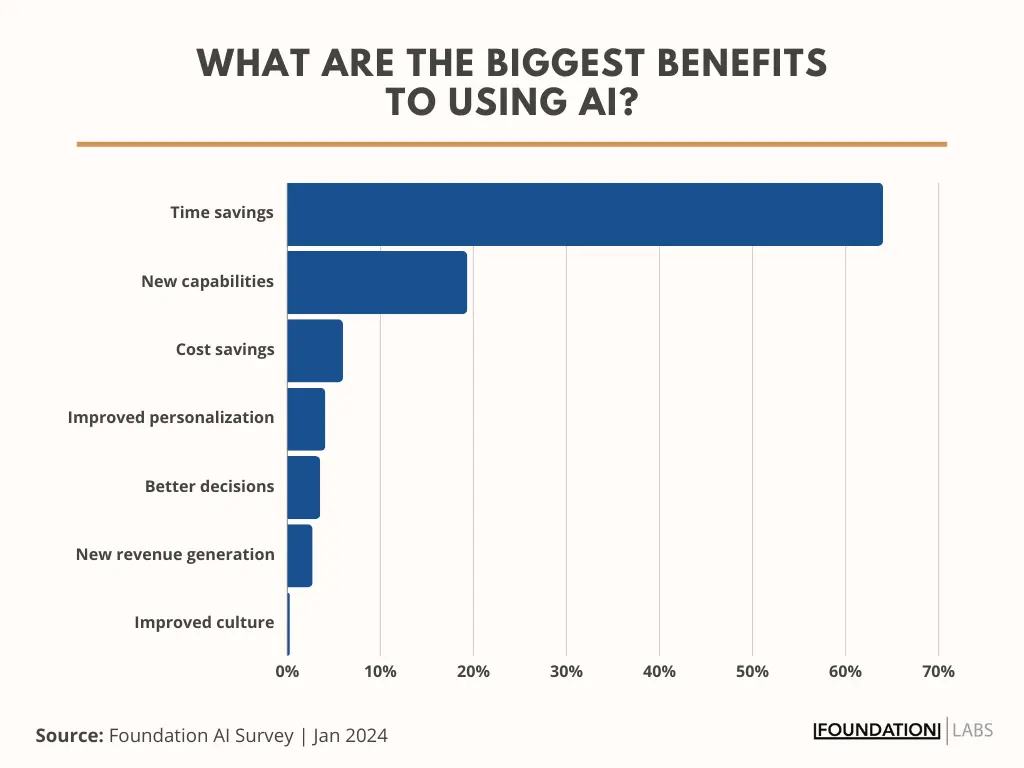
Image source: https://foundationinc.co/
Key Components of AI in Market Trend Analysis
To use AI for trend analysis, we have to use machine learning algorithms. These algorithms use historical data to identify patterns and make informed predictions related to the latest trends. Therefore, these algorithms are considered the base for trend analysis. However, selecting the right algorithm is crucial because every algorithm has its challenges and benefits. Businesses should choose them carefully according to their goals.
Here are some of the basic machine learning algorithms used in trend analysis.
Neural Network
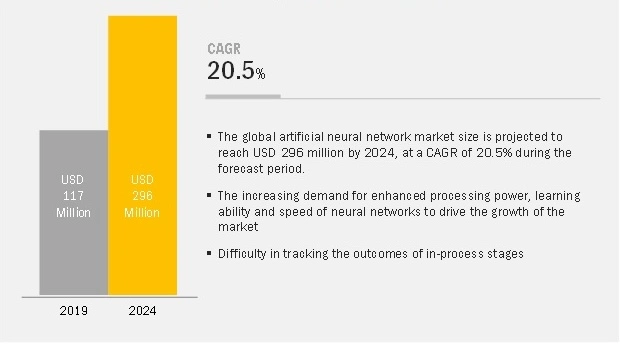
Inspired by the human brain, neural networks can recognize intricate patterns and irregular relationships in data. This makes them crucial for predicting trends in various dynamic environments. Thanks to their ability to learn and adapt, they are well-suited to understanding complex data and maximizing forecast accuracy in trend analysis.
Support Vector Machine (SVM)
It is the best model for predicting market trend analysis by optimizing the parameters and classifying data into different classes. Their precision in classification allows businesses to make accurate predictions and distinguish between multiple potential outcomes.
Random Forest
It gives the distinct classification of data and creates reliable predictive models by aggregating multiple decision trees. This technique reduces the risk of overfitting and provides a balanced viewpoint on emerging trends.
Bayesian Algorithm
This is a probabilistic algorithm that shows the relationship between past and future data. The Bayesian Algorithm in trend analysis works by using probabilistic graphical models and values extracted from past distributions, which predicts the distribution of future data based on historical data. Bayesian networks enhance predictive intelligence of businesses by bringing a deeper understanding of probability to market trend analysis. It enables the analysis of uncertainty and variability in forecasts.
Read More: Top 10 AI Solutions for Real-Time Data Processing
How does AI for Trend Analysis Work?
AI in market trend analysis and forecasting revolutionizes the approach to recognize and predict market trends by leveraging advanced data analytics and predictive models.
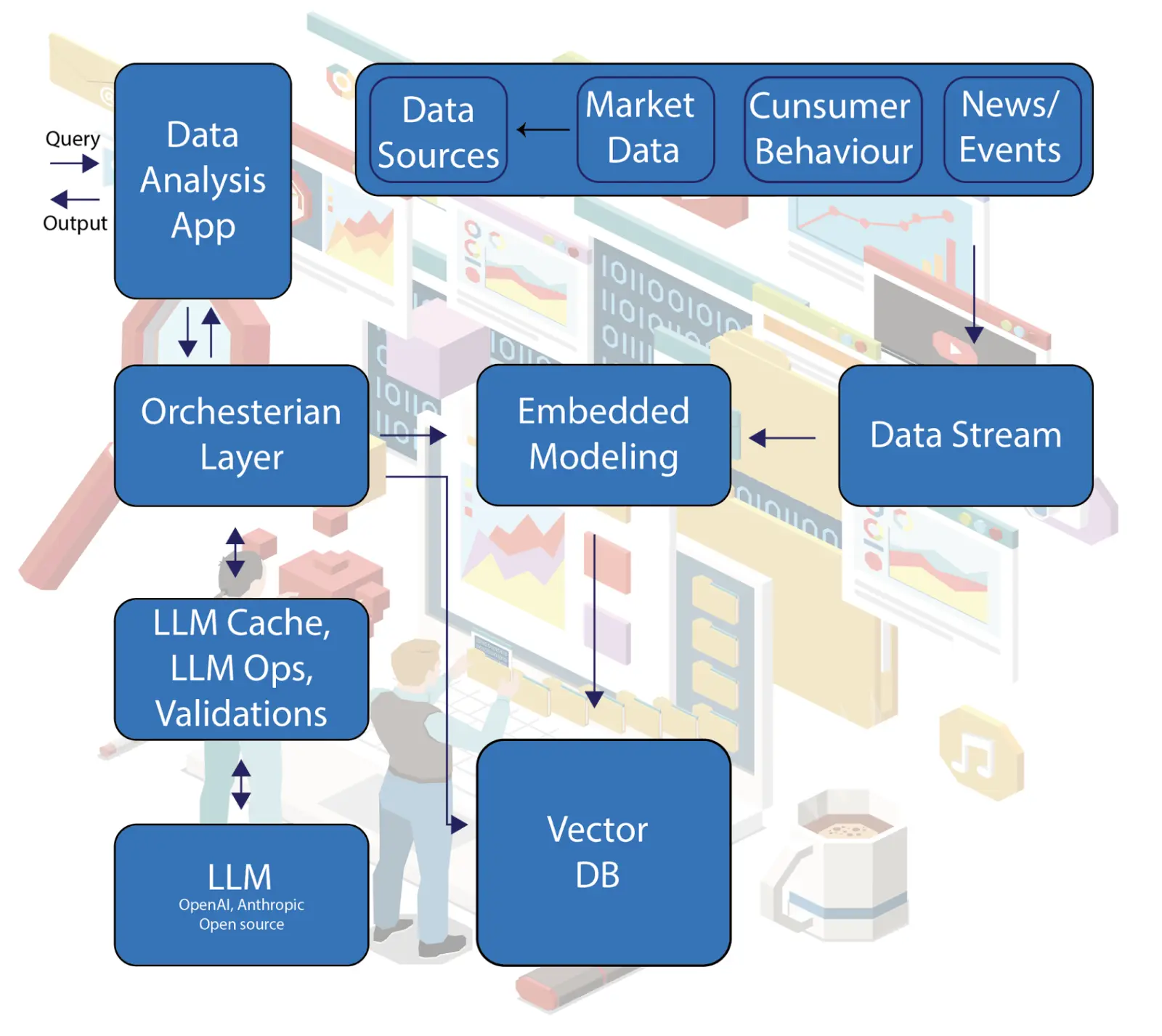
Here is a step-by-step overview of trend analysis solution architecture.
Data sources
AI trend analysis algorithms use diverse data sources to accurately and precisely predict the future. These data sources include market data feeds, news and events, economic indicators, consumer behavior, and competitor activity.
Data Stream
Data from the above sources is processed through a stream to handle its ingestion, data cleaning, and data structuring, and then it is prepared for detailed analysis.
Embedding Model
An embedded model then processes the prepared data. It transforms text into a numerical form called a vector that AI models can easily understand. Google, OpenAI, and Cohere usually provide such models.
Vector Database
The above-formed vectors are then saved in a vector database that efficiently performs querying and retrieval. Pinecone and PGvector are examples of these vector databases.
Orchestration layer
This layer is essential for managing the workflow. Its basic function is to manage the flow of data and tasks, ensuring smooth coordination among all the components in an AI-based trend analysis model.
Query
The data generation process begins when the user enters a query about market trends, competitor analysis, or consumer behavior into a trend analysis app.
LLM Processing
Once a query is received, the app passes it to the orchestration layer. The layer accesses data from Vector DB and LLM cache. Then, it is passed to the suitable LLM for further processing, which is chosen based on the nature of the query.
Output
LLM provides results based on the data and queries. The insights generated by LLM include market analysis reports, trend forecasts, and strategy recommendations.
LLM Cache
Some widely used tools are SQLite, Redis, and GPTCache, which store frequently accessed information, leading to less response time and faster processes.
LLM Ops
During this whole process, LLM Ops helps log and observe performance. The tools used in this process are ML Ops, Weight and Biases, and Helicon. They ensure LLMs work at greater efficiency.
Validation
A validation layer validates the LLM's output and ensures the accuracy and reliability of the provided information. LMQL, Rebuff, and Guardrails are some tools used for validation.
Read More: How AI-Driven Analytics Can Overcome the Insights Gap in 2024
AI Techniques Used in Trend Analysis
Predictive Analytics
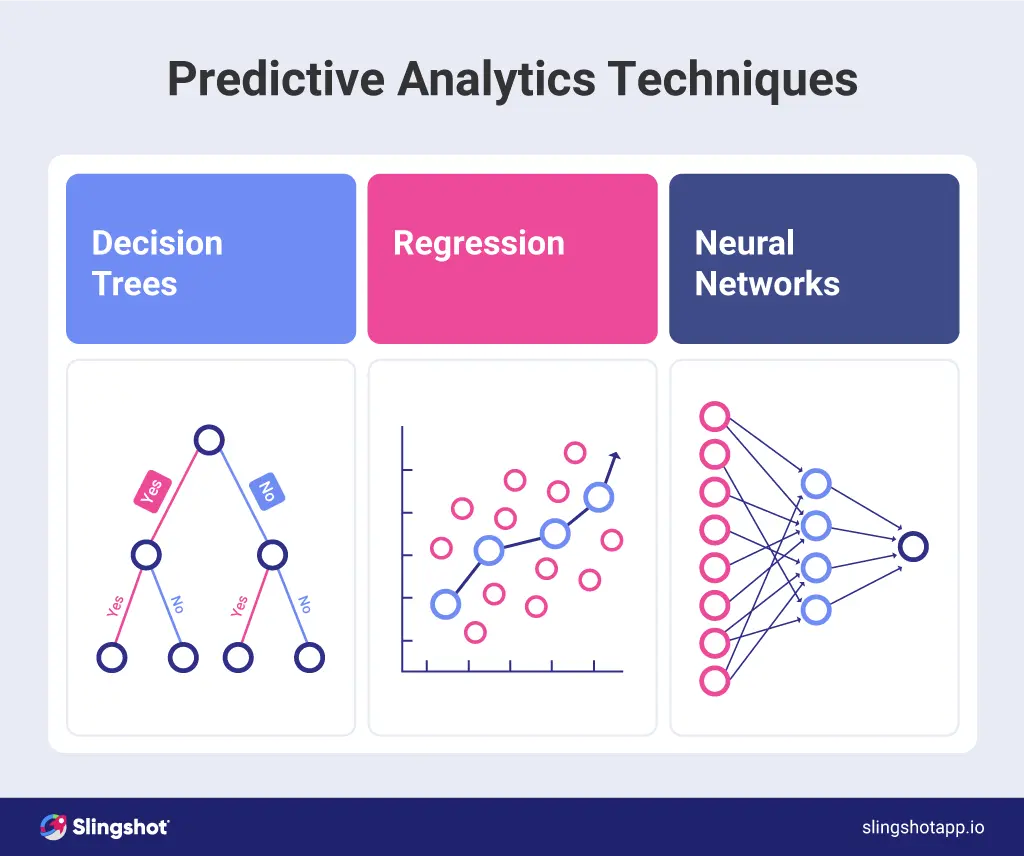
Predictive analytics transform massive data sets into useful business insights by analyzing historical data. Although it does not predict the future, it does indicate the probability of events occurring. This technique is important for identifying customer behaviors and trends. It scans diverse information sources, including customer feedback and market research. This AI technique helps businesses spot patterns, manage uncertainty, and plan effectively based on past events.
Data Mining
Data mining is a process of identifying patterns in large datasets and analyzing data to detect hidden mysteries. It combines AI, Machine Learning, and statistics to spot hidden patterns and unidentified relationships within large datasets. Data mining provides useful insights about future trends and events.
Natural Language processing
A Natural Language Processing technique is used for sentiment analysis. NLP is a main technique in trend analysis that makes machines understand and analyze human language. It analyzes customer reviews on social media posts, news articles, and other market trend news sources to better understand their sentiment towards products or services. These advanced machine learning algorithms make predictions with higher accuracy, which leads to business growth by providing accurate insights into upcoming trends. Due to the diversity of NLP, it is pivotal in a wide range of business domain-specific data analysis.
Deep Learning and Neural Networks (DNN)
The role of DNN is gaining prominence as its advanced and hybrid algorithm can predict where time series is pivotal. One of the remarkable aspects of using it for trend analysis is its ability to forecast the future value in series and trends, providing more comprehensive insight into data. Therefore, implementation of the DNN algorithm is crucial for unlocking potential in decoding the complex patterns in time series data.
Time Series Analysis
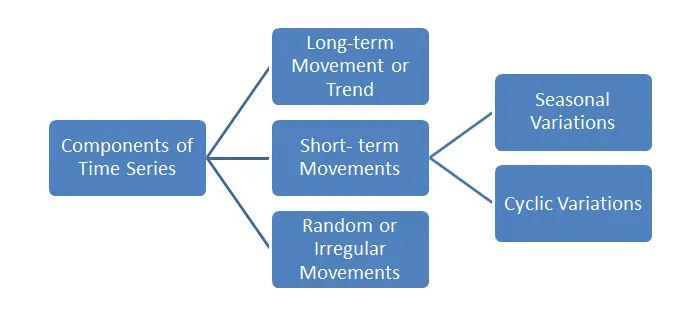
AI Trend analysis is crucial for insightful decision-making. A time series is a sequence of data predicting over time that helps businesses recognize patterns and trends and make future strategies. Three significant parts of a time series are trends, seasonality, and remainder. Trends change randomly over time. Understanding these trends in time series enables the refinement of predictive models and improves its efficiency by forecasting and gaining insights into the future.
Sentiment Analysis
Sentiment analysis in trend analysis works primarily using highly advanced and sophisticated AI models to identify emotions, behavior, and opinions related to a specific field over a defined period. This process provides insight into customers' sentiments and enlightens change that may be significant in emerging trends or patterns. First, data is collected from several sources, such as news, social media, and online forums. This textual data is then preprocessed and converted into a suitable format for analysis. NLP technique further processes this data and categorizes sentiments.
Challenges of AI in Trend Analysis
In addition to benefits, AI-based market forecasting leads to challenges that must be addressed.
Data Security and Privacy
AI algorithms and models use vast amounts of data, which includes sensitive information like security codes and medical records and personal information such as name, financial information, and address. Therefore, it is crucial to maintain a balance between data usage and data privacy to mitigate the risks.
Ethical Considerations
AI-based analysis comes up with the complexity of ethical dilemmas. The algorithms, learning, and transformation based on provided data can come up with inherent biases and unethical results. Integration of ethical rules such as principles of fairness, objective approach, and responsibility can mitigate biases. Advancement and diversity in AI are essential to giving an ethical edge to AI models and ensuring a transparent and unbiased technological solution.
Integration
Integrating advanced models with earlier systems is also a challenge due to the complexity of modern innovation with well-established frameworks. This invokes many compatibility, logistic, and synchronization challenges. So, integration between AI and systems must be seamless and harmonious to gain accurate results.
Best Practices to Overcome These Challenges
Here are the methods to overcome these challenges effectively.
Robust Data Protection Measures
There is a need for robust data protection protocols to overcome data security and privacy challenges. Businesses should implement advanced encryption techniques and secure storage solutions to prevent data breaches and unauthorized access. Regular audit and data access monitoring can also ensure data security.
Ethical AI practices
This can be achieved by unbiased data training and fair and transparent principles during the development of the AI model. Regular evaluation is necessary to avoid discriminant and unfair results. An engaging development team can contribute to impartial and more balanced AI models, mitigating inherent biases. Organizations should train stakeholders on the importance of ethical conduct and compliance to boost a responsible approach to AI development and utilization. Additionally, they should follow evolving ethical guidelines and regulations to ensure adherence to all relevant standards.
Seamless Integration
Developing AI models with easy user interfaces and advanced technology can mitigate integration challenges. A collaborative approach between system engineers and AI developers can help create an adhesive solution that aligns well with the existing technological framework. Moreover, proper training and support ensure optimal utilization and smooth integration of AI tools.
Regularly Update AI Models
AI models should be regularly updated and refined to adapt to the changing environment and data landscapes. Continuous upgrades and improvements will help maintain the accuracy of AI-based trend analysis. This ongoing upgrade process can help identify and promptly address any upcoming or emerging challenges.
User-Centric Approach
Lastly, developing AI models with a user-friendly approach ensures that they effectively address user needs. A user-centric approach can increase user satisfaction and adoption, contributing to AI's success in trend analysis.
Final Thoughts
AI in market trend analysis and forecasting holds immense potential in diverse industries and domains. This advanced technology allows businesses to dive deep into large datasets and decode patterns and insights, which enables them to make informed decisions and develop profitable strategies. Whether interpreting sentiments, predicting upcoming trends, or enhancing customer interaction, AI is a backbone in this digital era. AI technologies are giving businesses a better competitive edge in this data-driven world.
Last but not least, organizations should carefully overcome the challenges of ethical considerations and data privacy to employ AI technology responsibly. The constant advancements in AI are set to reveal richer, more accurate insights, providing enhanced innovations across different sectors. Implementation of ethical practices, cutting-edge technologies, and user-centric approaches will help businesses get the full potential of AI in trend analysis, setting the future where insights will be more accurate, accessible, and actionable.
Discover the full potential of AI in trend analysis with ownAI. Contact us to learn how we can help your business shift toward the AI era.

Let’s discuss about your next AI, Cloud or Digital Transformation.
 AI-Skilled & Agile
 Transparent, Trustworthy &
Vetted team Not tech, but business &
customer first approach





 Turn your idea into MVP in 8-16 weeks